The gadget that listens to your whole day (so you don't have to remember it)
I have a problem that no productivity app has ever really solved for me. I walk out of a meeting where we agreed on three things, and by the time I get back to my desk I can remember two of them — and I'm only fairly sure about one. My doctor once gave me a list of follow-ups at the end of a checkup; I nodded along, then spent the entire drive home trying to reconstruct what he said. We've all been there.
That, in a nutshell, is the bet Amazon just placed.
On Thursday, October 15, 2026, Amazon's Bee — the personal AI company Amazon acquired last year — unveiled its first new hardware since the acquisition: two devices built around one idea. What if a gadget could just listen to your day and turn what it hears into notes, reminders, and action items?
The two products are the Bee Frontier, a wrist-worn (or clip-on) wearable for $74.99 that's on sale now, and the Bee Eclipse, a credit-card-sized magnetic attachment for your phone for $99.99 that's coming soon. I've spent today going through everything Amazon announced, the press coverage, and the fine print — because a device that records your conversations deserves a lot more scrutiny than a device that just counts your steps. Here's the full picture.
What Amazon actually announced
Let's get the facts straight first, because launch-day coverage tends to blur things.
Bee's concept is simple: it sits passively in your day, captures conversations, and uses AI to turn them into things you can act on — summaries, insights, reminders, to-dos. You plan dinner with friends; Bee remembers the date and time and turns it into a calendar invite. You sit in a lecture; it takes notes. You visit the doctor; it remembers the care plan.
The new hardware is two form factors aimed at two kinds of buyers:
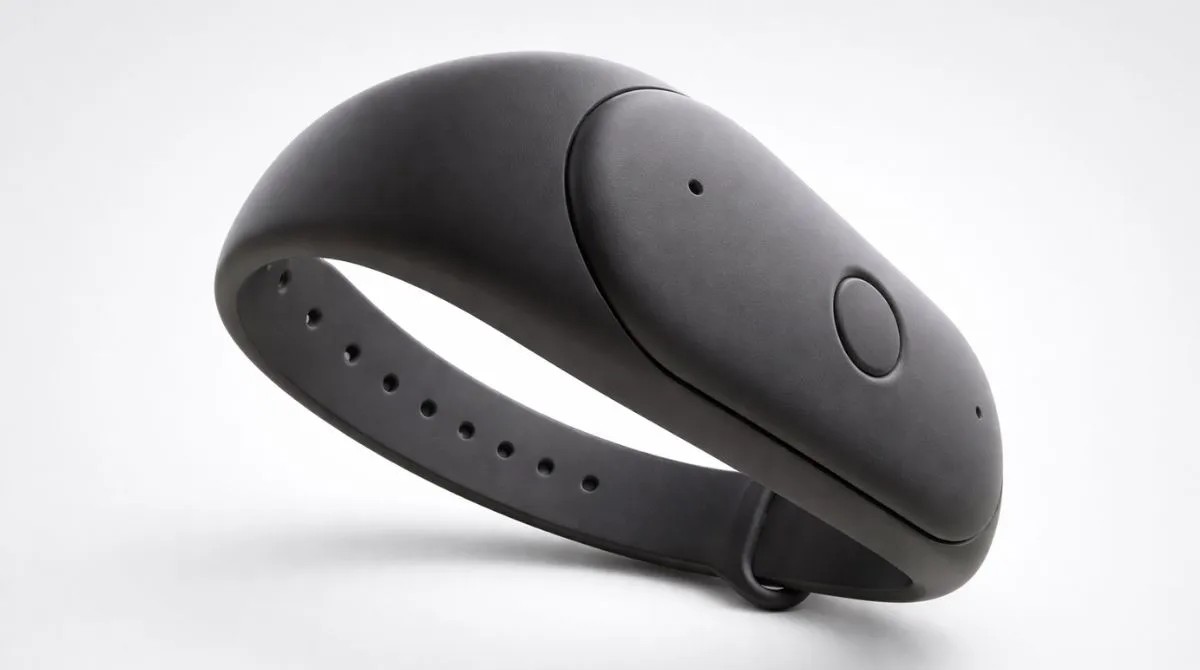
- Bee Frontier — the wearable. Wear it on your wrist with an ultra-soft silicone band, or clip it to your clothes. On sale now on Amazon.com for $74.99.
- Bee Eclipse — the phone attachment. Roughly half the size of a credit card, it attaches magnetically to the back of your smartphone. $99.99, listed as coming soon (Amazon hasn't announced a date yet).
Both devices come with 30 days of Bee Pro free, and both offer free conversation summaries and recaps with a 14-day memory window even without the subscription.
Bee Frontier: the specs that matter
The Frontier is the one you can actually buy today, so let's look at what you're getting for $74.99:
- Price: $74.99, available now on Amazon.com
- Colors: Onyx, Lavender, Sage
- Form factor: wristband or clothing clip
- Battery: up to 7 days on a charge
- Charging: USB-C
- Water resistance: IP67 — fine in rain, fine with hand-washing, not a swim tracker
- Microphones: dual mics with advanced noise filtering
The noise filtering is the spec I'd watch most closely. A device like this lives or dies on whether it can pick out your conversation in a noisy restaurant or a busy office. Dual mics with dedicated noise filtering is the right hardware approach — the real proof will be in independent reviews once units reach people.
Seven days of battery is genuinely good for this category — one less device on your nightly charging list. USB-C is the obvious, welcome choice.
Bee Eclipse: the interesting one
The Eclipse is the product that made me lean forward. It's not another wristband — it's a small slab, about half the size of a credit card, that sticks magnetically to the back of your phone. That design choice tells you a lot about who Amazon thinks the customer is: someone who doesn't want to wear anything new, who'd rather have the AI piggyback on the device they already carry everywhere.
Key details:
- Price: $99.99, coming soon (no release date announced yet)
- Colors: Silver, Midnight, Honey, Blush
- Battery: more than 21 days on a single charge
- Design: magnetic attachment for the back of your smartphone
That 21-day battery figure is remarkable — the Eclipse is a simpler device than the Frontier, no screen, no wrist to move around. Amazon says it also nudges users to get permission from the people they're recording every time a recording starts, a product decision I'll come back to in the privacy section.
The privacy question (the only one that really matters)
Here's the thing: I'm a developer, and I think in systems. A device whose whole job is to record my conversations is a device I will not touch until I understand exactly what happens to that audio. So I went looking for specifics, and credit where it's due — Amazon has given more concrete answers here than most companies do at launch.
Raw audio is never stored. Bee processes conversation audio in real time and then deletes it. The device doesn't keep a library of your voice sitting on a server somewhere.
Transcripts are encrypted with keys your device creates and controls. Amazon says no one else — including Amazon employees — can access them unless you share them. This is the same model Apple uses for iCloud's advanced data protection: if the company doesn't hold the keys, it can't read your data even if it wanted to.
You can delete your data at any time. Transcripts and summaries are deletable whenever you want.
The Eclipse asks about consent. Amazon says the Eclipse prompts users to obtain permission from call participants each time recording begins — meaningful, because recording laws vary and in many places it's illegal to record someone without consent.
Do I believe all of this? The architecture Amazon describes — real-time processing, on-device keys, no raw audio retention — is the right architecture, and meaningfully better than "we store everything and promise not to look." But claims are claims until someone independently verifies them. I'd love to see a third-party security audit, and I wouldn't be surprised if researchers are already poking at it. Promising, but unverified — the way every privacy claim from every tech company should be treated.
Bee Pro: the $11.99/month question
The hardware prices look aggressive, which usually means the real business model is the subscription. Here's how Bee Pro breaks down:
- Free tier: conversation summaries and recaps, 14 days of memory
- Bee Pro ($11.99/month): unlimited conversation summaries, integrations with Amazon.com, Alexa+, and third-party applications, suggested to-dos, daily memories, a personal chat assistant, and conversation templates
- Both new devices include 30 days of Bee Pro free
The Alexa+ integration is the piece that ties this to Amazon's broader strategy. Bee can link with Alexa, so an Echo device's Voice ID feature can recognize your voice and trigger a recording for Bee's insights — that link is optional, not forced. And the Amazon.com integration means more personalized shopping, which is exactly what you'd expect from an Amazon-owned device.
Is $11.99/month worth it? If you just want "what did we agree on at lunch," the free tier probably covers it. If you want it to be your external brain — daily memories, unlimited summaries, app integrations — that's the subscription doing the heavy lifting. At $74.99 for the hardware, Amazon is clearly betting that a cheap device plus a sticky subscription is the winning formula.
How it stacks up against the competition
The AI memory-device space isn't new, and Amazon's pricing is clearly aimed at undercutting everyone:
- Plaud Note: $159 (Note Pro: $189) — the current leader in the conversation-recording category
- Pocket: $129 — another AI recording device
- Bee Frontier: $74.99 — roughly half the price of the Plaud Note
That's not a subtle discount; that's a statement. Amazon is using its scale to make the category accessible, the same playbook it used with the Echo — sell the hardware cheap, own the ecosystem.
It's also worth noting the timing. Just this week we covered Apple's $299 HomeView smart-home hub, powered by the new Siri AI. Apple is going premium and privacy-first at $299; Amazon is going affordable and ambient at $75. Two very different philosophies about where AI lives in your home and your life, launching within days of each other.
Who should buy this, and who should skip it
Buy the Frontier if: you're constantly forgetting the details of conversations, you take a lot of meetings, you're a student sitting through lectures, or you just like the idea of a searchable memory of your day. At $74.99 with a free tier, it's a low-risk experiment.
Wait for the Eclipse if: you don't wear wrist devices and the magnetic phone attachment sounds more your style. But don't hold your breath — there's no date yet.
Skip it for now if: you're not comfortable with a recording device in your pocket, no matter what the privacy architecture says. That's completely valid. The audits will come, and you can reconsider later.
The bigger picture
Here's what I keep coming back to: we're watching AI move off the screen. A year ago it was something you typed into; now it's something you wear, something that sticks to the back of your phone, something that listens and remembers. The companies are racing to become the layer between you and your own life.
Amazon's bet is that the winner is cheap, passive, and forgettable — a $75 band you stop noticing. Apple's bet, with HomeView, is premium, in your home, and privacy-branded.
What I want to see next: independent reviews of the Frontier's real-world transcription quality, a security audit of the privacy architecture, and — honestly — how normal people react when they find out the person across the table is wearing one. That social question is the one no spec sheet can answer, and it's the one that decides whether this category goes mainstream or stays niche.
For now, the Frontier is $74.99, it's shipping, and it remembers things so you don't have to.
Frequently asked questions
How much does the Bee Frontier cost, and is it available now?
The Bee Frontier costs $74.99 and is available now on Amazon.com in three colors: Onyx, Lavender, and Sage. The Bee Eclipse costs $99.99 but is listed as coming soon with no announced release date.
Does Bee store recordings of my conversations?
According to Amazon, no. Bee processes conversation audio in real time and deletes it — raw audio is never stored. Transcripts are encrypted with keys generated and controlled by your own device, and Amazon says even its employees can't access them unless you share them. You can delete transcripts and summaries at any time.
What do you get with Bee Pro versus the free tier?
The free tier gives you conversation summaries and recaps with 14 days of memory. Bee Pro costs $11.99 per month and adds unlimited conversation summaries, integrations with Amazon.com, Alexa+, and third-party apps, suggested to-dos, daily memories, a personal chat assistant, and conversation templates. Both new devices include 30 days of Bee Pro free.
How long does the battery last?
The Bee Frontier lasts up to 7 days on a charge and charges over USB-C. The Bee Eclipse is rated for more than 21 days of battery life on a single charge.
Is it legal to record conversations with Bee?
It depends on where you live — recording laws vary widely, and many places require everyone's consent. Amazon says the Eclipse prompts users to get permission from participants each time a recording begins. You're responsible for following your local laws.
How is Bee different from the Plaud Note?
They do similar things — record conversations and turn them into AI summaries — but the Bee Frontier ($74.99) costs roughly half the Plaud Note ($159). Bee is also now an Amazon product, which means deeper integration with Alexa+ and Amazon's ecosystem, plus Amazon's private-computing privacy architecture.