
Introduction
I have spent most of my career thinking about the same bottleneck every developer thinks about: compute. Faster chips, cheaper tokens, bigger context windows. This week, the story that stopped me had nothing to do with any of that. According to the Financial Times, Anthropic — the company behind Claude — agreed in late September to spend about $3.4 billion on gas-fired power generators.
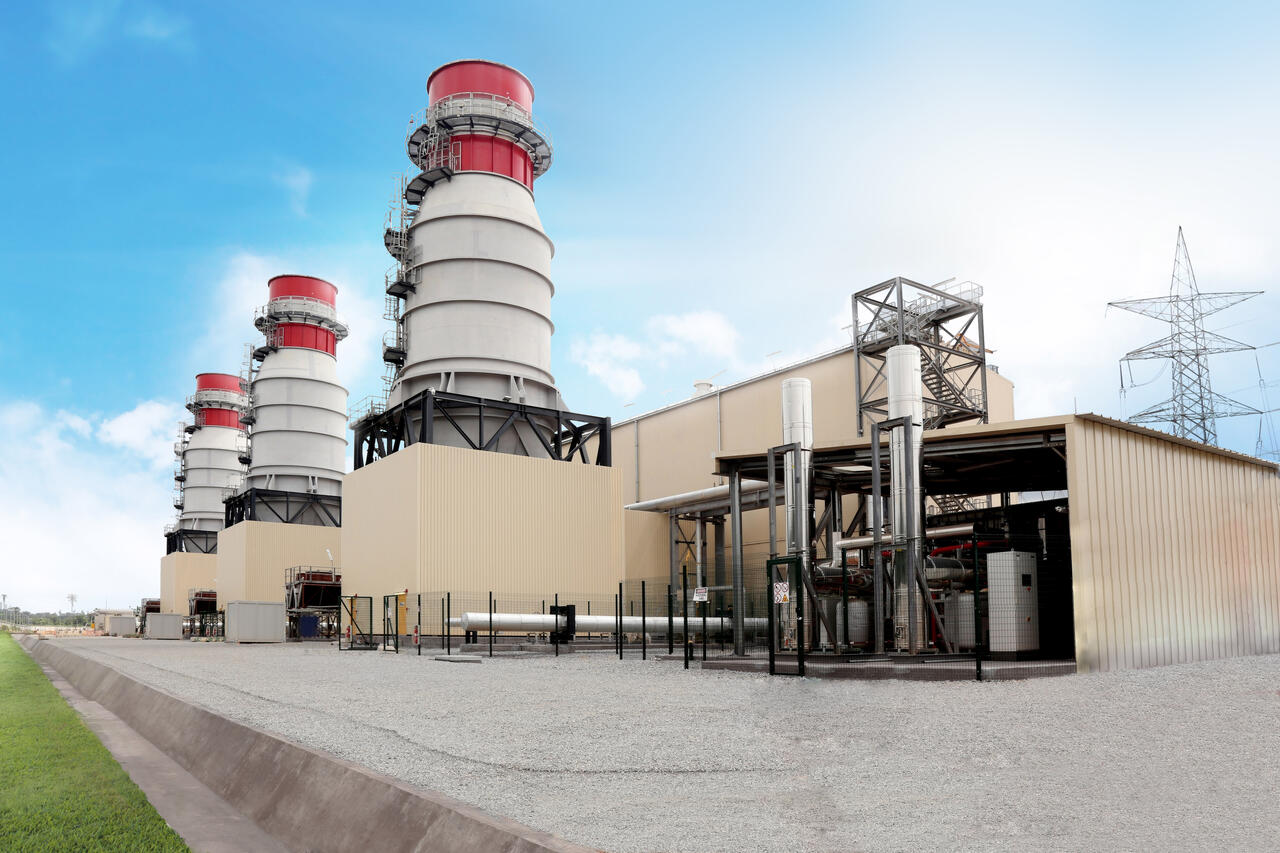
Not on GPUs. Not on a new model. On generators. Heavy-duty, gas-burning machines built by Caterpillar, enough to produce 1.7 gigawatts of electricity. The FT called it the largest known single purchase of power-generation equipment by any AI lab. The AI race is no longer just a race to build the smartest model. It is a race to plug the model in.
One honest caveat before I go further: Anthropic has not confirmed the deal, and neither has OnePWR. Reuters said it could not independently verify the FT's report. But investment bank Piper Sandler lists a $3.4 billion sale of OnePWR's power platform to an unnamed "frontier AI lab" in September 2026 — a near-exact match — and nobody involved has denied it.
So let me walk through what reportedly happened, why a chatbot company would buy its own power plant fleet, and what it means for those of us who build on these models every day.
What Anthropic Actually Bought
The deal, as the FT reported it on November 8, works like this. About two years ago, a San Antonio-based company called OnePWR Solutions ordered a large fleet of heavy-duty gas generators from Caterpillar. OnePWR needed financing to finish paying for them. Anthropic stepped in and took over those orders — reportedly committing around $3.4 billion in late September — and the package also covers the engineering and construction work needed to install the machines.
A few details matter. First, Anthropic did not buy OnePWR itself, and none of OnePWR's employees moved over — this was a takeover of equipment orders, not an acquisition. Second, Anthropic had originally planned to simply buy electricity from OnePWR as a customer, according to the FT, then changed its mind and decided to secure the equipment itself. Third, nobody has said where the generators will go or when they will be delivered — no site names, no published schedule.
The scale is what makes this hard to ignore. At the reported figures, Anthropic is paying roughly $2,000 per kilowatt of generating capacity, or about $2 million per megawatt, for the generators plus the installation work. A single Caterpillar G3520 gas generator set produces about 2.5 megawatts, which means 1.7 gigawatts works out to roughly 680 of those machines. To put 1.7 gigawatts in perspective, it is about the output of one large nuclear reactor. That is the amount of power one AI company just decided it needs to own outright, rather than wait to buy from the grid.
Why Now: The Queue Is the Bottleneck
Here is the part that changed how I think about this. For years, the constraint on AI was chips. Nvidia could not make H100s fast enough, and everyone queued for them. Then the constraint became money — who could raise enough to buy the chips. Now the constraint is electricity, and it is a much stranger bottleneck, because you cannot fix it by spending more. You can only fix it by waiting.
Anthropic said so itself. In its amended IPO registration statement filed with the US Securities and Exchange Commission on November 2 — six days before the FT story broke — the company warned investors that access to electricity limits data center expansion in several markets, and that new power sources and grid connections can take years to arrive. That is not marketing language. That is a legal filing telling future shareholders that the lights might not turn on fast enough.
The filing also says some of Anthropic's planned data centers rely on dedicated on-site natural gas generation, and that the company bears the fuel cost. A software company that sells API access to a language model is now, in its own legal paperwork, a buyer of natural gas, exposed to fuel prices with no stated cap. The filing puts total committed spending at about $895.4 billion, without saying whether the $3.4 billion sits inside it.
The queue problem is not unique to Anthropic. Caterpillar told investors on October 29 that it has a record backlog, and that its power generation sales grew 30 percent in a single quarter to $3.4 billion. Everyone is buying the same machines. The waiting list for big gas turbines now stretches for years, which is exactly why Anthropic reportedly bought someone else's place in line. OnePWR had ordered the equipment two years ago, so Anthropic bought the orders instead of joining the back of the queue.
The Math Every Developer Should Do
Let me do the arithmetic out loud, because the numbers tell the story better than any press release.
One point seven gigawatts is 1,700 megawatts. At roughly $2,000 per kilowatt, the $3.4 billion price tag covers the hardware and the work to install it. That is before a single cubic foot of gas is burned, before the fuel bill, before maintenance, before the air permits and the local negotiations that come with building a power plant next to a neighbourhood.
The alternative is buying electricity from the grid month by month, with no huge upfront cost. Anthropic chose the opposite, which only makes sense if it believes two things: that it cannot get 1.7 gigawatts from the grid on any timeline that matters, and that running its models at that scale is worth the cost and risk of owning power infrastructure.
There is a second calculation that matters to us as developers. Every token a model generates costs electricity. When the company selling you tokens has to build its own power plants, the cost of electricity stops being someone else's problem and becomes a line item in the price of your API calls. The power bill is coming to the token bill. If you have ever wondered why inference pricing feels sticky even as models get more efficient, this is part of the answer. The efficiency gains are real, but the power to run the efficient models still has to come from somewhere, and right now that somewhere is a gas turbine in Texas.
The Climate Contradiction Nobody Can Dodge
This is the uncomfortable part, and I am not going to smooth it over. Anthropic is the AI lab that has built its public identity around safety and responsibility more than any other. In February 2026, the company committed to pay for 100 percent of the grid upgrades needed to connect its data centers, and to bring net-new power generation online to match their electricity needs. That pledge was meant to reassure people that AI's growth would not land on ordinary electricity customers.
Now the same company is reportedly the biggest gas buyer in AI. Its own IPO filing says some of its data centers will rely on dedicated on-site natural gas generation, and that it bears the fuel cost with no cap. Gas is not grid upgrades and it is not net-new clean power. It is a fossil fuel, burned on site, for the foreseeable life of those data centers.
In its October 2026 report, the International Energy Agency estimated that annual emissions associated with electricity used by data centers could rise from about 150 million tonnes of CO2 to 350 million tonnes by 2035 — and Anthropic just bought a large piece of that trajectory. Defenders of the deal will say gas is a bridge fuel, that it is faster than waiting for new transmission lines, and that AI data centers need power that is available around the clock. All of that is true. It is also true that a bridge fuel still burns.
I am not singling out Anthropic — OpenAI, Google, Microsoft and Meta are all buying power at extraordinary scale. But Anthropic made the biggest public promises about paying its own way, and it is now the company that reportedly wrote the biggest cheque for gas. That tension will follow it into every community meeting about every data center it tries to build.
What This Means for Developers Like Us
So what changes for someone who builds WordPress sites, ships Elementor pages, or calls an API from a small plugin? More than you might think.
First, infrastructure is becoming the moat. The moat used to be the model itself, then distribution. Now there is a third moat, made of concrete, copper and gas turbines: a lab that owns its power keeps its models running when the grid is constrained, and a lab that does not waits. If you are choosing which provider to build on, its power position is now a real reliability factor, not an earnings-call footnote.
Second, expect power to show up in pricing. Anthropic's filing already flags fuel costs as its own burden. When energy is the binding constraint on supply, prices do not fall the way they do when chips get cheaper. The token you buy tomorrow is priced against a power market, not just a compute market.
Third, watch the local politics, because they will reach your timeline. This same week, a crowd packed a county commission meeting in West Tennessee over a data centre proposal, even after the request had been withdrawn. People are asking who pays for the grid upgrades, who gets the water, and who lives next to the generators. Every data centre now needs a social licence as well as a power connection.
Fourth, design for cost. If you are building AI features into a WordPress site or a client project, your provider's power economics are now part of your architecture. Cache aggressively. Batch requests. Use the smallest model that does the job well. The developers who treat inference like it is free will be the ones surprised by the bill — and the bill is increasingly a power bill in disguise.
What I Am Watching Next
Four things I will be checking in the coming weeks. First, whether Anthropic confirms the deal or lets it sit unconfirmed — silence is itself an answer. Second, where the generators go: the filing names new data center leases in Australia and Canada, and the only Canadian site made public is a 20-year lease in Nova Scotia, where EverWind Fuels wants to build at Point Tupper in Cape Breton. None of that is confirmed as the destination.
Third, the permit trail: air permits, grid interconnection agreements and local approvals are public documents, and they will say more than any press release about where this power goes and how soon it comes online. Fourth, whether other labs follow — if OpenAI or Google announce their own generator purchases, owning power stops being one company's gamble and becomes the industry's new normal. Caterpillar's record backlog suggests the orders are already there.
Conclusion
This is not really a story about generators. It is a story about what the AI industry has become: the models got so big and so hungry that the companies building them are now in the power business, whether they wanted to be or not. The queue for electricity is years long, the grid cannot keep up, and the deepest pockets are buying their way to the front.
For developers, the lesson is simple and practical. The cost of intelligence is becoming the cost of energy, and the companies that control energy will shape what we can build and what it costs to build it. I will keep watching where these generators land, because the answer to that question is also the answer to how fast — and how expensively — the next generation of AI tools will reach the rest of us.
Frequently Asked Questions
Did Anthropic really spend $3.4 billion on gas generators?
According to the Financial Times, which reported the deal on November 8, 2026, Anthropic agreed in late September to pay about $3.4 billion for commitments covering 1.7 gigawatts of gas-fired generators from OnePWR Solutions. Anthropic and OnePWR have not commented, and Reuters said it could not independently verify the report. Investment bank Piper Sandler lists a $3.4 billion sale of OnePWR's power platform to an unnamed "frontier AI lab" in September 2026, which matches the FT's account.
What exactly did Anthropic buy?
Anthropic reportedly took over generator orders that OnePWR Solutions had placed with Caterpillar about two years earlier, plus the engineering and construction capacity needed to install them. It did not acquire OnePWR as a company, and no OnePWR employees transferred. The package covers heavy-duty Caterpillar gas generator sets and the work to get them running.
Why would an AI company buy its own power generators?
Because the grid cannot deliver power fast enough. Anthropic's own IPO filing, amended on November 2, 2026, says access to electricity limits data center expansion in several markets and that new power sources and grid connections can take years. Buying existing generator orders lets the company skip a waiting list that now stretches for years.
Where will the generators be installed?
Nobody has said. The FT report and the follow-up coverage give no site names and no delivery schedule. Anthropic's filing mentions new data center leases in Australia and Canada, including a 20-year lease in Nova Scotia, but none of those has been confirmed as the destination for these generators.
How does this affect the price of using Claude or other AI models?
Every token a model generates costs electricity. When a provider has to buy and run its own power plants, energy becomes a direct cost of running the models, and that cost feeds into API pricing. It is one reason token prices may not keep falling the way they did when compute was the only constraint.
Is this bad for the climate?
Gas generation produces carbon emissions, and the International Energy Agency estimated in October 2026 that annual emissions from data center electricity could rise from about 150 million tonnes of CO2 to 350 million tonnes by 2035. Anthropic pledged in February 2026 to pay for grid upgrades and bring net-new generation online to match its data centers' needs, so the gas purchase sits uneasily with that promise. The company has not publicly addressed the tension.