Introduction: the small iPad grew up, and so did its price
I have a soft spot for the iPad mini. It is the one iPad that fits how I work away from my desk: reading documentation on a train, sketching a layout idea, reviewing a site on a real tablet screen instead of squinting at a phone. It has always been compromised, though — the old LCD was fine, not great, and the price was easier to defend than the screen.
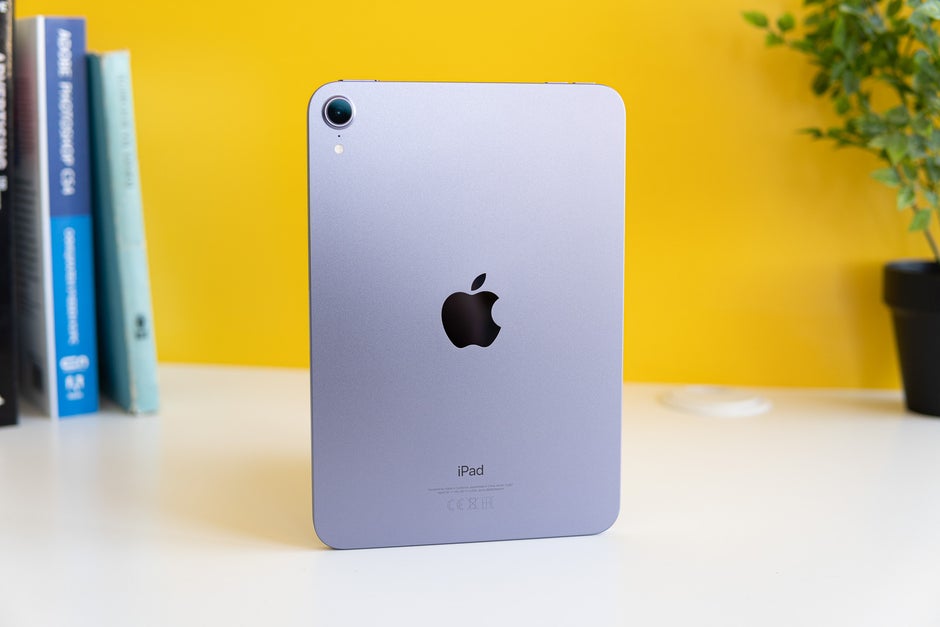
On Monday, October 26, 2026, Apple removed the biggest compromise. The new iPad mini — the first with an OLED display — pairs an 8.5-inch Super Retina XDR OLED panel with the A20 Pro chip, a thinner and lighter body, and, for the first time on a mini, IP67 resistance. It runs iPadOS 27 with new Apple Intelligence and Siri AI.
Then I saw the price, and my enthusiasm got a reality check. In India, the new mini starts at Rs 82,900 for the 128GB Wi-Fi model, up from Rs 69,900 for the previous model. In the United States it starts at $699, up from $599. That is not a small inflation adjustment. It is Apple repositioning the mini as a premium small tablet, not a cheap second device. So this is the honest version: what OLED actually buys you, what the A20 Pro does and does not do, where the price stings most, and who this tablet is really for.
The OLED display is the headline, and it deserves to be
Let us start with the screen, because it is the reason most people will consider upgrading. The new panel is 8.5 inches, slightly larger than the old 8.3-inch display, because Apple trimmed the bezels by 24 percent while keeping roughly the same footprint. Resolution is 2316 by 1512 pixels at 326 pixels per inch, with P3 wide colour, True Tone, and HDR support. The numbers that matter in daily use are brightness and contrast: 600 nits of full-screen brightness, a peak of 1,200 nits (more than double the previous generation), and a 2,000,000:1 contrast ratio. In plain language, blacks are actually black, text stays readable in bright rooms, and the panel can go as low as 1 nit for late-night reading.
There is one honest omission to flag: Apple's materials do not mention 120Hz or ProMotion, so this looks like a 60Hz display. If you were hoping OLED would also mean buttery scrolling like an iPad Pro, that is not what you are getting here. For reading, notes, and video, 60Hz is fine; for fast games and stylus work, it is a real limitation. Apple also offers a nano-texture option to cut glare — but in India it is only available on the 256GB and 512GB models, not the base model. If you read outdoors, that pushes you up a storage tier whether you need the storage or not.
The A20 Pro chip has a split personality — check your storage tier
The A20 Pro is built on a 2-nanometre process, and Apple claims up to 60 percent faster multithreaded CPU performance, up to 2.7 times faster graphics, and up to 4.5 times faster AI performance than the previous iPad mini. Those are Apple's comparison claims against the A17 Pro model, not independent benchmarks, so treat them as the ceiling, not a promise. Still, the direction is clear: a big generational jump, especially for on-device AI work.
But there is a detail that is easy to miss, and it is the kind of thing I always check before recommending hardware. The A20 Pro is not identical across storage tiers. The 128GB and 256GB models get a 5-core CPU, a 7-core GPU, and a 16-core Neural Engine. Only the 512GB model gets a 6-core CPU and a dual 16-core Neural Engine. For everyday use you will not feel that difference. For heavy on-device AI work, the 512GB configuration is the one with the full chip — and in India that model costs Rs 1,18,900 (Rs 1,30,900 with nano-texture). The full chip is not a free upgrade; it is bundled with the most expensive configuration. My rule: buy the chip for the work you actually do. If your mini is a reading and note-taking device, the base chip is plenty. If you plan to push on-device AI hard for three or four years, budget for the 512GB model knowingly, not after checkout.
Thinner, lighter, tougher — and finally sensible about cameras
The rest of the hardware story is quietly good. The new mini is 5.4mm thick, down from 6.3mm, and weighs 255 grams for the Wi-Fi model (263 grams for cellular), down from 297 grams — a difference you feel immediately in one hand. Combined with IP67 resistance, the first water and dust rating on a mini, this is a tablet you can worry less about in a bag, a kitchen, a clinic, or a field site.
The front camera has moved to the landscape edge, the correct decision for a device that spends half its life sideways on a video call. It is a 12-megapixel Center Stage camera; the rear camera is a 12-megapixel Wide camera with Smart HDR 4 and 4K video at up to 60 frames per second. Neither will replace your phone, but the layout finally matches how people hold the device. Sound gets an upgrade too: Apple's Acoustic Display pairs woofers through the display for punchier bass, with tweeters hidden between the glass and the enclosure for clearer highs. I will believe the bass claim when I hear it, but the direction is right. Connectivity is faster, with 5G on cellular models and USB 3 up to 10 gigabits per second. Battery life is quoted at up to 10 hours — treat that as a good day of mixed use, not a guarantee under heavy AI or gaming loads.
The price: where the Rs 13,000 increase actually lands
India pricing, Wi-Fi first: 128GB Rs 82,900; 256GB Rs 94,900 (Rs 1,06,900 nano-texture); 512GB Rs 1,18,900 (Rs 1,30,900 nano-texture). Wi-Fi plus Cellular starts at Rs 1,00,900 for 128GB, Rs 1,12,900 for 256GB (Rs 1,24,900 nano-texture), and Rs 1,36,900 for 512GB (Rs 1,48,900 nano-texture). Education pricing starts at Rs 76,900. The new TechWoven Smart Folio costs Rs 8,500, Apple Pencil Pro Rs 11,900, and Apple Pencil (USB-C) Rs 7,900. Neither pencil is in the box — easy to forget when comparing headline prices.
Why did the price jump? Launch coverage points to rising RAM and memory prices plus the cost of the OLED panel itself. This is not Apple inventing a reason to charge more; it is Apple passing on component costs. But the cause does not change the effect on your wallet: a base mini plus a Pencil Pro and a Smart Folio runs past Rs 1,00,000 in India before you add a case or AppleCare. That is premium-tablet territory. In the United States the step is $100 at the base ($699 Wi-Fi, $849 cellular). The percentage increase is larger in India — about 19 percent versus about 17 percent in the US — which is why Indian buyers feel this launch more sharply.
Who should buy it, who should wait, and who should skip it
Buy it if you use a small tablet daily and the screen is your bottleneck. If you read for hours, annotate PDFs, sketch with Apple Pencil Pro, or review visual work on the go, OLED plus the lighter body is a genuine quality-of-life upgrade. Buy it if you work where IP67 matters — field work, clinics, workshops — or if you are replacing a mini four or more years old.
Wait if you already own the A17 Pro mini and your main complaint is not the screen. For the previous model, the upgrade case is the screen, the water resistance, and the lighter weight, not everyday speed. If your current mini still does everything you ask of it, waiting for a price drop or a sale is the rational move; pre-orders open October 28 and availability starts November 6, so there is no rush.
Skip it — or at least pause — if you need a laptop replacement, a 120Hz display, or the cheapest way to run iPad apps. The mini is still a companion device, not a MacBook substitute, and an 11-inch iPad or iPad Air may serve you better for the same money or less.
For developers, the mini is a great second device for testing small-tablet layouts, reading specs, and reviewing builds away from a desk — not my only test tablet, since most users are on phones or larger iPads. Buy it for the work you will actually do on it, and let the OLED screen earn its keep there.
The timing tells its own story
Apple announced the mini on October 26, just days before its "Pro and Tell" event on October 28 in Los Angeles, where new MacBook Pro and iMac models are expected. Pre-orders for the mini open on October 28 at 10:10 a.m. Pacific Time, with availability from November 6. That sequencing is deliberate: the mini gets its own moment before the Mac announcements take over the news cycle. It also lands in a strange hardware moment — memory prices rising, OLED still premium — and Apple is choosing positioning over holding the old price. The mini is no longer the affordable iPad; it is the premium small iPad. People who loved it for its size will still love it; people who bought it because it was cheapest will look elsewhere. That is a clearer product — just a more expensive one.
Conclusion: a better mini, at a price that demands a reason
In hardware terms, I mostly love this launch. OLED on a mini was long overdue, the A20 Pro is a serious chip, and the thinner, lighter, IP67 body fixes complaints I have had for years. But a purchase is not a spec sheet. At Rs 82,900 in India — past Rs 1,00,000 with Pencil Pro and Smart Folio — this tablet demands a reason, not an impulse. If you read, sketch, annotate, or work in the field every day, the reason is there: a better screen you will look at for hours, in a body you will barely feel. If you do not, the honest move is to wait, or to buy a larger iPad for less. The mini grew up. Make sure your budget and your workflow grew with it before you tap buy.
FAQ
When can I buy the new iPad mini?
Pre-orders open October 28, 2026, and availability starts November 6, 2026, via the Apple India website and Apple Store app.
How much does the new iPad mini cost in India?
The Wi-Fi model starts at Rs 82,900 for 128GB, Rs 94,900 for 256GB, and Rs 1,18,900 for 512GB. Wi-Fi plus Cellular models start at Rs 1,00,900 for 128GB. Education pricing starts at Rs 76,900.
What is actually new compared to the previous iPad mini?
An 8.5-inch OLED display, A20 Pro chip, 5.4mm / 255-gram body, IP67 rating, landscape front camera, Acoustic Display speakers, and iPadOS 27 with new Apple Intelligence and Siri AI.
Is the A20 Pro chip the same in every model?
No. The 128GB/256GB models get a 5-core CPU and 16-core Neural Engine; only the 512GB model gets a 6-core CPU and dual 16-core Neural Engine. Both get a 7-core GPU. It matters mainly for heavy on-device AI work.
Does the new iPad mini have a 120Hz ProMotion display?
Apple's launch materials do not mention 120Hz or ProMotion, and coverage reports a 60Hz display. Buy it for OLED contrast and brightness, not ProMotion smoothness.
Should I upgrade from the previous iPad mini?
Upgrade if the screen, lighter body, or IP67 rating solves a daily problem, or your mini is several years old. Otherwise, waiting for a sale is smarter.