I've spent most of my career thinking about interfaces — HTML, CSS, Elementor widgets, the whole stack of things humans touch to talk to machines. So when a report dropped this week claiming Apple wants to let you control your iPhone with nothing but your brainwaves, it stopped me cold. Not because it's science fiction — because Apple has been quietly building toward exactly this for years, and this might be the first time the endgame is visible.
The report that started it all
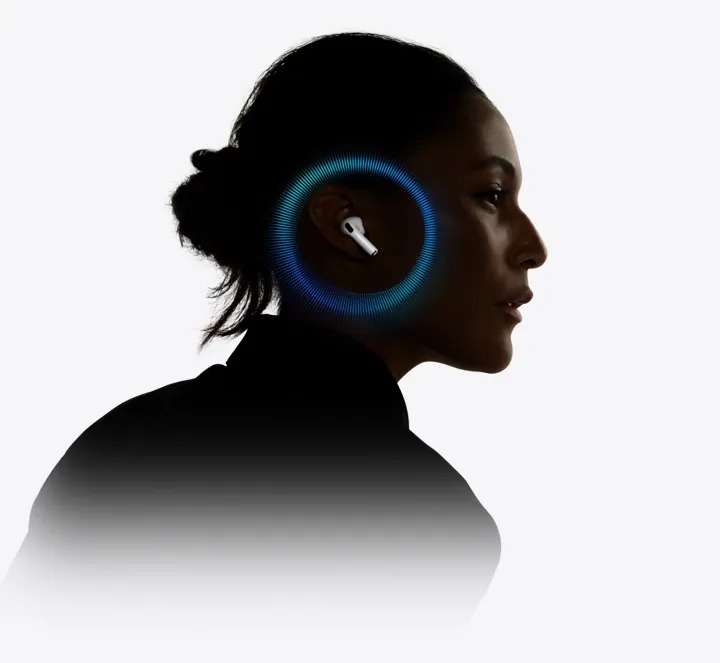
An October 13, 2026 report says Apple's secret health labs are deeply exploring non-invasive neural interface technology: advanced sensors hidden inside wearables — think AirPods or an Apple Watch band — reading micro-electrical signals from your brain.
The key word there is non-invasive. Unlike Elon Musk's Neuralink, which requires actual brain surgery to implant electrodes into brain tissue, Apple's concept needs no incision and no operating room. You just wear something you'd already wear.
The part everyone forgot: Apple has been doing this since 2025
This didn't start last week. Back in May 2025, the Wall Street Journal reported that Apple was working with a neurotechnology company called Synchron to let people control Apple devices with their thoughts. That partnership produced something concrete: Apple created a dedicated BCI Human Interface Device (HID) protocol and built brain-computer interface support into its operating systems.
Synchron's device, called the Stentrode, is a stent-like implant threaded through the jugular vein until it rests inside a blood vessel sitting right above the brain's motor cortex. It carries 16 electrodes that capture motor-related brain activity — and crucially, it gets there without open-brain surgery.
By the time iOS 26 shipped, Apple had native brain-control support in the OS. Signals get translated into digital commands through Apple's Switch Control accessibility framework — the same framework that already lets people use joysticks and adaptive hardware. In Apple's framing, brain signals became just another input device, formally recognized alongside touch, voice, and typing.
Then in August 2025, Synchron published a live demo that more people should have watched: Mark Jackson, a participant in Synchron's COMMAND clinical study who lives with ALS and cannot use his arms or hands, controlled an iPad entirely with thought — navigating the home screen, opening apps, composing messages. Ten patients had received the Stentrode under the FDA's investigational device exemption by then. Slower than a touchscreen, sure. But it worked, natively, on a shipping iPhone OS.
That's the context the new report sits inside. Apple isn't starting from zero — it has a shipped protocol, real patients, and two years of learning what neural signals look like inside a consumer OS.
How it would actually work — no sci-fi required
Let me demystify the technology, because "controlling your iPhone with your brain" triggers two bad instincts: "that's impossible" or "they'll read my thoughts."
When you decide to move your hand, your motor cortex fires a pattern of electrical activity before any muscle moves. A brain-computer interface detects that pattern and maps it to a command. It's not reading your inner monologue — it's detecting the electrical shadow of an intention to move.
In the Stentrode version, electrodes sit millimeters from the motor cortex, so the signal is relatively clean. The OS receives something that looks like cursor input: move left, select, scroll. Apple routes it through Switch Control, which already knows how to turn arbitrary input streams into interface actions.
The non-invasive version is harder in every dimension. Sensors in an AirPod or watch band sit far from the motor cortex, trying to pick up faint signals through bone and skin. Machine learning does the heavy lifting: training models to separate the signal of an intended gesture from the noise of everything else your body is doing. Apple's silicon advantage matters enormously here — real-time signal processing is exactly what on-device neural engines are built for.
I'd bet current prototypes detect a few broad gestures: a jaw clench to select, an imagined "left" to move a cursor, intentional blinks as a click. Coarse, but real — and coarse is enough for the use case Apple cares about right now.
Why non-invasive changes everything
Here's what most coverage misses: the surgical version already exists and works. The bottleneck isn't technology — it's the audience.
Brain implants, even minimally invasive ones, serve people with severe motor impairments: ALS, spinal cord injuries, stroke. That's who Apple's BCI HID protocol serves today, and it's genuinely life-changing for them. But implants will never be a consumer product. Nobody is getting a catheter threaded through their jugular vein to scroll Instagram hands-free.
The addressable market for surgical BCIs is measured in hundreds of thousands. For a non-invasive interface built into AirPods, it's hundreds of millions. That's why the October 2026 report matters: it signals Apple is trying to cross from accessibility technology to consumer technology. No surgery, no clinic — just put in your AirPods and think.
This is also where Apple's competition is weakest. Neuralink's invasive approach may produce richer signals, but it will always be a medical procedure first. Meta's wrist-based neural interfaces read muscle signals (EMG), not brain signals — a different bet. Apple's path — brain signals, no surgery, consumer wearables — is the only one that could plausibly ship at Apple scale.
The timeline: don't hold your breath
Now the honest part. Everything above is real, but the consumer version is still years away, and the report is careful on this point.
Non-invasive signal quality is the fundamental wall. Your skull attenuates and smears electrical signals; distinguishing "user intends to tap" from "user is chewing" through a watch-band sensor is a research-grade problem. Apple's labs are exploring this — that word is doing a lot of work. Exploration is not a roadmap.
Then there's regulation. Any device claiming to read neural signals will draw intense FDA scrutiny — the Synchron work went through the FDA's investigational device exemption process for exactly this reason. And there's calibration: brains are idiosyncratic, so a consumer product would need a personal training phase — wear it, perform gestures, teach it your patterns — a real UX hurdle for a company that prides itself on "it just works."
My realistic guess: accessibility-grade non-invasive interfaces for simple commands within a few years; anything approaching general-purpose mind control is the better part of a decade out. The touchscreen isn't dying this decade.
The part nobody's talking about: privacy
As a developer, I think this is the most important section of this article.
If a device can read micro-electrical signals from your brain — even coarsely, even just motor intentions — it collects the most intimate data stream that has ever existed. Your clicks reveal what you do. Your location reveals where you go. Your neural signals reveal what you intend before you act.
Apple's privacy story writes itself here: on-device processing, neural engine, nothing leaves the phone. And Apple has the best track record in the industry — the Secure Enclave, on-device Siri processing, App Tracking Transparency. If anyone can credibly promise "your brain signals never leave your device," it's Apple.
But the legal landscape is nowhere near ready. There is almost no legal framework for neural data anywhere in the world — a few US states have started extending privacy laws to cover it, but we're in the earliest days. What happens when an employer wants neural data from a company device? When law enforcement asks? When an advertiser offers a discount for opting in? These aren't 2030s hypotheticals; the groundwork is being laid — or not laid — right now.
I'm not saying this to scare you. The window to get this right is before the technology ships, and that window is open today.
What this means for developers
Apple's BCI HID protocol already exists. Brain signals are already a recognized input category in Apple's accessibility stack — and the developer surface for neural input isn't some future API. It's Switch Control, which has shipped in iOS for a decade. Any app that works well with Switch Control today is, in a real sense, already compatible with brain control.
That has practical implications right now. Accessibility support isn't just a compliance checkbox anymore — it's forward compatibility with the next input paradigm. Proper accessibility labels, logical focus order, Switch Control navigation: these are the foundations neural interfaces will build on.
Longer term, I expect Apple to expose neural intent as a first-class input event, the way 3D Touch and the Apple Pencil got their own gesture recognizers. Developers who understand intent-based input will have a head start on an entirely new interaction model.
And for web developers like me? The web always lags native on input innovation, but the pattern is consistent: native proves it, the web standardizes it years later. Touch events, pointer events, the Gamepad API — all followed this arc. Neural input will follow it eventually. Worth watching, not worth building for yet.
My take
The October 2026 report isn't hype. It's the visible tip of a program Apple has been running since 2025 — the Synchron partnership, the BCI HID protocol, iOS 26's native support, real patients controlling real iPads. The new chapter is the non-invasive push: brain interfaces without surgery, through devices people already wear.
Will you control your iPhone with your thoughts in 2027? No. Will the accessibility version keep getting better every year? Yes. Will there be a consumer product in your lifetime that makes touchscreens feel quaint? I'd bet on it.
The interface I've spent my career building for — the thing you tap and swipe — might be the last interface humans ever have to touch.
Frequently Asked Questions
Is Apple really building technology to control iPhones with your brain? Yes — and it's further along than most people realize. Apple partnered with Synchron in 2025, created a BCI HID protocol, and shipped native brain-control support in iOS 26 for implant users. An October 2026 report says Apple's health labs are now exploring a non-invasive version using sensors in wearables like AirPods or an Apple Watch band — no surgery required.
How does Apple's approach differ from Neuralink? Neuralink surgically implants electrodes into brain tissue. Apple's Synchron partnership uses a stent-like device threaded through a blood vessel to the motor cortex — no open-brain surgery. The newly reported research aims to eliminate surgery entirely, reading micro-electrical brain signals through wearable sensors.
When will consumers control an iPhone with their thoughts? Not soon. The implant version already works for patients with ALS and spinal cord injuries via Apple's accessibility features. A non-invasive consumer version is still in research and likely years away, pending signal-quality breakthroughs, FDA clearance, and personalized calibration.
Can a brain interface read my thoughts? No. Current brain-computer interfaces detect the electrical patterns of motor intentions — deciding to move a cursor or select an item — not inner monologue, memories, or beliefs. They map neural activity to interface commands; they don't decode language or private thoughts.
What should developers do to prepare? Make your apps fully accessible. Apple's neural input already flows through the Switch Control accessibility framework, so apps with proper accessibility labels and logical navigation are effectively forward-compatible with brain control. Accessible apps will be first in line when Apple exposes neural intent as a first-class input API.
Is my neural data safe? This is the open question. Apple processes sensitive data on-device and has the industry's strongest privacy track record, but almost no legal framework governs neural data yet. The privacy conversation needs to happen now, before consumer neural interfaces ship.