Introduction
I spend most of my working days inside design tools. Photoshop for assets, Elementor for layouts, and increasingly an AI image generator sitting in a tab next to both, doing the rough drafts. So when the two biggest names in visual storytelling announce they are building AI together, I pay attention — not because I will ever get to use the thing they are building, but because of what it tells me about where creative AI is heading for the rest of us.
On November 9, 2026, Adobe and The Walt Disney Company announced a multi-year strategic alliance at Adobe MAX. Adobe becomes Disney's Official AI Innovation Partner, and the centre of the deal is custom generative AI models built through Adobe Firefly Foundry, trained on Disney's own intellectual property — its character attributes, environments and visual styles — and kept private and proprietary to Disney.
Here is the part that matters most to people like me who build websites and design for clients: this is not a consumer product launch. You will not be able to type a prompt and get a Disney-style image out of it. These models exist to speed up Disney's own production — theme parks, films, sports broadcasts — while keeping a human artist in charge. That framing, artist-led and brand-specific, is the direction the whole creative AI market is moving. If you design anything for a living, this deal is a preview of the tools you will be offered next.
What Was Actually Announced
Let me lay out the deal as the two companies described it, because the details are more interesting than the headline.
Adobe becomes the Official AI Innovation Partner of The Walt Disney Company under a multi-year agreement announced on November 9, 2026. Disney gets early access to Firefly, Firefly Foundry, Premiere and Photoshop, plus dedicated Adobe engineering and research support for its production pipeline.
The technical core is Firefly Foundry, Adobe's enterprise service for building proprietary, brand-specific generative AI models. Disney will work directly with Adobe on models tailored to its properties. Adobe describes them as human-centred and artist-led, customised on Disney properties and trained on character attributes, environments and visual styles, producing what Adobe calls commercially safe, production-ready creative outputs.
The deal covers three parts of Disney's business. Disney Experiences — the parks, resorts and cruise lines — will use the models to shorten project development timelines. The Walt Disney Studios, through its StudioLAB innovation programme, will use them for concept exploration, post-production and visual effects work. And ESPN, through the ESPN Edge Innovation Center, will explore AI that deepens sports fan engagement and brings more of the ESPN archive to audiences.
Two things were not disclosed, and their absence is worth noting. Neither company put a value on the deal, and neither gave a launch timetable for the new models. The market's reaction was muted — Adobe's shares traded roughly flat the day after the announcement, about 0.38 percent below Monday's close in European trading.
Firefly Foundry, Explained in Plain Language
If you have used Adobe Firefly, you know it as the image generator built into Photoshop, Express and the Firefly web app — trained, Adobe says, on licensed content, and marketed as commercially safe. Firefly Foundry is the enterprise version of that idea, and it is a different thing in an important way.
Firefly Foundry is a service Adobe announced on October 28, 2025, that lets a large organisation build and deploy its own generative AI models, tuned to its own assets. It is a way for a company to aim Adobe's model-building infrastructure at its own brand — its characters, its visual language, its archive — and end up with a model only that company can use.
It is worth distinguishing this from Firefly Custom Models, a feature that further trains a model on a set of existing images to capture a particular style or subject. Custom Models is a tool inside the product. Foundry is the service layer around it: the engineering support, the deployment, the governance that turns a tuned model into something a company the size of Disney can run across studios, parks and a sports network without it leaking everywhere.
That distinction is the whole story: Disney is not buying a subscription. It is buying a private AI factory, built on Adobe's platform, that only Disney gets to operate.
What Is Already Working at Imagineering
The most concrete part of the announcement is the work already happening at Walt Disney Imagineering Research and Development, the group that designs the parks. Two tools are already in use there, according to Adobe.
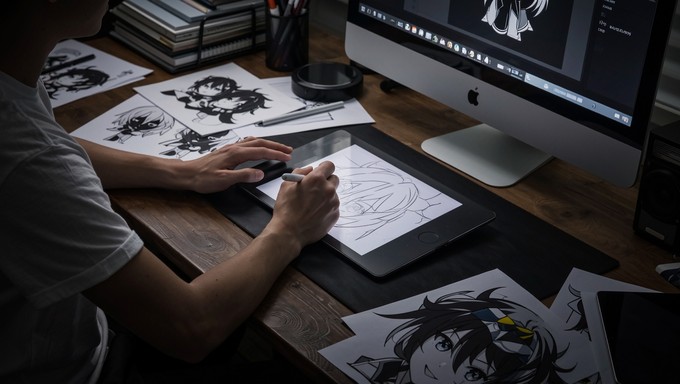
The first is a sketch-to-image model that converts rough hand-drawn concepts into fully rendered 2D concept art in the visual language of the project. The second is a custom image model that generates on-brand, franchise-accurate assets — images that stay inside the visual world of a specific Disney property instead of drifting into generic AI style.
This is not the first time the two companies have worked together on this. Adobe first announced the Imagineering collaboration on June 16, 2026, bringing Firefly Foundry into the design and pre-production visualisation pipeline for Disney Parks and Experiences. The November 9 deal takes that pilot and extends it across the whole company — from the parks to the studio to ESPN.
That progression matters. A pilot that survived five months inside Imagineering and then got expanded company-wide is a pilot that produced something useful. Disney does not hand its characters to an outside model lightly. The fact that the sketch-to-image workflow is already running in production, rather than being a slide in a keynote, is the strongest signal in the whole announcement.
The other two strands are earlier in their journey. Adobe joins The Walt Disney Studios' StudioLAB programme as an innovation partner, with initial projects focused on custom AI models for post-production and visual effects. Through the ESPN Edge Innovation Center, Adobe and ESPN will explore AI that deepens sports fan engagement and brings the ESPN archive to life. Co-innovation projects on both are already underway, though neither company has detailed their scope or timing. Parks first, studio next, sports last — a sensible rollout order, and a useful template for anyone bringing AI into their own creative work: start where the tool already works, then expand.
Why This Matters for Designers and Website Builders
You might be reading this and thinking that a deal between two giants has nothing to do with your next client project. I think it has everything to do with it, for three reasons.
First, brand-specific AI is becoming the product. The generic image generator — type a prompt, get a picture — is a commodity now. What companies are actually buying, and what Adobe is now selling to the biggest entertainment brand on earth, is a model that knows one brand deeply and cannot produce anything else. Expect Firefly Custom Models, and its equivalents from other vendors, to get more prominent and more capable in the next year. The question will not be whether you can generate an image, but whether you can generate one that stays on-brand without a designer redrawing it.
Second, the "commercially safe" claim is now a competitive battleground. Adobe has built its whole AI pitch around models trained on licensed content, and Disney's participation is the strongest endorsement of that pitch imaginable — the most protective company in entertainment trusting Adobe's training data enough to build on it. That does not prove the claim, and it is worth remembering that "commercially safe" is Adobe's description of its own product, not an independent legal finding. But it raises the bar for every other AI tool — if your clients ask whether their site's images came from a commercially safe model, you will want a real answer.
Third, the artist-led framing is a response to a real fear. Designers have spent two years worrying that generative AI would replace them. Disney and Adobe are selling the opposite story: the artist sketches, the model renders, the artist decides. Whether that story holds up depends on how the tools are actually deployed, and I would not take a press release as proof. But the fact that both companies led with "human-centred and artist-led" tells me they know their audience is watching closely.
The "Commercially Safe" Claim — Read It Carefully
I want to be straight about what this deal does not prove, because the announcement is written to make you feel reassured, and reassurance is not evidence.
The models are private and proprietary to Disney. Nobody outside Disney can test them, audit them, or verify Adobe's claims about their outputs. The "commercially safe, production-ready" description comes from the companies selling and buying the product. It has not been independently tested.
The deal also does not make Disney characters available to the public through AI. This is explicitly an internal production arrangement. If you were hoping to generate on-brand Disney assets in Photoshop, that is not what was announced, and it is not coming. The models stay inside Disney.
None of this makes the deal unimportant. It makes it a beginning rather than a conclusion, and beginnings deserve careful reading rather than celebration.
What To Do With This: A Checklist for Designers and Site Owners
This deal is about two giant companies, but the pattern behind it applies to work at any scale. Here is what I am taking from it into my own projects.
1. Try Firefly Custom Models on a small brand project. If you have access to Adobe's tools, train a custom model on a client's real assets — their photography, their colour palette, their existing designs — and see how close the outputs stay to the brand. That is the workflow Disney just bought at enterprise scale.
2. Build a brand kit before you prompt. The reason Disney's models work is that they are trained on a defined visual world. Your prompts will get dramatically better if you define that world first: a document with the brand's colours, fonts, image style, and examples of what "on-brand" means. Feed that to the AI before you prompt.
3. Keep a human in the approval loop, and say so. If you use AI-generated images on a client site, tell the client, and keep a human review step before anything goes live. The Disney deal is built on artist-led production. Adopt the same rule at your scale: the AI drafts, you decide.
4. Ask your AI tools where their training data came from. Adobe's pitch is licensed training data. Other tools have different answers, and some have no good answer at all. Before you put AI-generated images on a commercial website, know what your tool was trained on and what its terms say about commercial use.
5. Watch what ships from StudioLAB and ESPN, not what is announced. The real test of this deal is whether the post-production and archive tools actually make it into production. If they do, expect Adobe to productise the same capabilities for smaller studios and agencies. That is when this deal reaches your desk — and the advantage will go to the designer who has already practised the sketch-to-image workflow with the tools they have today.
Conclusion
Disney and Adobe did not announce a product I can buy, and they did not announce a tool I can use. They announced a direction: private, brand-specific AI models, built on licensed data, operated by artists, inside the world's most protective entertainment company. That direction is now the most credible version of creative AI's future, because the company with the most to lose from getting it wrong just bet its characters on it.
I will be watching what actually ships — the StudioLAB post-production tools, the ESPN archive projects, and whether Firefly Foundry becomes something smaller studios can genuinely afford. In the meantime, the practical lesson is already usable: define your brand's visual world, train your tools on it, keep a human in charge, and know where your training data came from.
---
Frequently Asked Questions
What did Disney and Adobe actually announce on November 9, 2026?
Adobe and The Walt Disney Company announced a multi-year strategic alliance at Adobe MAX, under which Adobe becomes Disney's Official AI Innovation Partner. The deal centres on custom generative AI models built through Adobe Firefly Foundry, trained on Disney intellectual property and kept private to Disney, with early access to Firefly, Firefly Foundry, Premiere and Photoshop plus dedicated Adobe engineering support.
What is Adobe Firefly Foundry?
Firefly Foundry is Adobe's enterprise service, announced on October 28, 2025, for building and deploying proprietary generative AI models tuned to a single organisation's own assets. It differs from Firefly Custom Models, a feature that further trains a model on existing images to capture a style or subject. Foundry is the service layer — engineering, deployment and governance — that turns a tuned model into something a large company can run across its business.
What is Disney already using the technology for?
At Walt Disney Imagineering Research and Development, two tools are already in use: a sketch-to-image model that turns hand-drawn concepts into fully rendered 2D concept art, and a custom image model that generates on-brand, franchise-accurate assets. The collaboration began with an announcement on June 16, 2026, and the November deal extends it across the company.
Can the public use Disney's custom AI models?
No. The models are private and proprietary to Disney and are intended for internal production work — theme park design, film post-production and visual effects, and ESPN fan engagement and archive projects. The deal does not open Disney character generation to the general public.
What does "commercially safe" mean in this context?
It is Adobe's description of outputs from models trained on licensed content, intended to be safe for commercial use. It is the companies' own claim, not an independently tested legal finding. Designers should still check the licensing terms of whatever AI tool they use before putting generated images on a commercial website.
How much is the Disney-Adobe deal worth?
Neither company disclosed financial terms, a deal value or a launch timetable. Adobe's shares traded roughly flat the day after the announcement, suggesting investors are waiting to see what the partnership produces before pricing it in.