Why Is Starlink Still Not in India?
First, some background, because this fight didn't come out of nowhere.
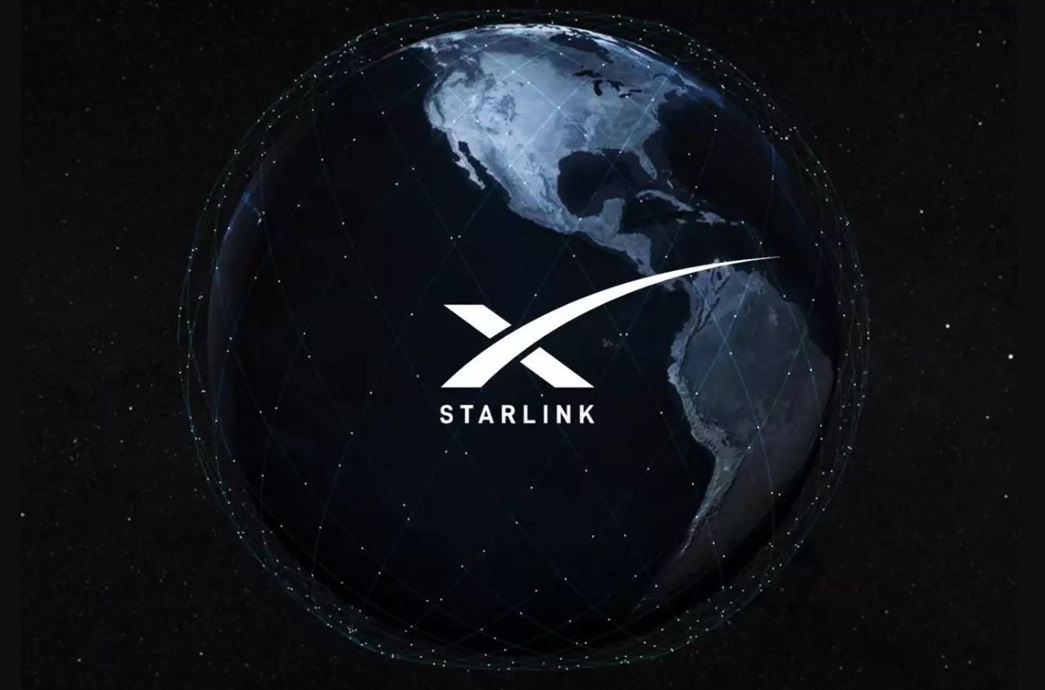
SpaceX has been trying to launch Starlink in India for years — a satellite internet service that already operates in dozens of countries, beaming high-speed internet to remote areas where traditional broadband doesn't reach. Sounds like exactly what India needs, right? Millions in rural India still lack reliable internet.
But India has one of the most complicated telecom regulatory environments in the world. Spectrum allocation, licensing, security clearances... it's a maze. And SpaceX has been stuck in it.
What makes this especially ironic? Last year, SpaceX struck distribution agreements with both Reliance Jio (Ambani's telecom arm) and Bharti Airtel. These deals were supposed to pave the way for Starlink's launch once approvals came through. It looked like everyone was playing nice. But the final go-ahead from New Delhi still hasn't arrived. And Musk has clearly run out of patience.
The Feud: How It Escalated This Month
So what actually happened in October 2026? Let me walk you through the timeline, because it escalated fast.
"Prime Minister Ambani"
It started getting really spicy on October 10, when Musk sarcastically started referring to Mukesh Ambani as "Prime Minister Ambani." The world's richest tech billionaire publicly implying that a businessman — not the elected government — is the real power running India. That's not a subtle jab. That's a sledgehammer.
Musk's argument, essentially, is this: Ambani controls Reliance Jio, which dominates India's telecom market. And according to Musk, Ambani is using that influence to keep Starlink out and protect his monopoly. "Naturally, you would prefer to maintain your monopolistic exploitation of the great people of India," Musk wrote on X, "but would you nonetheless consider allowing Starlink to compete?"
Ouch.
The Political Donations Bombshell
But Musk didn't stop there. On the same day, he shared screenshots of media reports alleging that Reliance-funded firms had boosted BJP (India's ruling party) campaigns on social media, and that a Reliance-linked company had donated a staggering ₹385 crore (roughly $46 million) to the BJP through electoral bonds, plus another ₹25 crore to the Shiv Sena.
The reports he shared included an Al Jazeera investigation from 2022 headlined "How a Reliance-funded firm boosts BJP's campaigns on Facebook" and an archived Indian Express report from 2024 on Qwik Supply's electoral bond donations.
Now, let me be clear — sharing old news reports isn't the same as proving corruption. But Musk's implication was obvious: he's suggesting a cozy relationship between Ambani's empire and the ruling party, and that this is what's keeping Starlink grounded.
Reliance has not publicly responded.
"Absurd Hypocrisy"
Then, on October 11, Musk went after Ambani's supporters. In a post on X, he accused them of "absurd hypocrisy and hyperbole" — and honestly, his argument was pretty sharp.
Here's what he said: Ambani's defenders are simultaneously arguing two contradictory things. On one hand, they claim Starlink "couldn't possibly compete with the amazing low prices offered by Ambani's de facto monopoly in India." On the other hand, they're also claiming Starlink would be "too strong of a competitor" and needs to be kept out.
See the contradiction? If Starlink can't compete, why are you so scared of it? And if it's such a threat, doesn't that prove the market needs competition?
"This is absurd hypocrisy and hyperbole," Musk wrote. And you know what? He's got a point. You can't have it both ways.
Musk's broader argument is that competition would benefit ordinary Indians by expanding consumer choice and potentially lowering prices. "The reality is that competition would greatly benefit the average citizen in India by giving them more choices, as it always does," he argued.
India's Response
The Indian government isn't having any of it. Communications Minister Jyotiraditya Scindia has maintained that India's telecom framework is "fair and non-discriminatory" and that suggestions of selective treatment are "baseless and misconceived." He also noted three players have received satcom licenses — implying Starlink isn't being singled out.
So who's right? India's regulatory processes are notoriously slow — that's well documented. Whether there's deliberate foot-dragging to protect domestic players is the trillion-rupee question. But the optics aren't great when the world's most famous entrepreneur is publicly calling your system rigged.
Meanwhile, Musk Says SpaceX Could Be Worth More Than the Global Economy
As if the Ambani feud wasn't enough, Musk dropped another bombshell on October 9 that's almost too big to wrap your head around.
In a post on X, Musk said he could see a path for SpaceX to eventually be worth "orders of magnitude more" than the current global economy.
Let that sink in. Not more than Apple. Not more than Saudi Aramco. More than the entire global economy. Multiple orders of magnitude more.
This builds on comments he reportedly made to SpaceX investors back in July 2026, when he said the company could be worth "more than the rest of Earth." At the time, people thought that was peak Musk hyperbole. Now he's gone even further.
To his credit, Musk did walk it back slightly the next day. "Seeing a path is not a statement of extreme confidence that we will achieve that outcome," he clarified. "Just means that I believe there is such a path and the probability of achieving it is not zero."
Which, when you think about it, is classic Musk. Say something absolutely outrageous, then add a qualifier that technically makes it reasonable.
But is he actually wrong? Starlink is already generating serious revenue. And if SpaceX ever cracks space-based manufacturing or asteroid mining, the numbers get absurd fast. The global economy is roughly $100 trillion — "orders of magnitude" more means quadrillions. It's a staggering claim, but in a future where SpaceX controls the infrastructure of the space economy, it's not mathematically impossible. Just wildly optimistic.
The Terafab Update: "Let There Be ZERO Doubt"
There's more. On October 7, Musk also shut down speculation about TSMC taking over Tesla's massive Terafab semiconductor project in Texas.
For those who haven't been following: Terafab is a gigantic chip fabrication project in Grimes County, Texas, by Tesla, SpaceX, and xAI. The initial investment is $16.8 billion, with plans to create around 3,000 jobs. If all four planned phases are eventually built, the total could reach $119 billion. Intel joined as a partner back in April 2026.
There had been reports that TSMC was exploring a partnership that might give the Taiwanese chipmaker operational control of the plant. Musk was having none of it.
Replying to an X user who predicted TSMC would end up running the plant, Musk wrote: "No, we will build and run the fab. Let there be ZERO doubt about that. Maybe TSMC subleases part of the Terafab if they want, but nothing more than that."
Why does this matter? In an era where AI chips are the most strategically important commodity on the planet, owning your own fab is an enormous competitive advantage. Musk doesn't just want to design chips or buy them — he wants to manufacture them, controlling the supply chain, timelines, and costs.
Trump Calls Musk the "Modern Day Thomas Edison"
And to round out an absolutely insane week, President Donald Trump awarded Elon Musk the National Medal of Science on October 8, calling him the "modern day Thomas Edison."
The ceremony was part of a summit titled "Science: A New Golden Age." Other recipients included Google co-founder Sergey Brin, NVIDIA CEO Jensen Huang, and AMD CEO Lisa Su.
"First we honor an industrial titan, a brilliant engineer and one of the greatest technology founders to ever live. His name is Elon Musk," Trump said.
Just a week earlier, Trump had gathered tech executives at the White House to sign a "morally binding" accord on safely developing AI. It's worth noting: Musk donated $291 million to support Trump and Republican candidates during the 2024 election cycle, making him the largest individual political donor of that cycle. Make of that what you will.
What Does All of This Actually Mean?
Okay, so let's step back and look at the bigger picture. What is actually going on with Elon Musk in October 2026?
First, the Ambani feud is about much more than Starlink. It's about whether emerging markets will be open to foreign tech competition or whether domestic champions get protected. India is the world's most populous country and one of its fastest-growing digital economies. Musk clearly believes the game is rigged. Whether he's right or just frustrated by bureaucracy, the fact that he's saying it so publicly tells you how high the stakes are.
Second, the SpaceX valuation comments — as absurd as they sound — reflect a genuine belief in the space economy. Ten years ago people laughed at reusable rockets too.
Third, Terafab shows Musk wants to control the entire technology stack — from chip manufacturing to AI models to space infrastructure. That's an unprecedented level of vertical integration. Genius or terrifying, depending on your perspective. Maybe both.
Fourth, the Trump award signals Musk is now firmly embedded in the American political establishment. The outsider who used to troll regulators on Twitter is now receiving medals from the President. That's a remarkable transformation — and enormous influence over US tech policy.
My Take
Here's my honest opinion: Musk is right about competition being good for Indian consumers, and the contradictory arguments from Ambani's defenders really don't hold up to scrutiny. If Starlink can't compete on price, then let the market prove it. Blocking competition "just in case" is the behavior of a monopoly protecting itself, not a confident market leader.
That said — and this is important — Musk's approach of publicly attacking a country's most powerful businessman and implying government corruption is... let's say aggressive. It's not how these things are usually done. Whether it's effective or just burns bridges remains to be seen. Diplomacy and public shaming are very different strategies, and Musk has clearly chosen the latter.
On the SpaceX valuation stuff? I think it's 90% hype and 10% genuine long-term vision. But that 10% matters, because Musk has a track record of turning "impossible" visions into reality. I wouldn't bet against him — but I also wouldn't invest my life savings based on "orders of magnitude more than the global economy" either.
And the Terafab move makes complete strategic sense. In a world where AI chips are gold, owning the mine is the smartest play on the board.
One thing is certain: October 2026 will be remembered as the month Elon Musk went to war on multiple fronts simultaneously — against a telecom empire in India, against the limits of economic imagination, and for control of the chip supply chain. Whether he wins all three battles is another question entirely. But you have to admit: it's never boring with this guy.
What do you think? Is Musk right to call out Ambani publicly, or is he burning bridges he'll need later? Drop your thoughts — I'd genuinely love to hear different perspectives on this one.
This article covers events reported through October 11, 2026. Sources include Reuters, TechCrunch, The Hindu BusinessLine, USA Today, and Livemint. The opinions expressed are the author's own.