I still remember the first time the radio came on
I booted up Vice City expecting a GTA III expansion with a fresh coat of paint. What I got instead was a game that grabbed me by the collar in the first five minutes and never let go. Tommy Vercetti steps off a plane in 1986, fresh out of prison after fifteen years, and within minutes the deal he was sent to close goes sideways in the most spectacular way possible. Money gone, drugs gone, people dead.
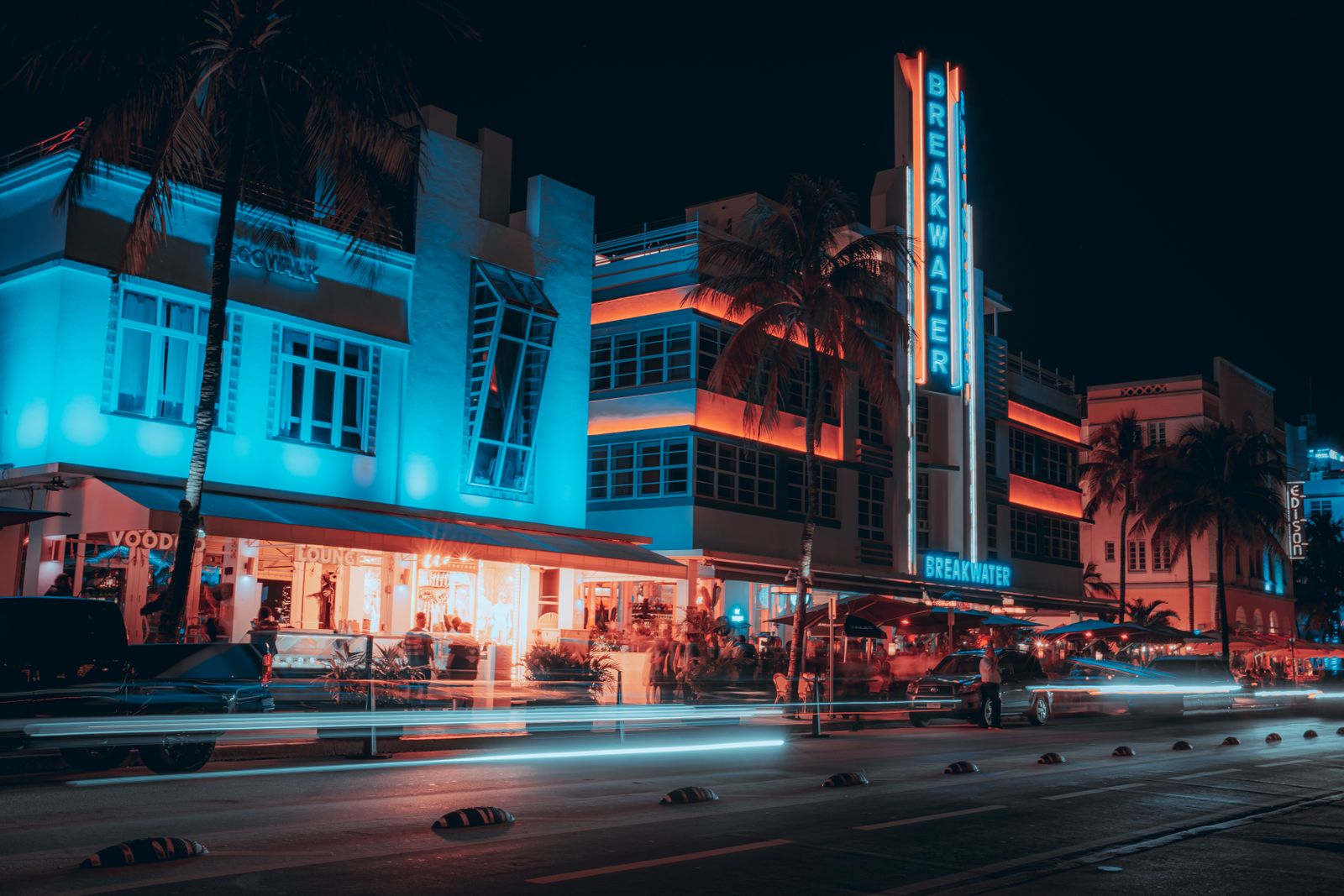
Here is the thing nobody tells you about Vice City until you play it again: it is not really about the missions. It is about the place. The pastel hotels on Ocean Drive, the palm trees, the sun going down over the water while Michael Jackson comes on the radio. Rockstar built a city that felt like a holiday and a crime scene at the same time, and I have never seen another game pull off that trick quite as well.
The year Rockstar became untouchable
GTA III had landed in October 2001 and blown the doors off what a video game could be. Rockstar North had about a year to follow it up, and by all rights Vice City should have been a rushed cash-in. It was not. The team, led by producer Leslie Benzies with Sam and Dan Houser steering the creative side, announced the game at E3 on May 22, 2002, and had it on shelves by October 29, 2002, for the PlayStation 2. The budget was reportedly around five million dollars.
Then the numbers came in, and they were absurd. Vice City sold more than 500,000 copies in its first 24 hours and 1.4 million in two days, making it the fastest-selling game in history at that moment. It finished 2002 as the best-selling video game of the year in the United States. The PlayStation 2 version alone went on to sell around 14.2 million copies, and across all platforms the game passed 17.5 million by March 2008. Critics loved it just as much: Metacritic calculated an average score of 95 out of 100 from 62 reviews, making it the highest-rated PlayStation 2 game of 2002.
Tommy Vercetti is still the best GTA lead, and I will die on this hill
GTA III's Claude was a silent man in a green jacket, and he worked fine for that game. But Tommy Vercetti was something else entirely. Ray Liotta voiced him, and Liotta brought every bit of that Goodfellas menace with him. Tommy is not a nice guy, and the game never pretends otherwise. He is impatient, funny in a mean way, and terrifyingly good at climbing over anyone in his way. But he is also the first GTA protagonist who felt like a real character instead of a pair of hands holding a gun.
What makes Tommy work is that he has a plan. He gets out of prison, gets betrayed, and instead of running he decides to take the whole city for himself. He buys businesses, leans on rivals, makes terrible friends, and by the end he is sitting in a mansion on Starfish Island with a drug empire and a target on his back. It is Scarface with the volume turned up and the self-awareness turned up even higher, and I bought every second of it.
The supporting cast was ridiculous too. Philip Michael Thomas, who played Tubbs in Miami Vice, voiced Lance Vance, Tommy's partner who slowly turns into his biggest problem. Burt Reynolds played property developer Avery Carrington. Dennis Hopper, Tom Sizemore and William Fichtner filled out the rest of the cast.
A city that understood the assignment
Vice City is a fictional version of Miami, set in 1986, and Rockstar understood something a lot of developers still get wrong: a game world does not need to be big, it needs to be specific. Vice City is two islands connected by bridges, and I can still picture the whole map in my head. Ocean Beach with its hotels and neon. Downtown with its towers. Little Havana and Little Haiti. The docks. The airport. Starfish Island with the mansions.
Every part of the city has a personality. Drive east at sunset and the whole screen turns pink and orange. Head into Little Haiti at night and the mood shifts completely. The pastel colours, the palm trees, the beach, the boats bobbing in the marina, it all added up to a place I actually wanted to spend time in, not just drive through on the way to the next mission marker. The Scarface and Miami Vice influence is everywhere, from the mansion to the pastel suits, but Rockstar built a world where those movies felt true.
The soundtrack that changed how games use music
I am going to say this plainly: Vice City has the best licensed soundtrack in gaming history, and it is not close. Before this game, most game soundtracks were original music written to fit the game. Rockstar flipped that idea on its head and licensed more than 100 real songs, mostly from the 1980s, and spread them across nine radio stations you could flip through in any car.
Let me walk you through the dial, because I still know these stations by heart. V-Rock, hosted by Lazlow, was the metal station: Iron Maiden's "2 Minutes to Midnight". Wave 103 was new wave heaven: Blondie "Atomic", Tears for Fears "Pale Shelter". Flash FM was pure pop, including Michael Jackson's "Billie Jean". Emotion 98.3 was the soft rock station for slow drives at night, with Toto's "Africa". Fever 105 brought the soul and funk. Wildstyle brought the early hip-hop, including Grandmaster Flash and the Furious Five's "The Message". Radio Espantoso covered Latin hits, and talk stations VCPR and K-Chat were just as funny.
Rockstar even released the whole thing as a seven-CD box set, one disc per music station. This was not background music. The soundtrack was the game's identity. Every open-world game with a great radio, from Saints Row to GTA V itself, is standing on ground Vice City cleared. One sad footnote: music licenses expire. Some songs, including Michael Jackson's tracks, were removed from later re-releases and the Definitive Edition because Rockstar could not renew the rights.
What Vice City added that GTA III never had
It is easy to remember Vice City as GTA III in a prettier city, but that sells it short. Rockstar added a pile of stuff that became standard for the whole genre.
- Buyable property. Tommy could buy safehouses and businesses that generated income and unlocked missions.
- An empire to build. Taking over the drug trade was a system, not just a story beat.
- Motorbikes, helicopters and planes. Bikes changed how the city felt to move through, and helicopters gave you the whole skyline.
- A voiced protagonist with a real arc. Tommy talks, argues, jokes and threatens his way through the story.
- Interiors and style. You could walk into the Malibu Club, the print works, the film studio.
What modern open-world games stole from Vice City
Here is where I put my developer hat on. Vice City taught the industry three lessons, and the games that learned them are the ones still standing.
First, vibe is a feature. Vice City did not win on map size or mission count. It won because it had a feeling, and every system served that feeling. The music, the colours, the cars, the clothes, the dialogue, all of it pointed the same way.
Second, licensed music is world-building. Before Vice City, music in games was mostly wallpaper. After it, a radio station became a design tool. The right song at the right moment does more storytelling than a cutscene.
Third, let the player own things. The property system was simple, but it changed the relationship between player and world. You were not a tourist anymore. You had addresses, businesses, income.
Okay, it was not perfect
I love this game, but I am not going to pretend it was flawless. The shooting controls were clumsy even by 2002 standards, and the auto-aim was a coin toss on a bad day. And then there is the mission everyone brings up the second Vice City is mentioned: Demolition Man. Flying a remote-control helicopter through a construction site, dropping bombs with a timer ticking down, on a PS2 controller with no checkpoints. I failed that mission so many times I genuinely considered quitting the game.
The game also drew real criticism at the time for its depiction of violence and racial groups, and some of its jokes and stereotypes have aged badly. I still play it, and I still think it is a masterpiece, but I do not pretend those parts do not exist.
The legacy, and why GTA VI is going home
Vice City's real legacy is simple: it proved an open-world game could be a cultural event, not just a product. It sold like a blockbuster movie, it had a soundtrack people bought on CD, and it made its setting a star. San Andreas went bigger, GTA IV went darker, GTA V went wider, but none of them ever felt as cool as Vice City.
That is why the next chapter matters so much. GTA VI is heading back to Vice City, to the state of Leonida, with a release date of November 19, 2026. Millions of players, myself included, will load it up and immediately compare every street, every sunset and every radio station to the 2002 original. A game built in about a year, on a five-million-dollar budget, by a team coming off their first 3D hit, managed to define what an open-world game could feel like. That does not happen by accident.
Final word: go back, it holds up
I replayed Vice City recently, and I was braced for disappointment. The driving still feels loose in the best way, the missions still make me laugh, and the moment "Billie Jean" comes on Flash FM while I am cruising down Ocean Drive at sunset, I am twenty years younger and completely sold all over again.
If you have never played it, fix that. Play the original version if you can, turn the radio up, and ignore the mission markers for a while. Just drive. That is the game. The missions are the excuse. Vice City is the reason.
Frequently asked questions
When was GTA Vice City released? Grand Theft Auto: Vice City launched on October 29, 2002, for the PlayStation 2 in North America, with Europe following on November 8, 2002.
Who voiced Tommy Vercetti? Ray Liotta, best known for Goodfellas, voiced Tommy Vercetti. The supporting cast included Philip Michael Thomas as Lance Vance, Burt Reynolds as Avery Carrington, Dennis Hopper as Steve Scott, Tom Sizemore as Sonny Forelli and William Fichtner as Ken Rosenberg.
What year is GTA Vice City set in? The game is set in 1986, in the fictional Vice City, which is based on Miami, Florida. Tommy Vercetti is released from prison after serving fifteen years and is sent to Vice City to oversee a drug deal that goes wrong.
How many copies did GTA Vice City sell? Vice City sold more than 500,000 copies in its first 24 hours and 1.4 million in two days, making it the fastest-selling game in history at the time. It was the best-selling game of 2002 in the US, passing 17.5 million copies across all platforms by March 2008.
Is GTA VI set in Vice City? Yes. GTA VI returns to Vice City and the state of Leonida, with a release date of November 19, 2026. It is the first mainline GTA game set in Vice City since the 2002 original.