I have watched a lot of tech selloffs, but rarely one where the companies getting punished were reporting growth. That is what made Friday, October 30, 2026, so strange — and so worth paying attention to. Intel grew revenue 21% and still suffered its worst day since 1974. Amazon's cloud business grew 39% and its stock still fell. Reddit posted a strong quarter and cratered 29%. The market was not reacting to failure. It was reacting to a bill.
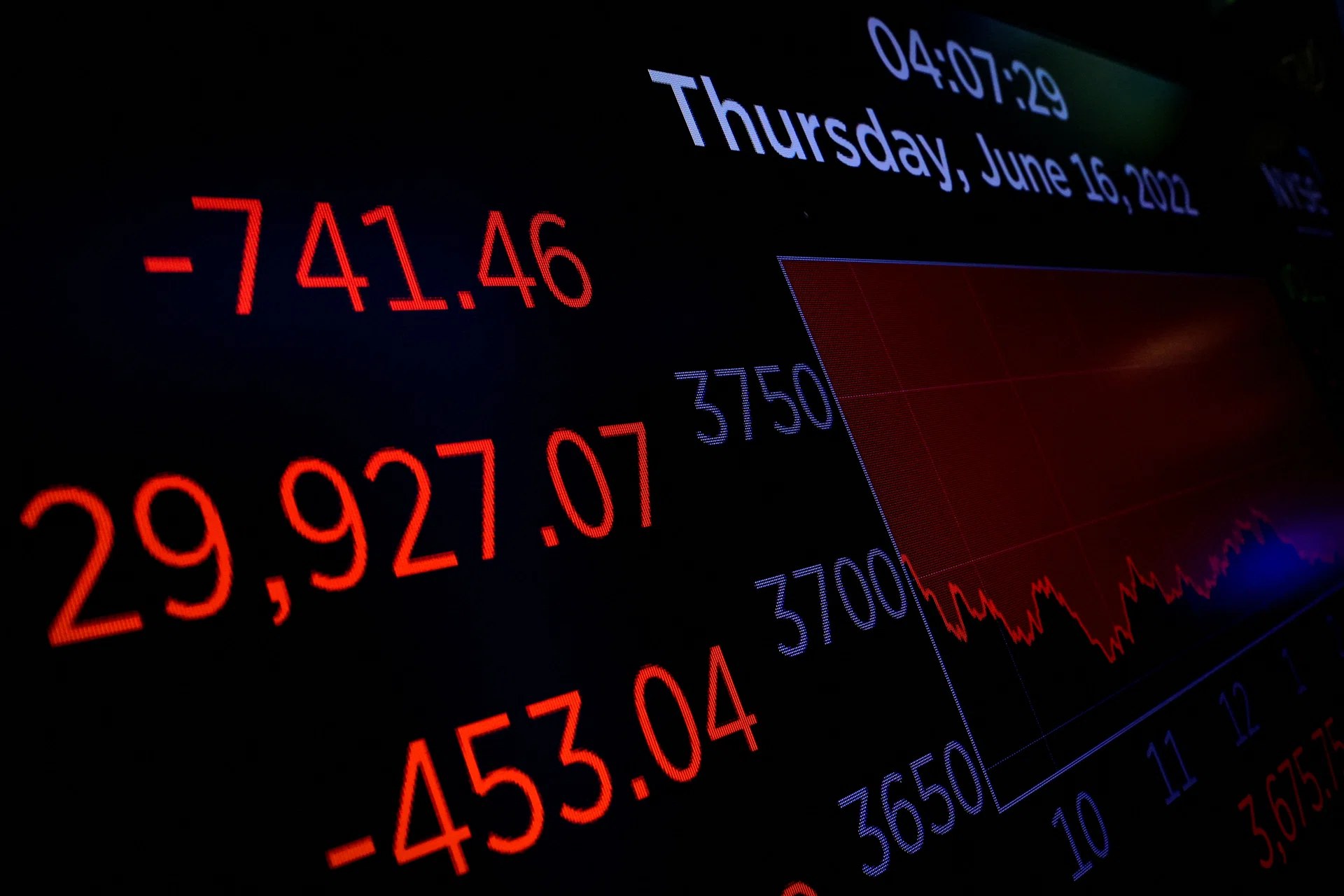
October is the month the AI trade finally got asked to show its receipts. More than $2 trillion in market value is set to be wiped from the tech-heavy Nasdaq 100 this month alone, according to Reuters — an amount slightly larger than the entire market value of SpaceX. The index has fallen more than 5.8% so far in October, and Friday capped it off in brutal fashion: the Nasdaq Composite dropped 2.86%, the S&P 500 fell 1.82%, and the Dow lost 572 points, each suffering its worst day since June. The Nasdaq is now down 7.8% from its record high earlier this month, its worst monthly decline since March 2025.
Friday's Carnage, Company by Company
Let me start with the numbers, because they are genuinely startling.
Intel was the worst of the bunch. The chipmaker plummeted roughly 29% on Friday — CNN put the exact figure at 28.58%, its worst day since 1974 and its second-worst day on record — despite reporting a 21% rise in revenue to $13.7 billion. Data center and AI revenue jumped 78% to $7.3 billion. So why the crash? Because the rest of the business is struggling: revenue in Intel's client computing and physical AI group fell 5% to $8.1 billion, global PC shipments dropped 4% from a year earlier, and the company guided to adjusted earnings of just 25 cents per share in the current quarter on revenue of $15 to $16 billion, well below analysts' expectations of $17.1 billion. Chief Financial Officer David Zinsner said the PC slowdown will continue at least through the first half of next year, as soaring prices and shortages of parts — themselves partly caused by the AI build-out — squeeze consumer demand.
Amazon fell a more modest 1.4% on Friday, but the context stung. The e-commerce giant reported revenue of $201.9 billion and net income of $20.7 billion — both of which missed Wall Street estimates — and negative free cash flow of $42.4 billion. The bright spot, as ever, was Amazon Web Services, which posted its highest revenue growth in years at 39%, reaching $46 billion. But Amazon also reaffirmed its 2026 capital expenditure forecast of $220 billion, mostly aimed at AI infrastructure.
Reddit's 29% plunge might be the most important story of the day for website owners, and I will come back to it in detail below. The company reported a strong quarter, but CEO Steve Huffman warned that Google's AI summaries are hammering its web traffic. In October, search traffic dropped by an average of more than 1 million referrals per week. The company expects fourth-quarter revenue of $1 billion to $1.03 billion, missing Wall Street's $1.05 billion estimate. A good business, punished for a traffic trend it does not control.
And then there was Alphabet, which had already done its damage the day before. On Thursday, Google's parent suffered its biggest one-day percentage drop on record, shedding more than $500 billion in market value — its worst single-day decline ever — after disappointing results in its core search advertising business and a massive acceleration in cash burn. It fell another 1.4% on Friday, capping off its worst month on record.
The damage spread well beyond those four names. Nvidia dropped 4.2%, AMD fell 11%, Broadcom lost 5.5%, and SanDisk sank 13%. A closely watched index of chipmakers sank 7.2%.
Why Now? The Market Finally Asked "When Does This Pay Off?"
Here is the thing I keep coming back to: none of this happened because AI stopped working. Revenue across the so-called Magnificent Seven has remained strong since ChatGPT launched in November 2022, and demand for data and compute is, in the words of one strategist quoted by Reuters, "insatiable and growing." Microsoft actually broke from the gloom this week, with results that showed AI spending starting to pay off, and forecast strong cloud growth.
What changed is the financing. The AI boom is no longer being paid for out of spare cash. It is being paid for with debt, at a scale that is starting to frighten even seasoned investors.
Meta's plans for a record $97.5 billion fundraise heightened concerns about shareholder dilution and whether mounting AI spending could force other Big Tech companies to increasingly tap capital markets. Microsoft is reportedly planning to raise about $25 billion through its first US investment-grade bond sale in more than nine years. Meta, Amazon, and Alphabet have issued hundreds of billions of dollars in bond sales over the past four years, and credit markets are starting to price in the risk that rising financing costs could squeeze even these giants.
Then there are the sheer totals. Morgan Stanley forecasts that capital spending on AI infrastructure overall will surpass a trillion dollars next year. J.P. Morgan expects global AI capex to reach $5.5 trillion by 2030, with $900 billion being spent in 2026 alone — and this year's AI capex by Amazon, Alphabet, Meta, Oracle, and Microsoft would likely equal their cumulative spend since the November 2022 launch of ChatGPT. In a single year, five companies are spending roughly what they spent in the previous four years combined.
That is the question the market asked in October: if you are spending at that pace, funded with debt while borrowing costs rise, when exactly does the money come back? "It may be that we've overestimated how strong the growth might be," John Bilton of Multi-Asset Solutions told Reuters. The trade is not dead — but the assumption of immediate, endless growth has cracked.
The Reddit Warning Is the One Developers Should Not Miss
I covered Reddit's complaint about Google's AI Mode earlier this month, and now its CEO has put numbers on it: search traffic down by more than 1 million referrals per week in October.
This matters for three reasons. First, Reddit is huge, with a brand Google has historically loved — if it cannot hold search traffic against AI summaries, smaller sites have even less protection. Second, the traffic loss is showing up in revenue guidance: no longer a theoretical SEO debate, but a line item in a public forecast. Third, it connects to Alphabet's own pain: Google's AI answers squeeze both sides at once, publishers who lose clicks and Google itself, whose search ad growth is slowing as chatbot searches eat into its most profitable business.
What This Means for Developers and Agencies
AI tool pricing will get squeezed from both sides. When the companies funding AI infrastructure face investor pressure over spending, they tend to raise prices where they can and cut costs where they must. If your product's margins depend on cheap AI inference, now is the time to measure your actual per-user cost and to have a fallback model or provider in mind. I would not build a business that only works if today's AI prices last forever.
Cloud and hosting costs deserve a fresh look. AWS grew 39% this quarter, which is great for Amazon and a reminder for the rest of us that cloud spend is compounding. If you run client sites, audit the ones with idle resources, oversized instances, or forgotten staging environments. The AI boom is driving up demand — and prices — for memory and compute, and Intel's warning about component shortages and soaring prices is a reminder that hardware costs flow downstream to everyone.
Client budgets may tighten, but real work survives. When Big Tech stocks fall, startup funding and corporate budgets usually feel it a few months later. Agencies should expect longer sales cycles and harder questions about return on investment. The work that survives a downturn is the work with a measurable payoff: sites that load fast, convert visitors, rank, and bring in enquiries. "We added AI" is not a deliverable. "Your site now brings in X qualified leads a month" is.
Do not panic about the AI trade itself. A 5.8% monthly fall in the Nasdaq 100 is a correction, not a collapse of the technology. "The AI trade is down, but not out," Paul Stanley, managing director at Arca, said in a note on Friday morning. "This is not the first tech and AI correction, and it won't be the last. We are still in the very early stages of AI development, and pullbacks are par for the course." The infrastructure being built — data centers, chips, models — does not disappear because a stock fell. What changes is who pays for it, how fast it gets built, and which companies survive to profit from it.
What I Am Watching Next
Two earnings reports will set the tone for the rest of the year. Apple is set to report next week, and Nvidia — the bellwether of the entire AI hardware trade — reports in mid-November. If either disappoints, expect another rough week. If both show AI spending converting into real revenue, the October panic may look like a buying opportunity in hindsight.
I am also watching traffic data — Reddit's weekly referral numbers, and whether other publishers report the same pattern. That story affects our industry more directly than any stock chart.
Conclusion
October 2026 will be remembered as the month the AI boom met its first serious bill. More than $2 trillion wiped from the Nasdaq 100, Intel's worst day in half a century, Alphabet's record one-day loss, and Reddit's warning that AI answers are draining its traffic — together they tell a single story: investors are no longer willing to fund AI growth on faith alone.
For developers and website owners, the lesson is not to abandon AI. It is to build like someone who has to pay for it: measure your AI costs, diversify your traffic beyond search, sell work with a measurable payoff, and keep your infrastructure lean.
The AI trade is down, not out. But from here on, it has to prove itself — quarter by quarter, dollar by dollar.
Frequently Asked Questions
How much value did the Nasdaq lose in October 2026?
More than $2 trillion is set to be wiped from the Nasdaq 100 in October 2026, per Reuters — slightly more than SpaceX's entire market value. The index fell over 5.8% in the month, and the Nasdaq Composite ended October 7.8% below its earlier record high.
Why did Intel stock crash nearly 29% on October 30, 2026?
Intel fell about 29% — its worst day since 1974 — despite revenue rising 21% to $13.7 billion. Investors focused on PC weakness: client computing revenue down 5%, PC shipments down 4%, and fourth-quarter guidance well below expectations.
Why did Amazon fall if AWS grew 39%?
Amazon dropped 1.4% after revenue and net income both missed estimates, with negative free cash flow of $42.4 billion — while reaffirming a $220 billion 2026 spending plan, mostly for AI infrastructure.
Why did Reddit stock fall 29% despite a strong quarter?
CEO Steve Huffman warned that Google's AI summaries are hammering Reddit's traffic, with search referrals down over 1 million per week in October. Fourth-quarter revenue guidance also missed estimates.
Is the AI bubble bursting?
October was a sharp correction driven by doubts about how quickly massive AI spending will generate returns, not by evidence that AI demand has collapsed. Revenues across the biggest tech companies remain strong — the trade is "down, but not out."
What should website owners do about falling search traffic from AI answers?
Diversify now: build email lists, communities, and direct traffic, and offer content people visit on purpose rather than relying solely on Google search referrals.