
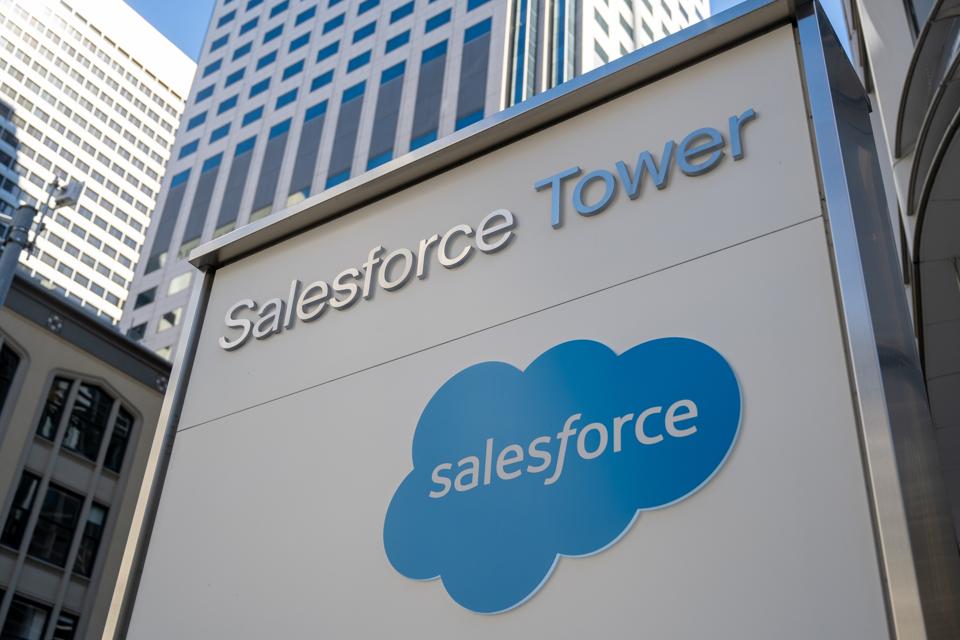
I opened my news feed this morning and had to do a double take: Salesforce agreed to acquire Braze for about $5.66 billion in cash, announced October 20, 2026. That's the biggest enterprise software deal in months, and if you run websites, apps, or marketing campaigns — which, if you're reading this site, you probably do — it affects the tools you build on more than you'd think.
I've spent years integrating marketing stacks into websites, so let me break this down the way I'd explain it to a developer friend: what the deal actually is, why Salesforce is paying a 58% premium, what it means for Braze's 2,770 customers, and the questions I'd be asking if any of my stack touches Marketing Cloud.
The deal in plain numbers
Here's what the announcement says, stripped of press-release polish:
- Price: $47.50 in cash per Braze Class A share, an enterprise value of about $5.66 billion including debt. - Premium: roughly 58% over Braze's Monday closing price of $30.04. - Market reaction: Braze shares jumped 51.7% to close at $45.57 on Tuesday, on trading volume roughly 18 times the normal average. Salesforce's own stock barely moved. - Timeline: the merger agreement was filed with the SEC dated October 19, and the deal isn't expected to close until Salesforce's fiscal 2028 — subject to shareholder and regulatory approvals. - Guidance: Salesforce says it doesn't expect the deal to change its fiscal 2027 outlook.
The part that tells the real story: even at a 58% premium, $47.50 is still well below the $65 a share Braze priced at when it went public in 2021. Axios noted the price sits at roughly 7 times Braze's trailing sales — and the company hasn't reached profitability yet. That's the hangover of the 2021 software-IPO era in one number: a good company, bought for a price its own IPO investors can only dream of.
Who Braze actually is (for developers who've never touched it)
If you work mostly on the website side, Braze may not be a name in your daily vocabulary. Here's the developer-friendly version: Braze runs a cloud-native, event-streaming platform that turns live customer behavior into personalized messages across mobile apps, websites, email, SMS, and WhatsApp. Think of it as the engine behind those eerily well-timed push notifications — "you left something in your cart" sent thirty seconds after you actually did it, with an offer calibrated to your browsing history.
Its customers include Canva, Instacart, Dairy Queen, Venmo, Equinox, and Urban Outfitters — about 2,770 of them. And recently it layered AI on top to help marketers optimize content, offers, channels, and timing, rather than hand-building every campaign flow.
Why does that matter technically? Because Braze's architecture is the thing Salesforce is actually buying. Most legacy marketing clouds are batch systems: they segment users overnight and send campaigns on a schedule. Braze is built around real-time event streams — a customer does something, the platform reacts in the moment. Salesforce's own president of applications and marketing, Patrick Stokes, put it this way: "Every interaction is an opportunity to wow your customers. Most of that wow comes from knowing your customer, and responding at just the right moment." Translation from executive-speak: our marketing cloud reacts too slowly, and Braze doesn't.
Why Salesforce is paying up: the three-layer play
Salesforce's announcement is explicit about where Braze slots in, and it's a three-part story:
1. The real-time engagement layer. Salesforce plans to plug Braze's engine into Marketing Cloud. The pitch is a single system that reads live customer intent, decides what to do next, and sends a tailored message on any channel. If you've ever built an abandoned-cart flow in WordPress or Shopify and wished it were smarter and faster, this is the enterprise-grade version of that wish.
2. The data layer: Customer 360 and Data 360. Braze's real-time signals are only valuable if they connect to everything Salesforce already knows about a customer. Salesforce says the combination will tie Braze's live behavior stream to its customer data platform. For developers, this is where the interesting (and painful) integration work lives — identity resolution, event schemas, consent management.
3. The agentic AI layer: Agentforce. This is the part I'm watching most closely. Salesforce has been going all-in on agentic AI — it bought AI customer-service platform Fin for roughly $3.6 billion in June 2026, and expanded its Anthropic partnership in August with a "Claudeforce" plugin featuring pre-built sales skills. Braze becomes the engagement arm of that strategy: agents that don't just answer questions but proactively reach out to customers at the right moment, on the right channel, with the right offer.
Braze CEO and co-founder Bill Magnuson said the company would "continue building as Braze" and that Salesforce's platform will help it innovate faster — because access to Salesforce's enterprise distribution is the thing a 2,770-customer company can never buy on its own.
What the market is really telling us
The stock moves tell their own story. Braze's 51.7% single-day jump means shareholders who watched the stock fall 51% since the 2021 IPO finally get a dignified exit. The share price now sits within about 4% of the offer price, which tells you traders think the deal gets done — the discount is just the time value of money until a fiscal-2028 close.
But here's the signal that matters more to the industry: Klaviyo, Braze's closest peer, jumped about 11.9% the same day. When an acquisition reprices a whole category upward, it means every boardroom in the space is recalculating what their customer-engagement vendor is worth — and who might be next. If you're a marketer choosing between platforms right now, expect your vendor's sales team to mention this deal on your next call. They will.
Context: Salesforce's acquisition shopping spree
This deal doesn't come from nowhere. Salesforce has been assembling its AI-era stack piece by piece:
- June 2026: roughly $3.6 billion for Fin, the AI customer-service platform — the service side of the agent story. - August 2026: expanded Anthropic partnership with "Claudeforce" pre-built sales skills — the model side. - October 2026: $5.66 billion for Braze — the engagement and marketing side.
That's the full customer lifecycle under construction: acquire (marketing), convert (sales), support (service) — all increasingly run by agents instead of humans clicking through dashboards. Axios called this deal an admission that Salesforce's marketing cloud "could use some seeding," and I think that's exactly right. Salesforce's marketing products have always lagged the pace of its sales and service businesses. This is the fix, bought at full price.
What this means if you're a developer or marketer
Let me get practical, because that's what this site is for:
If you build on Marketing Cloud, start learning Braze's event and messaging model now. Integration roadmaps move slowly — the deal doesn't close until fiscal 2028 — but the direction is set. The developers who understand both Marketing Cloud's data model and Braze's real-time canvas will be the ones clients pay a premium for during the integration years.
If you're a Braze customer (or evaluating it), nothing changes tomorrow. Magnuson's "continue building as Braze" line plus a closing date more than a year out means your contracts, APIs, and integrations keep working. The real question — how tightly Braze gets absorbed into Salesforce's pricing and platform over time — won't be answerable until the integration plan lands after close.
If you run your own stack on WordPress or a headless setup, the strategic takeaway is bigger than this one deal: the industry is consolidating around real-time, AI-driven engagement. The era of the overnight batch newsletter is ending. Whatever tools you use — and there are excellent ones outside the Salesforce universe — make sure they can react to live user behavior, because that's now the baseline your competitors will assume.
On pricing and lock-in: enterprise software history says acquisitions this size eventually mean bundled pricing and tighter ecosystem coupling. Independent vendors like Klaviyo just got more valuable as the "not-Salesforce" option, which is probably why its stock jumped. If vendor independence matters to you, now is a good time to keep your options open.
The honest risks
Three things could still go sideways. Regulatory review: any $5.66 billion deal in 2026 gets a hard look, and the fiscal-2028 timeline already bakes in a long review. Integration: Salesforce has a mixed record — some acquisitions (Tableau) thrived; others took years to settle (Slack is still settling in). Braze's edge is its real-time architecture, and the classic risk is that it gets absorbed into Salesforce's release cadence and loses the speed that justified the premium. Talent: watch whether Braze's technical leadership stays past the close — that's the earliest honest signal about whether "continue building as Braze" is real.
What I'd watch next
If I were tracking this story for my own stack decisions, here's my watch list:
1. The integration roadmap after the fiscal-2028 close — specifically, whether Braze keeps its own API surface and release cadence. 2. Agentforce + Braze convergence — the first demo of an AI agent triggering a Braze journey from a Salesforce data signal will tell you everything about the actual product strategy. 3. Competitor responses — Klaviyo, Adobe, and the independent engagement platforms now have a clear target to position against. Expect a wave of "independent and not acquired" marketing. 4. Regulatory milestones — any extended review could push that fiscal-2028 date and give competitors a long runway.
Conclusion: the engagement layer just got enterprise-sized
I've watched marketing technology consolidate for over a decade, and this deal fits the pattern: the acquirer buys the capability it couldn't build fast enough, at a price that looks steep until you see the strategy behind it. $5.66 billion is a lot of money for a company that isn't profitable — until you realize Salesforce is buying the real-time engagement layer of its entire AI-agent future.
For developers and marketers, the lesson is the same one this year keeps teaching: real-time, AI-driven, behavior-based engagement is no longer the fancy tier of the stack. It's the stack. Whether you run on Salesforce, WordPress, or something you built yourself, the bar just moved.
I'll be watching the integration story unfold.
What exactly did Salesforce agree to buy?
Salesforce signed a definitive agreement on October 19, announced October 20, 2026, to acquire customer-engagement platform Braze for $47.50 per share in cash — about $5.66 billion in enterprise value. Braze shareholders get paid in cash; the deal is expected to close in Salesforce's fiscal 2028.
How big is the premium Salesforce is paying?
About 58% over Braze's October 19 closing price of $30.04. Braze stock jumped 51.7% to $45.57 on the announcement day, now trading within roughly 4% of the offer price. The price is still below Braze's $65 IPO price from 2021.
What does Braze do?
Braze runs a cloud-native, event-streaming customer-engagement platform that turns live customer behavior into personalized messages across mobile apps, websites, email, SMS, and WhatsApp. It serves about 2,770 customers including Canva, Instacart, Dairy Queen, and Venmo, and recently added AI tools to optimize content, offers, channels, and timing.
When will the deal close, and what changes for Braze customers?
Closing is expected in fiscal 2028, subject to shareholder and regulatory approval. In the short term, nothing changes — CEO Bill Magnuson said Braze will "continue building as Braze." Pricing and integration details will only emerge after the close.
Why does Salesforce want Braze?
Salesforce plans to combine Braze's real-time engagement engine with Marketing Cloud, Customer 360, Data 360, and its Agentforce AI-agent platform — creating a single system that reads live customer intent and acts on it. It follows Salesforce's roughly $3.6 billion June 2026 purchase of AI customer-service platform Fin and its expanded Anthropic partnership.
Does this affect non-Salesforce marketers and developers?
Indirectly but meaningfully. The deal confirms real-time, AI-driven engagement as the industry baseline, and it repriced the whole category — Klaviyo jumped about 11.9% on the news. If vendor independence matters to you, the "not-Salesforce" options just became more strategically valuable.