Introduction: the rocket company stopped being a rocket company
I build WordPress and Elementor sites for a living, and almost every tool in my workflow now runs on somebody else's computer. The code assistant that finishes my PHP, the image model that makes my hero graphics, the hosted AI that drafts my copy — all of them live in a data center I will never see. So when the company that launches rockets announces it is spending more than $74 billion to build computers, I pay attention — because it tells me where the AI tools I depend on are heading.
On Thursday, November 12, 2026, SpaceX said in a company statement that it plans to invest more than $74 billion in two supercomputing campuses: one at its Starbase site in Texas, and another in Cochise County, Arizona. Reuters reported the announcement the same day. The split is roughly $24 billion for Texas and about $50 billion for Arizona. Here is what was announced, what is still only a plan, and what it means for those of us who rent AI compute by the hour.
What SpaceX actually announced
Let me start with what is solid, because a $74 billion headline invites exaggeration. SpaceX announced plans, not finished buildings. The company said it expects to spend $24 billion on the Starbase site and roughly $50 billion on the Arizona campus. The Arizona site still needs approval from Cochise County, and the Texas project faces its own local votes. Neither campus is built, and neither is approved yet.
That distinction matters. An announcement is a statement of intent, not a data center — and 2026 is full of AI infrastructure announcements that shrank or slipped. What makes this one different is the company making it: SpaceX is public now, profitable in connectivity, and its AI division already brings in more revenue than Starlink. This is a $1.9 trillion public company redirecting its balance sheet.
The Texas campus: power first, computers second
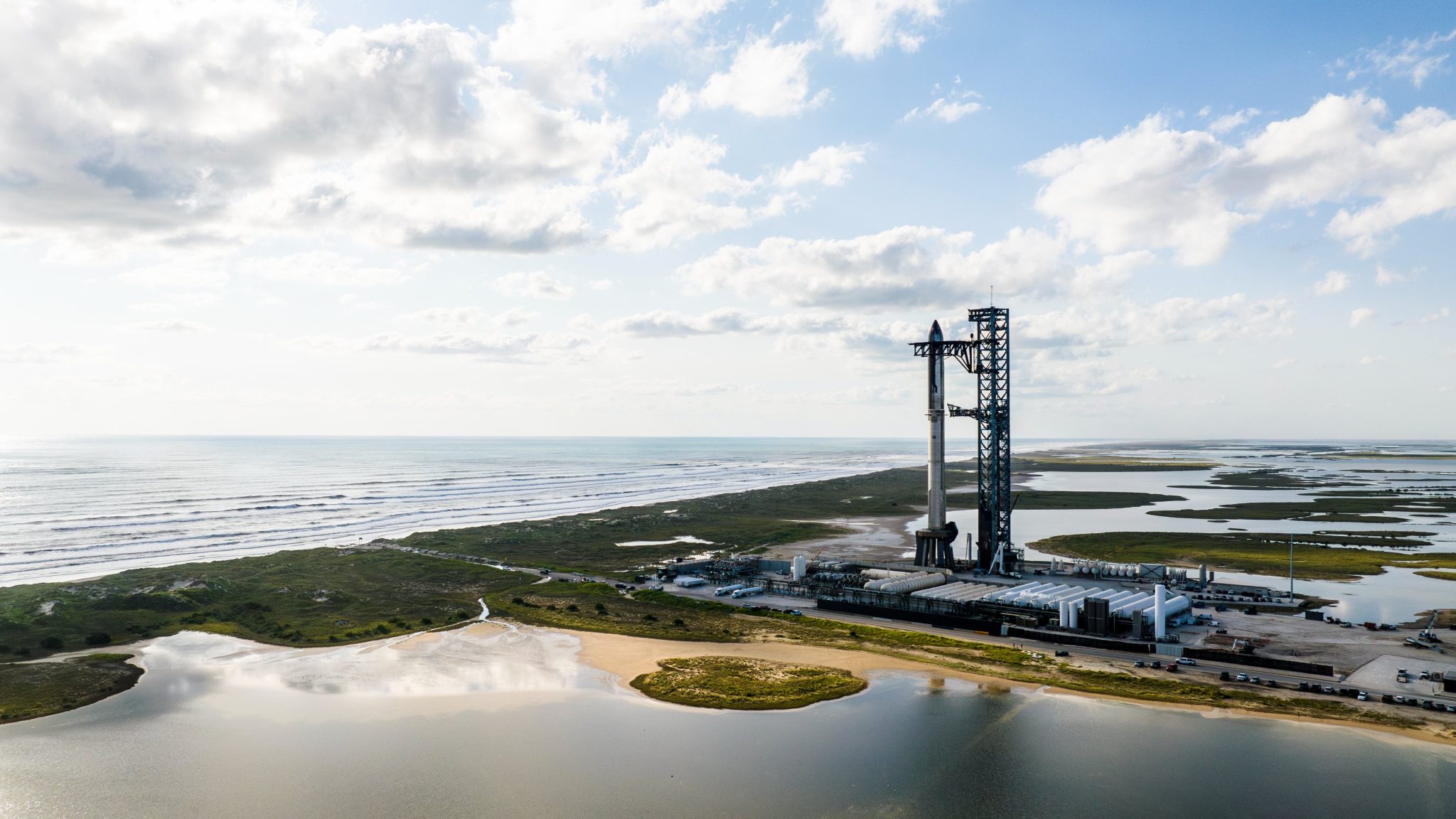
The Starbase facility is the smaller of the two at $24 billion, and it is the one that tells you the most about how SpaceX thinks. According to Reuters, the Starbase facility would generate its own electricity rather than draw from the public grid. Earlier in the same week, the company said it was planning a gas-fired power plant alongside the super-compute facility at Starbase.
That inverts how most of us think about data centers. The usual story is: find a site, buy the chips, then argue with the local utility about power. SpaceX is building the power plant at the same time, so it never has to wait in a connection queue or compete with its neighbours for capacity.
For a developer, this is the detail that should stick: the constraint on AI compute in 2026 is no longer just chips, it is power. I wrote last week about Anthropic buying $3.4 billion worth of gas generators for the same reason. Every serious AI builder is becoming, in part, a power company. The Starbase project also faces a local decision: the city is scheduled to vote on a tax break for it on December 9.
The Arizona campus: the bigger bet, and the bigger fight
The Cochise County campus is the larger half of the announcement, at roughly $50 billion, and the more complicated one. SpaceX said it would create about 5,500 construction jobs and 1,000 permanent jobs. Reports put the full build-out at up to 6 gigawatts of power demand — about 24 times the summer peak of the local electric cooperative.
That is why this campus needs approval from Cochise County, and why approval is not guaranteed. A petition against the Arizona permit has gathered around 2,400 signatures, and a county hearing is scheduled for December. The objections are the ones you would expect: water, power, traffic, and whether a small desert county wants to host one of the largest computing facilities on earth. The jobs argument is real — 1,000 permanent jobs is transformative for a rural county — but so is the disruption.
The Arizona campus is where the abstract debate about AI infrastructure becomes concrete: a real place, real neighbours, real water and power, and a real vote. If you want to understand why AI infrastructure is slowing down in some places and speeding up in others, do not watch the chip announcements. Watch the county hearings.
Why a rocket company is doing this at all
If you only knew SpaceX as a rocket company, this announcement looks bizarre. It stops looking bizarre once you look at the company's numbers, because SpaceX has quietly become an AI company that also launches rockets.
In February 2026, SpaceX acquired xAI — the maker of the Grok AI model — in an all-stock deal Reuters valued at about $250 billion. Four months later it went public on the Nasdaq (ticker SPCX) at $135 a share, raising about $75 billion at a roughly $1.77 trillion valuation, the largest IPO on record.
Then came the third-quarter results, reported on October 20. SpaceX took in $14.6 billion of revenue in the quarter, and its AI segment — now reported as "Super Intelligence" — brought in $7.6 billion of that, more than half the company's revenue and up 830 percent from a year earlier. Starlink's connectivity business brought in $5.2 billion.
That is the context for the $74 billion. SpaceX is not diversifying into AI — AI is now its biggest business, and the campuses are the factories that business needs. The company also closed $40 billion of debt financing in October to buy GPUs, a deal I covered here at the time, with deliveries expected in the first half of 2027. The campuses are where those GPUs will live.
The bottleneck moved: power, permits, and money
Two years ago, the constraint on AI was chips. Then it was capital. Now it is power, permits, and time. Anthropic bought gas generators, the big clouds have all signed power deals that would have looked absurd three years ago, and SpaceX is building its own gas-fired plant in Texas. When every lab wants the same thing — enormous amounts of reliable electricity, delivered quickly — the companies that solve power first are the ones that keep scaling.
There is a second bottleneck behind the first: money. SpaceX can borrow because it has Starlink revenue and an investment-grade rating. In October, Elon Musk warned that debt markets had "almost entirely shut off" for companies without revenue outside AI data centers, and that the 200-plus smaller GPU-rental companies — the neoclouds — faced consolidation. SpaceX is on the right side of that divide.
What this means for developers and the tools we rent
First, more compute is good news for the price and availability of AI tools. Every AI feature in the WordPress and Elementor ecosystem — Elementor's AI features, the AI plugins, the hosted services that generate layouts and copy — sits on top of cloud AI infrastructure. When a company the size of SpaceX adds tens of billions of dollars of compute capacity, the supply of that infrastructure grows, and over time that puts downward pressure on the cost of running the models.
Second, Grok gets a bigger home. xAI's models run on SpaceX's infrastructure, and these campuses are, in practice, Grok's factories. A $74 billion investment in compute is also a $74 billion investment in keeping Grok competitive with Claude, Gemini, and ChatGPT — and competition between the labs is the single best thing that has happened to developer pricing in the last two years.
Third, the power-first model changes where AI gets built. If the winning strategy is to generate your own electricity in Texas and Arizona, the map of AI infrastructure shifts toward places with cheap land, permissive permitting, and room for a power plant. That has consequences for latency and regional availability. The geography of AI is being redrawn right now by power companies that happen to run AI labs.
Fourth, and most practically, none of this changes what I do on Monday morning — the campuses are not built, and my tools run on the infrastructure that exists today. What changes is the planning horizon: if you are choosing AI services or building products on top of a model's API, the supply picture for 2027 and 2028 just got materially better.
The honest risks: planned is not built
I would not be doing my job if I only told the optimistic version. There are real reasons this could go slower, smaller, or differently than announced.
The first is approvals. Arizona needs Cochise County's sign-off, and 2,400 signatures on a petition is not nothing. Local opposition has already slowed or stopped data center projects across the United States this year, and a 6-gigawatt facility is the kind of project that concentrates opposition.
The second is money. Seventy-four billion dollars is a plan, not a bank balance. SpaceX spent $48.1 billion on equipment and buildings in the first nine months of 2026, against $13.1 billion of cash from operations, and its AI segment spent $15.8 billion on capital expenditure in the second quarter alone, against $2.6 billion of revenue. That gap is financed by debt and equity, and it works as long as lenders and investors keep believing. The Nasdaq wiped out $2 trillion in October on AI spending fears, and SoftBank took a $3.7 billion charge this week after over-ordering AI data-center power equipment.
The third is demand. All of this capacity assumes demand for AI compute keeps growing at its current pace. If model efficiency improves faster than expected, some of this capacity becomes expensive spare capacity. SpaceX's bet is that demand keeps growing — a reasonable bet, but a bet, not a fact.
None of these risks makes the announcement unimportant. They make it a story to follow rather than a result to celebrate. The right posture is the one I take with every infrastructure announcement now: note the plan, watch the permits, and judge the company by what gets built.
What to watch next
December 9 is the first date that matters. The Starbase tax-break vote is scheduled for then, and the Cochise County hearing process runs through December as well. Approvals are the gating item for everything else, and a yes in December turns a plan into a construction project.
The second thing to watch is financing. Seventy-four billion dollars across two campuses is a multi-year spend, and the terms on which it is financed will tell you how confident the market is in the plan.
The third is the power story. The gas-fired plant at Starbase, the 6-gigawatt figure in Arizona, the water agreements — these are the boring details that decide whether the campuses open in 2027 or 2029. And the fourth is Grok itself: if these campuses are built to run frontier AI workloads, the proof will show up in the models — bigger training runs, faster inference, lower API prices.
Conclusion
SpaceX just announced it will spend more than $74 billion on two AI supercomputing campuses — $24 billion at Starbase in Texas, where it will generate its own electricity, and about $50 billion in Cochise County, Arizona, where it still needs the county's approval. The announcement is the clearest statement yet that the rocket company has become a compute company: its AI segment, built on the xAI merger, now brings in more than half its revenue, and the campuses are the factories that business needs.
For developers, the honest summary is this: the compute is coming, the power is the hard part, and the approvals in December are the first real test. The tools we use will get cheaper to run if this capacity gets built, and Grok will get a much bigger home. But planned is not built. Note the announcement, watch the county votes, and judge SpaceX by what is standing in Texas and Arizona a year from now — not by the number in the headline.
Frequently Asked Questions
How much is SpaceX spending on the two AI campuses?
SpaceX said it plans to invest more than $74 billion in total: about $24 billion on the Starbase site in Texas and roughly $50 billion on the campus in Cochise County, Arizona, per the company's statement on November 12, 2026, as reported by Reuters.
Where are the two supercomputing campuses?
One is at SpaceX's Starbase site in Texas, and the other is in Cochise County, Arizona, near Willcox. The Texas facility would generate its own electricity rather than drawing from the public grid, with a gas-fired power plant planned there. The Arizona campus still needs approval from Cochise County.
How many jobs will the Arizona campus create?
SpaceX said the Arizona campus would create about 5,500 construction jobs and 1,000 permanent jobs. Reports put the full build-out at up to 6 gigawatts of power demand, and a petition against the county permit has gathered around 2,400 signatures, with a county hearing in December.
Why is SpaceX, a rocket company, building AI supercomputers?
SpaceX acquired xAI, the maker of the Grok AI model, in February 2026, and went public on the Nasdaq in June 2026. In the third quarter of 2026, its AI segment brought in $7.6 billion — more than half of the company's $14.6 billion in revenue. The campuses are the computing infrastructure that business needs, following a $40 billion debt raise in October to buy GPUs.
When will the campuses be built?
There is no firm completion date yet. The projects still need local approvals, including a Starbase tax-break vote scheduled for December 9 and the Cochise County process in Arizona. Construction timelines and financing details have not been announced, so December's votes are the first real milestone.
What does this mean for developers and AI tool prices?
More compute capacity generally means better availability and, over time, lower costs for the AI services developers use — including the AI features inside WordPress, Elementor, and the hosted tools that generate code, layouts, and copy. The effect is not immediate, since the campuses are years from full operation, but the supply of AI compute is growing, and competition between the labs keeps developer pricing under pressure.
Sources: Reuters, November 12, 2026; SpaceX company statement; Dealroom and company filings on the SpaceX IPO and xAI merger; SpaceX Q3 2026 results.