

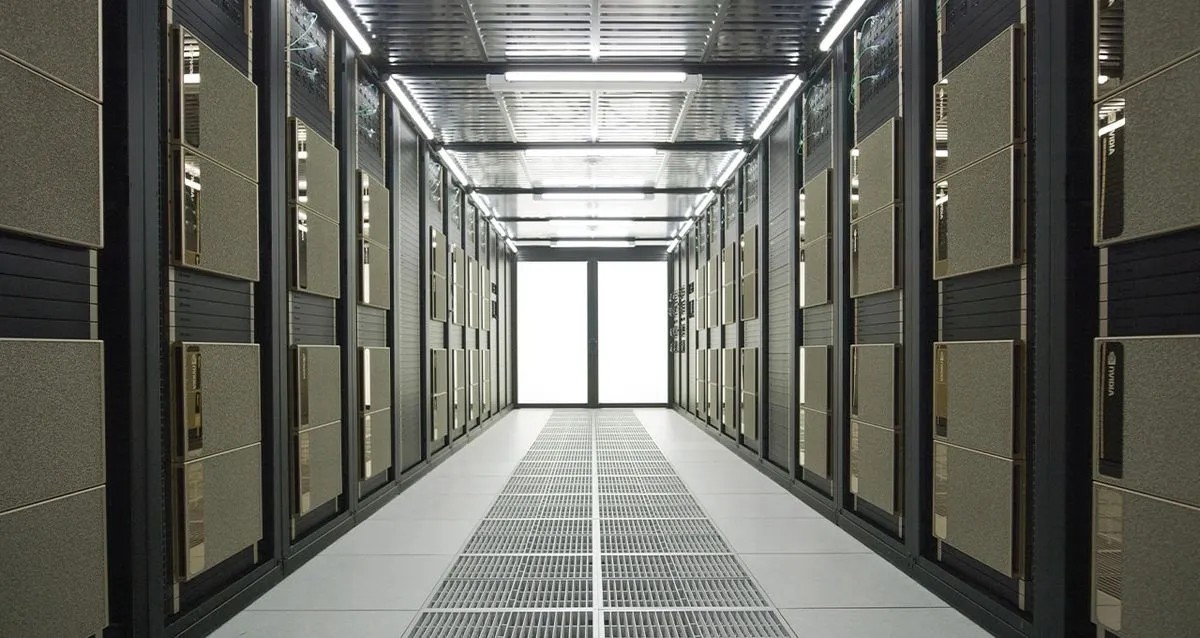
Introduction: one company borrows $40 billion, 200 others get a warning
On Sunday, October 25, 2026, Elon Musk posted on X that SpaceX had closed $40 billion of debt financing to buy graphics processing units — the chips that power AI systems. In the same breath, he delivered a warning for the rest of the industry: debt markets have "almost entirely shut off access to money for any company that doesn't have substantial revenue independent of AI data centers," and the 200-plus companies renting out GPU capacity — the so-called neoclouds — are headed for what he called "guppy-level death and consolidation."
I have spent years watching the GPU rental market from the developer side: spinning up instances to train a model, fine-tune something overnight, or run inference without buying hardware. For most of us, the neocloud boom was good news: more places to rent GPUs, often cheaper and with less waiting. So when the biggest infrastructure story of the year arrives as a $40 billion loan plus a death sentence for the smaller players, it is worth asking what actually happened, what is verified, what is prediction, and what it changes for anyone who rents compute.
What actually happened: the deal, and what "closed" does not prove
Let us start with what is solid. Musk announced on X that SpaceX had closed $40 billion in debt financing for GPUs. Reuters reported the same day that SpaceX had been negotiating that amount with banks and asset managers for Nvidia AI chips, and that the deal is primarily callable debt — meaning SpaceX can repay it early — funding GPU deliveries expected in the first and second quarters of 2027. Musk himself added that it is "not a major factor this quarter," and SpaceX expects $35 billion to $40 billion in capital expenditure in the fourth quarter alone, according to CFO Bret Johnsen.
Now the honest caveats, because they matter. Reuters also noted it was not immediately clear from Musk's post what he meant by "closed," or whether investors had agreed on pricing. The circulating structure — about $10 billion in bank loans plus $30 billion in investment-grade debt, Apollo leading, PIMCO participating — comes from an October 7 Financial Times report, not a SpaceX confirmation.
What is confirmed is the core shape: a very large, mostly callable debt package, tied to GPU deliveries in early 2027, raised by a company with an investment-grade rating and real revenue from businesses that have nothing to do with AI data centers. That last detail is the whole story.
Why SpaceX could borrow and the neoclouds cannot
Musk was blunt about why SpaceX got the money: "we're investment grade and have Starlink & launch revenue." Starlink sells satellite internet; the launch business sells rockets. Neither depends on the AI boom. So when a lender looks at SpaceX, it sees cash flows that survive even if the AI build-out stalls.
A neocloud looks like the opposite. Companies like CoreWeave and Nebius built their businesses by borrowing money, buying GPUs, and renting that capacity back out — mostly to tech customers, mostly for AI workloads. When GPU demand was exploding and lenders were enthusiastic, that model printed money. But it has one structural weakness: if lenders stop lending, or deliveries slip, or rental prices fall, the company still owes the debt. There is no second business to fall back on.
That is exactly the door Musk says has closed. Read his sentence twice, because it describes a two-tier credit market. Tier one: borrowers with outside revenue, who can still raise tens of billions. Tier two: pure-play AI infrastructure companies, who increasingly cannot raise anything at terms lenders will accept. Musk's prediction follows directly: "That means the 200+ neoclouds are going to see guppy-level death and consolidation. Some will make it through, but not many." He even closed off the obvious escape hatch, saying SpaceX won't buy struggling neoclouds because it would be "pointless."
What a neocloud actually is, and why there are 200 of them
If you have only ever rented from the big clouds, the neocloud boom can look strange. Why did more than 200 companies spring up to do something Amazon, Microsoft, and Google already do? Because the big clouds serve everyone, and their GPU capacity has often been spoken for by their largest customers. Neoclouds did one thing only: buy GPUs, rack them fast, and rent them to AI labs and startups with simpler pricing, faster provisioning, and hardware tuned for training. For a developer, that meant less waiting and sometimes a lower hourly rate. For investors, it meant a pure bet on AI compute demand.
The number 200-plus tells you how low the barrier to entry looked two years ago: a credit line, a power contract, and a GPU order. But the same low barrier is now the problem. When credit tightens, the companies with the thinnest balance sheets and least contracted revenue feel it first. And unlike a software startup, a neocloud cannot cut headcount and wait out a downturn — the debt payments keep coming whether the GPUs are rented or not.
The cracks beyond Musk's post
Musk has an interest in talking down his competitors, so I would not take his word alone. But the warning lands because several independent reports point the same way.
The Information reported that AI data center tenants are now demanding late-delivery penalties of more than $5 million per day if developers fail to deliver power and facilities on time — up from around $1 million earlier this year. Think about what that means: the people buying capacity no longer trust that it will arrive on schedule, so they are pricing that distrust into contracts.
Meanwhile, investors have started betting against US neocloud and data center companies after fears that the debt-fueled build-out was becoming unsustainable sparked a selloff. Reports describe neocloud credit-default-swap spreads surging, and at least one planned listing, Firmus, being pulled. None of this proves a collapse. All of it proves the market has stopped giving AI infrastructure companies the benefit of the doubt.
What this means for developers renting GPU compute
Here is where I stop reporting and start giving you the practical version, because this story lands directly on your infrastructure bill.
First, do not build your pipeline around a single small provider. I know the hourly rate looks great and the support engineer actually answers. But if your provider is one of the 200, your risk is not just a price increase — it is a provider that stops answering, gets acquired, or restructures mid-project. Keep workloads portable: containers, standard frameworks, infrastructure-as-code, no proprietary APIs in the critical path. Portability is boring work until the week it saves your project.
Second, read the exit terms you usually skip: what happens to reserved instances if the provider is acquired, and how fast can you export data and checkpoints?
Third, expect price weirdness in both directions. Consolidation usually pushes prices up over time, because fewer providers means less competition. But a shakeout can also produce fire sales: distressed capacity dumped at deep discounts as companies try to generate cash. If you have flexible, interruptible workloads — batch training, experimentation, rendering — you may find bargains. If you need guaranteed capacity with a service-level agreement, lock in terms with a provider whose balance sheet you trust.
Finally, none of this means AI compute is going away. The demand that created 200 neoclouds is real: models are bigger, inference is everywhere, and every company I talk to is still trying to buy more capacity. A shakeout does not mean the end of rented GPUs. It means the market grows up — fewer players, bigger balance sheets, harder terms, and less patience for business models that only work when credit is free.
Why Musk might be wrong — or just early
Let me steelman the other side, because Musk is not a neutral observer. He runs companies that compete with neoclouds for GPUs, power, and talent, so talking down the sector while announcing his own $40 billion raise is, at minimum, convenient messaging. Predictions of mass death in a booming sector have a habit of arriving early: companies with real contracted revenue, real customers, and real power contracts may survive just fine, and "consolidation" often means strong players buying good assets cheap, not an industry-wide graveyard.
It is also worth noting that the $40 billion itself is a bet, not a verdict. SpaceX is borrowing heavily to buy chips whose deliveries arrive in early 2027, in a market where prices, power availability, and demand could all move against it. If the AI build-out slows, SpaceX will be holding the same kind of debt it just criticized — just with better revenue to cover it.
And the demand side is genuinely unresolved. Apollo's chief economist Torsten Slok argued on October 24 that AI has delivered "zero financial payoff" outside the tech sector. If that view spreads, GPU demand could cool; if this week's hyperscaler earnings show AI revenue accelerating, the shakeout may look like a normal credit cycle instead. Both stories are live right now.
Conclusion: credit, not chips, is now the bottleneck
A year ago, the question was whether you could get GPUs. Then it was power. Now, for a whole class of companies, it is credit — and the answer, according to the man who just raised $40 billion, is no, unless you already have revenue from somewhere else.
For developers, the lesson is practical, not dramatic. Rent compute from providers that can survive a credit winter. Keep your workloads portable enough to move in a weekend. Read the contract. Watch this week's earnings. And enjoy the bargains a shakeout may create, without building your future on a provider that might not be there in a year.
The GPU gold rush is not over — but the era when anyone with a credit line could join it just ended.
FAQ
What did SpaceX actually announce?
On October 25, 2026, Elon Musk said on X that SpaceX had closed $40 billion of debt financing for GPUs, primarily callable debt funding deliveries in early 2027. Reuters reported the company had been negotiating the package for Nvidia AI chips, and that SpaceX expects $35–40 billion in fourth-quarter capital expenditure.
What is a neocloud?
A newer company that rents out GPU computing capacity, usually focused almost entirely on AI customers. Unlike the big hyperscale clouds, neoclouds such as CoreWeave and Nebius typically have little revenue outside AI data centers, which makes them dependent on continuous access to debt financing.
Why does Musk think neoclouds will fail?
His argument is about credit, not technology: debt markets have "almost entirely shut off" for companies without substantial revenue independent of AI data centers, so pure-play GPU rental companies cannot refinance or expand. He predicts "guppy-level death and consolidation" among the 200-plus neoclouds, with only a few survivors.
Is the $40 billion deal fully confirmed?
The core announcement is confirmed by Musk's post and Reuters reporting, but details are not: Reuters noted it was unclear what "closed" meant or whether pricing was agreed, and the reported $10 billion loans plus $30 billion investment-grade debt breakdown comes from an October 7 Financial Times report, not a SpaceX statement.
Should developers stop using neocloud providers?
No — but diversify. Keep workloads portable with containers and infrastructure-as-code, check contract exit terms, prefer providers with strong contracted revenue for critical workloads, and avoid depending on any single small provider for something you cannot move quickly.
Could GPU rental prices go up or down after a shakeout?
Both. Consolidation usually raises prices over time as competition falls, but distressed providers may dump capacity at deep discounts first. Flexible workloads may find bargains; buyers who need guaranteed capacity should lock in terms with financially strong providers and watch this week's hyperscaler earnings for direction.


