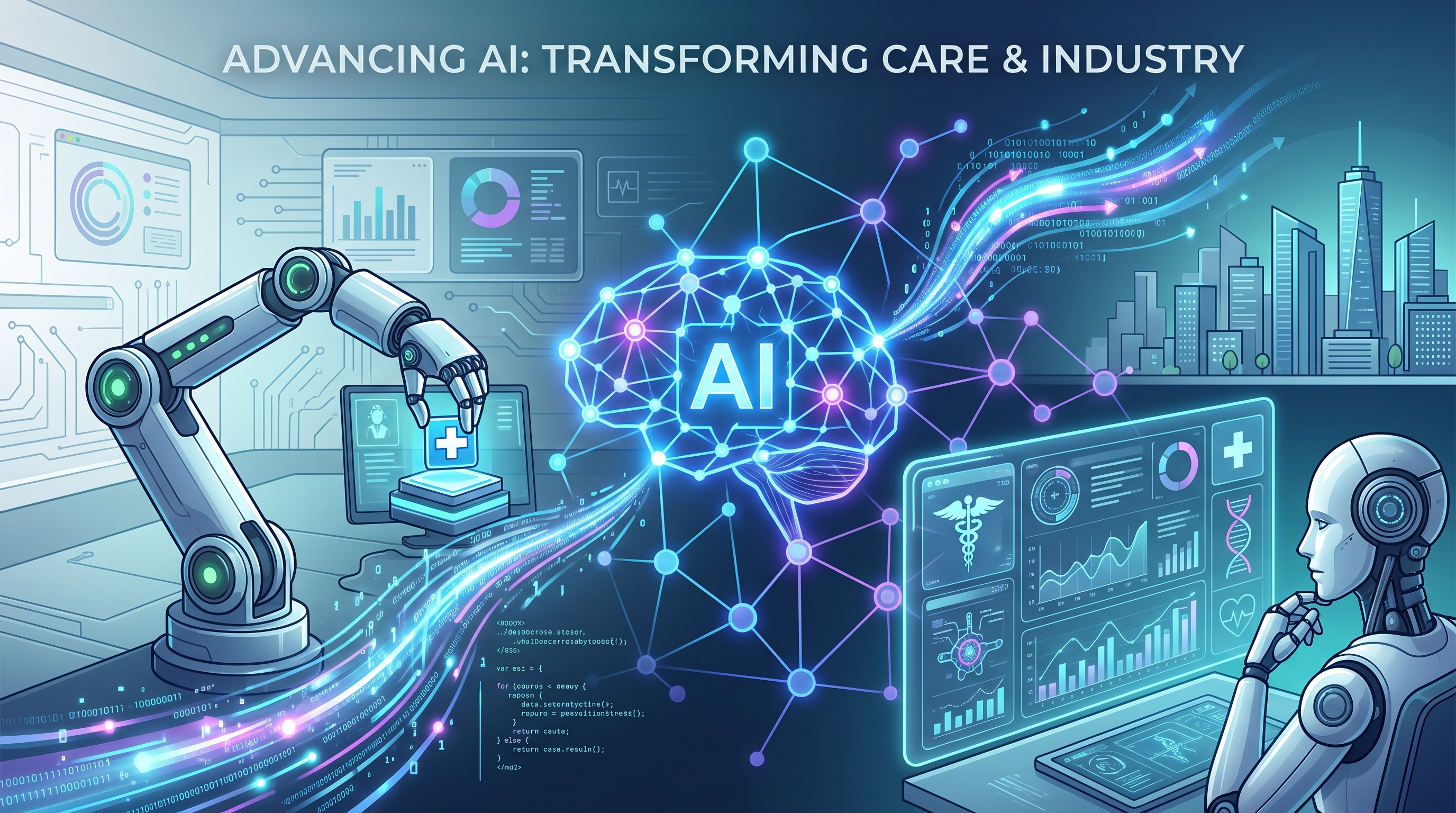
If you are still thinking of AI as a chatbot you ask questions to, you are about a year behind. Sometime in the last twelve months, artificial intelligence quietly stopped being an assistant and became a worker. It does not just answer anymore — it books, builds, diagnoses, drives, trades, and teaches. I keep a running list of the places AI has actually showed up in my own life and work this year, and honestly, it is getting hard to find a corner of daily life it has not touched.
This is not a hype piece. Every application below is something real people and real companies are running in production in 2026 — in hospitals, factories, banks, classrooms, and on the phones in our pockets. Some of them will surprise you. A few might unsettle you. All of them matter, because the people who understand what AI can actually do right now are the ones getting hired, getting funded, and getting ahead.
The Big Shift: From Chatbots to Agents
Before we get into the list, you need to understand the single biggest change of 2026. The model got old news; the agent is the story now. An AI agent does not just draft an answer — it plans a multi-step task, calls tools, uses APIs, checks its own work, and finishes the job without you watching over its shoulder.
The numbers back this up. A PwC survey found that 35% of organizations now report broad adoption of AI agents, with another 27% in limited deployment. Frameworks like LangChain and AutoGen let teams build multi-agent systems where specialized agents collaborate on a shared goal — one researches, one writes, one checks. And in 2026, roughly 30% of enterprise software vendors have shipped Model Context Protocol (MCP) servers, which is a fancy way of saying AI tools can finally talk securely to the business software companies already use. That plumbing is why agents actually work in production now instead of just in demos.
IDC projects AI investment will grow to $1.3 trillion by 2029. That money is not chasing chatbots. It is chasing this list.
1. Autonomous AI Agents Running Business Workflows
This is the umbrella everything else sits under. In 2026, agents handle customer onboarding, process insurance claims, reconcile accounts, and manage supply chains end to end. Insurers using AI-enhanced automation have cut claims processing times by about 60% and reduced errors by over 40%. Banks run loan applications, compliance reporting, and reconciliations the same way.
What changed: agents stopped being demos and became dependable, with monitoring, guardrails, and human oversight on the risky decisions. One research report put it bluntly — over 60% of enterprise operations are expected to be agent-powered in 2026. If you work in an office, some part of your workflow probably already flows through one of these systems, whether or not anyone told you.
2. Medical Scribing and Clinical Documentation
Doctors were drowning in paperwork long before AI showed up. In 2026, ambient AI scribes like Abridge listen to patient visits and write the clinical notes automatically. The reported effect is striking: AI agents cut documentation time by roughly 66 minutes per provider per day. That is over an hour a day handed back to actual medicine.
This matters more than it sounds. Burnout is one of the biggest problems in healthcare, and most of it is not caused by patients — it is caused by the electronic health record. When a tool quietly removes the worst part of a doctor's day, adoption follows fast. This is AI at its best: invisible, boring, and genuinely life-improving.
3. AI Diagnostics and Medical Imaging
Deep learning models now read CT scans, MRIs, pathology slides, and retinal images at clinical grade. They do not replace radiologists — they act as a second pair of eyes that never gets tired, flagging anomalies in seconds and prioritizing urgent cases in the queue.
The real 2026 story is scale. Hospitals without dedicated robotics or AI programs are getting their first deployments, and startups are specifically targeting smaller care sites. Triage, patient monitoring, specialist scheduling, even predicting which patients are likely to be readmitted — agents handle all of it. Early intervention is the quiet superpower here: catching something a month earlier can be the difference between a treatment and a tragedy.
4. Drug Discovery and Protein Science
AI-driven protein structure prediction — pioneered by tools like AlphaFold and now extended by a whole ecosystem of successors — has compressed years of lab work into days of computation. Researchers can model how proteins fold, predict how molecules will bind, and screen drug candidates before a single test tube is involved.
In 2026, pharmaceutical companies run AI pipelines that propose novel compounds, simulate their behavior, and prioritize the most promising ones for real trials. It does not make drug discovery easy — clinical trials still take years — but it front-loads the process so fewer dead ends ever reach the lab. For rare diseases with tiny patient populations, this efficiency is often the difference between a drug existing and not existing.
5. Fraud Detection and Financial Risk
Every time you tap to pay, an AI model somewhere is deciding in milliseconds whether that transaction is really you. Modern fraud systems analyze thousands of signals — device, location, spending pattern, typing rhythm — and they learn continuously as fraudsters evolve.
Banks report roughly 35% lower fraud losses and 40% faster loan approvals with AI-driven pipelines. The loan part is underappreciated: automated underwriting lets lenders say yes faster to qualified borrowers who would have waited days under manual review. Meanwhile, agents watch for money laundering patterns across millions of transactions that no human team could ever review by hand.
6. Autonomous Trading and Portfolio Management
Algorithmic trading is old news, but 2026's version is different: agents that reason about market events in plain language, adjust strategies as conditions change, and manage risk continuously. They ingest earnings calls, news, and market data simultaneously — and they do not panic.
For everyday investors, the bigger impact is robo-advisory done right. AI portfolio tools rebalance automatically, harvest tax losses, and adapt to your life events. The professional edge has compressed: strategies that once required a Bloomberg terminal and a quant team are now available through consumer apps. That is genuinely democratizing, even if it makes markets twitchier.
7. Humanoid Robots and Physical AI
This is the year AI grew a body. Tesla's Optimus Gen 3 — with hands carrying 22 degrees of freedom and Tesla's new AI5 chip, said to rival an Nvidia H100 on Tesla's own workloads — is moving toward production, with the robot reportedly getting the AI5 chip before Tesla's cars do. Boston Dynamics' Atlas gained a 13-degree-of-freedom tactile hand built for real factory work, and Hyundai plans a factory capable of producing 30,000 robots a year by 2028.
The numbers are startling: IDC figures put Agibot alone at more than 8,600 humanoid shipments in the first half of 2026 — about 35% of a market approaching 25,000 units. Chinese manufacturers like Unitree have driven prices down dramatically, and the first consumer humanoids are shipping to homes. Warehouses were first; factories are next; your home is after that. Physical AI is no longer a lab curiosity — it is a shipping product category.
8. Predictive Maintenance and Smart Manufacturing
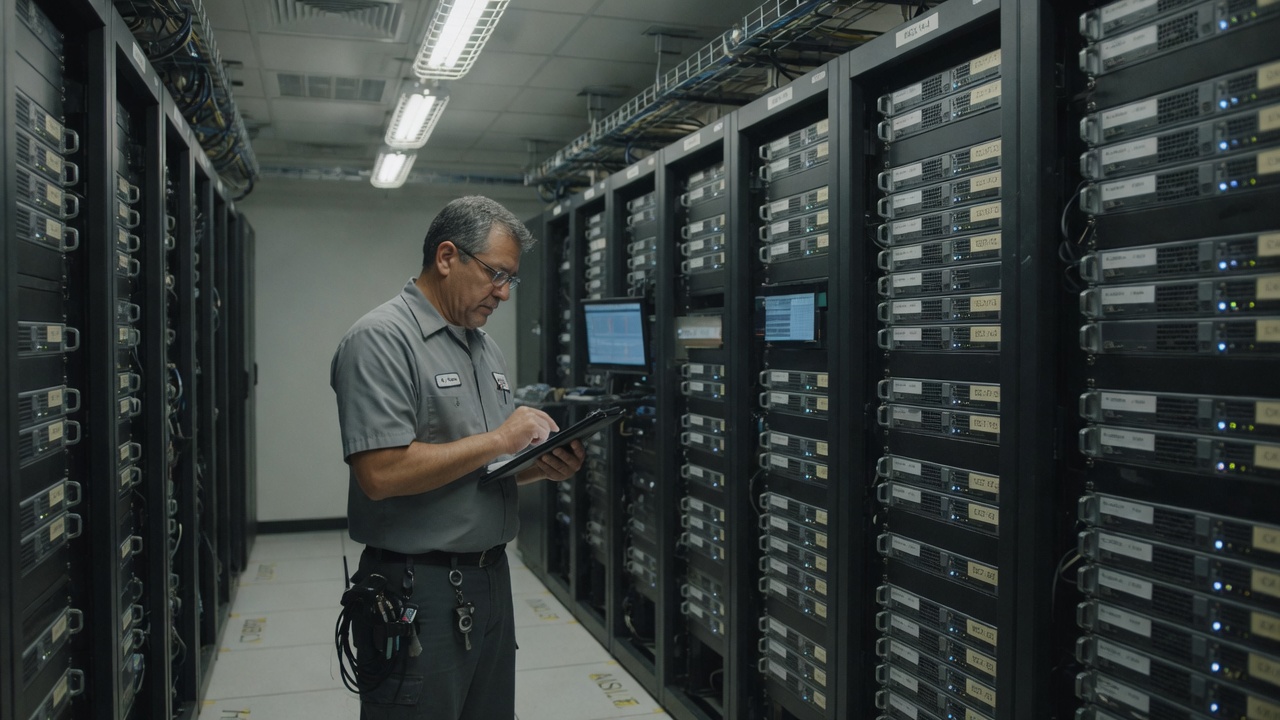
Factories lose staggering amounts of money to unplanned downtime — a single halted production line can cost tens of thousands of dollars an hour. AI systems now monitor vibration, temperature, acoustics, and power draw on industrial equipment, predicting failures days or weeks before they happen.
In 2026, this goes beyond prediction: AI agents schedule the maintenance, order the parts, and reroute production around the outage automatically. Combined with collaborative robots — some 75,000 entering factories globally — manufacturing is becoming self-healing. The plants that adopt this run leaner, waste less, and outprice the ones that do not.
9. Autonomous Vehicles and Smart Logistics
Self-driving technology keeps grinding forward. Robotaxi services are expanding in more cities, long-haul trucking companies run autonomous freight on major corridors, and warehouses are fully automated end to end. AI handles navigation, obstacle detection, and traffic prediction; in logistics, agents optimize routes, loads, and delivery windows in real time.
The less visible part is just as important: smart-city traffic systems that adjust signals dynamically, cutting congestion and emissions. And in agriculture, precision farming — AI-guided drones and sensors optimizing irrigation, fertilizer, and harvest timing — is quietly one of the most impactful deployments on this list. Feeding more people with fewer resources is not glamorous, but it matters.
10. AI Coding Assistants and Software Engineering
Ask any developer what changed their job most in the last two years and they will name a coding assistant. Tools like Claude Code and its competitors now write, debug, review, and refactor code — and in 2026, multi-agent coding systems can take a feature request and produce a working implementation across multiple files.
The honest take: this has not eliminated programming jobs; it has eliminated the boring parts of programming jobs. Senior engineers spend their time on architecture and judgment while agents handle boilerplate. Junior developers ramp up faster. And non-programmers can now build real software — internal tools, automations, prototypes — that previously required a hired engineer. The barrier between having an idea and having working software has never been lower.
11. AI Video Generation and Creative Media
OpenAI's Sora 2 set the benchmark for cinematic AI video in 2026, and a whole ecosystem of competitors followed. Short films, advertisements, product demos, and social content are now routinely generated from text prompts. On the text side, GPT-5-class models with million-token context windows and Anthropic's Claude 4.6 series handle long-form writing, research synthesis, and professional document work.
The honest debate here is about craft versus content. AI video is astonishing and getting better monthly, but the best work in 2026 comes from humans directing AI tools — storyboarding, art direction, editing — rather than from fully automated generation. Studios and agencies that treat AI as a production accelerator are thriving; the ones treating it as a replacement are producing forgettable work. The tool is not the talent.
12. Personalized Education and AI Tutoring
A great tutor is one of the most effective educational interventions ever measured — and until recently, it was only available to wealthy families. AI tutors changed the economics. In 2026, agents provide personalized learning paths, grade work, answer questions at 2 AM, and adapt to each student's pace.
The best implementations do not replace teachers; they multiply them. A teacher with thirty students can now give each one a personal tutor for practice while reserving class time for discussion and mentoring. For adult learners, AI-powered courses and interview prep have made reskilling dramatically more accessible. Education is one of the few places where AI's impact is almost purely additive.
13. Customer Service at Machine Scale
Chatbots were annoying; agents are actually useful. Modern customer-service AI resolves the majority of routine issues — order tracking, returns, password resets, billing questions — without a human ever touching the ticket. Projections suggest 80% of common issues will be resolved autonomously by 2029, with contact centers seeing 20–40% cost reductions.
What changed is memory and tools: today's agents remember your history, can actually look at your account, and take real actions like issuing refunds or rebooking flights. The bar is simple — did it solve my problem? Increasingly, yes, and faster than the hold music ever did. Human agents now handle the complex, emotional cases they were always better at.
14. Cybersecurity and Threat Detection
Attackers use AI, so defenders have to as well. AI security systems monitor networks in real time, detect anomalies that match no known signature, and respond to intrusions in seconds rather than hours. They analyze phishing attempts, hunt for compromised credentials, and predict which vulnerabilities attackers will exploit next.
The 2026 reality is an arms race: AI-generated phishing is more convincing than ever, deepfake-based fraud targets executives, and automated attacks probe defenses continuously. Organizations that still rely on signature-based antivirus and annual security training are bringing a knife to a gunfight. AI-driven security operations centers are becoming the standard, not the luxury.
15. On-Device AI and Ambient Intelligence
The most profound shift might be the quietest one. Apple's iOS 26 brought a context-aware Siri that predicts intent across apps while keeping processing on the device; Google's Gemini Flash-Lite and efficient models from DeepSeek and Alibaba's Qwen series run serious intelligence on phones and laptops without the cloud.
This matters for two reasons: privacy and latency. When AI runs on your device, your data does not have to leave it — and responses are instant. Your phone now transcribes, translates, summarizes, and edits photos locally. The ambient vision is a device that understands context — what is on your screen, where you are, what you are doing — and helps without being asked. We are most of the way there.
What This All Adds Up To
If there is a single thread through these fifteen applications, it is this: AI stopped being a tool you visit and became infrastructure you live inside. The winners of 2026 are not the companies with the flashiest models — they are the ones that embedded AI into the boring, repetitive, expensive parts of their operations and measured the result.
For individuals, the takeaway is practical. You do not need to become an AI researcher. You need to become someone who knows which of these tools applies to your work and is not afraid to use them. The doctor who lets AI handle documentation, the freelancer who uses agents for research, the small business owner who automates customer service — they are all playing the same game: let the machine do the machine work, and spend your human hours on the parts that actually need a human.
Conclusion
Fifteen applications, one pattern: artificial intelligence in 2026 is not a glimpse of the future — it is the operating layer of the present. From the robot walking a factory floor to the scribe writing your doctor's notes, from the model blocking a fraudulent charge to the tutor helping a student at midnight, AI has moved from demonstration to deployment.
The question is no longer whether AI will reshape your industry. It is whether you will be the one wielding it or the one competing against someone who is. Start with one application from this list that touches your daily work, learn it properly, and build from there. The future does not arrive all at once — it arrives one deployed agent at a time, and it is already here.
Frequently Asked Questions
What is the biggest AI trend in 2026?
Agentic AI — autonomous systems that plan and execute multi-step tasks using tools and APIs. With 35% of organizations reporting broad adoption per PwC and major vendors shipping agent platforms, agents are the defining shift of 2026, moving AI from answering questions to doing work.
Which industries are most affected by AI right now?
Healthcare (documentation, diagnostics), finance (fraud, underwriting), manufacturing (predictive maintenance, robotics), customer service, and software development. These sectors show the clearest measured ROI, with documented savings like 60% faster insurance claims processing and 66 minutes of daily documentation time saved per clinician.
Are humanoid robots actually being sold in 2026?
Yes. The humanoid robot market approached 25,000 units shipped in the first half of 2026, led by Chinese manufacturers like Agibot, while Tesla's Optimus Gen 3 moves toward production with its AI5 chip. Warehouses and factories are the first major buyers, with consumer home robots beginning to ship.
Will AI agents replace human jobs?
They are reshaping jobs more than eliminating them outright. Agents take over repetitive, structured work — claims processing, documentation, routine support — while humans move toward oversight, judgment, and relationship work. The consistent pattern across industries is augmentation first: people who learn to manage agents become more productive, not less employed.
How can a small business start using AI in 2026?
Start with one painful, repetitive workflow: customer inquiries, invoicing, or content creation. Off-the-shelf agent platforms and no-code automation tools can deploy these in days, not months. Measure the time saved, then expand. You do not need a data science team — you need one clear problem and the willingness to experiment.