Introduction
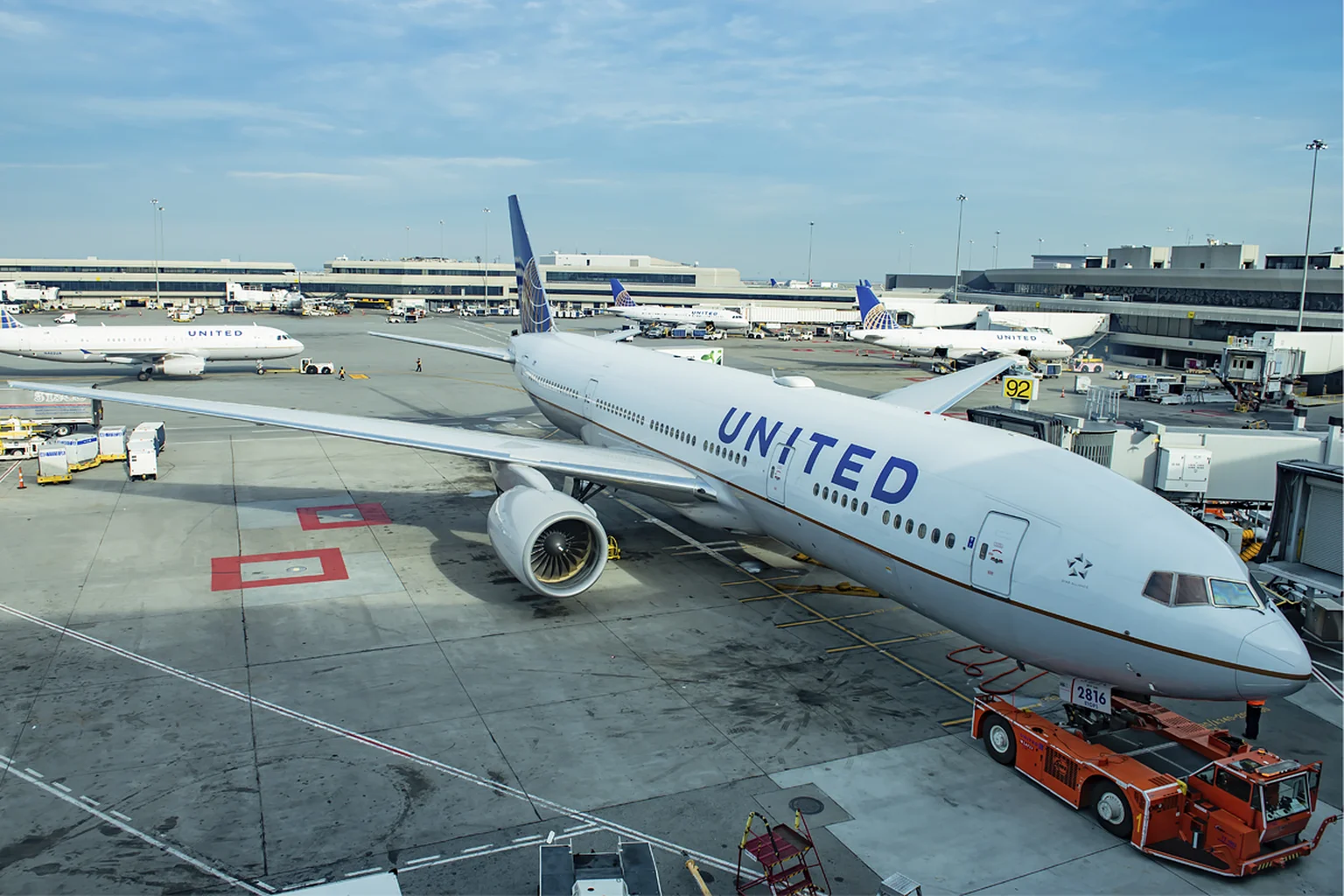
I spent most of this year telling clients the same thing: the agentic web is coming, and your website needs to be ready for visitors who aren't human. Yesterday, United Airlines answered that prediction in the most dramatic way possible — by slamming the door in the agents' faces.
On Wednesday, November 11, 2026, United Airlines announced it is banning unauthorized third-party AI agents from booking, changing, or servicing flights on its platform. It didn't just issue a press release. It rewrote its Contract of Carriage — the legal document governing every ticket it sells — adding a rule that puts AI agents on the same prohibited list as hidden-city ticketing. Any reservation an AI agent touches can now be cancelled without notice.
This is the first time a major US airline has done this, and it matters far beyond aviation. Because if you run a WordPress site, an Elementor-built store, a booking form, or anything that takes money online, you are about to face the exact same question United just answered: when an AI agent shows up at your checkout with a customer's credit card, do you let it in — or do you stop it at the door?
Here's what happened, why United did it, and what it means for the sites you and I build.
What United Actually Did
Let's start with the facts — the details here are unusually precise for a corporate policy change.
United revised its Contract of Carriage on November 11, 2026, and added a new provision — Rule 6.J.6 — that bars "the use of AI Agents to make, modify or service a Ticket, and/or to purchase any service or product." That wording is deliberately broad. It covers booking a flight, changing one, picking a seat, buying an upgrade, or purchasing anything else United sells. A companion change to Rule 5.H gives the airline the right to cancel any reservation "made, modified or serviced by AI Agents" without notice. And the remedies in Rule 6.K run all the way from invalidating tickets to banning passengers, deleting MileagePlus miles, revoking Elite status, and ending a MileagePlus membership entirely.
The airline also added a new definition of "AI Agent" to Rule 1 of the contract. It covers autonomous and semi-autonomous software, including AI assistants built into consumer platforms, AI browsers, and third-party assistants reached through travel agency tools. In plain English: it doesn't matter whether the agent is Meta's Muse, OpenAI's Dots, or xAI's Grok Bot. If software is doing the buying instead of the person, United says no.
The ban applies everywhere United sells: its own website and app, plus bookings made indirectly through travel agencies and aggregators. United's Digital Trust Center now states plainly that the airline does not currently work with any third-party personal AI agents.
There are two important carve-outs. First, bookings an AI agent made before November 11 will not be cancelled on that basis — those reservations will stand, though passengers should check they were ticketed correctly. Second, AI assistants can still search for and display United flights and fares. The looking is fine. The buying is not. The customer has to complete the purchase themselves.
The Wall Street Journal broke the story first, and it was quickly confirmed by Reuters, USA Today, and a wave of travel publications.
Why United Says It Did It
United's public reasoning rests on three legs: privacy, money, and regulation.
On privacy, the airline says handing your MileagePlus login to an outside AI tool can expose sensitive information. An agent that books your flight needs your account credentials, your payment details, your passport information, and your travel history — and it hands all of that to a third-party system United has never vetted. United's statement warned that personal agents can "expose sensitive information, and actions taken by these tools may result in unintended purchases, account changes, or use of MileagePlus miles."
On money, the concern is unintended transactions. An agent that misreads a prompt, hallucinates a date, or books the wrong cabin can spend real money and burn real loyalty points before a human ever notices. United's guidance stresses that a customer's permission is not sufficient — an AI assistant must also have the airline's authorization to transact with it.
On regulation, United points to Federal Aviation Administration and Department of Transportation rules. Flight check-in, for example, requires passengers to personally acknowledge that their luggage contains no prohibited items such as explosives. An automated tool tapping "yes" on your behalf arguably can't satisfy a rule written for a human signature. The FAA and DOT did not immediately respond to press requests for comment, so this part of the argument is United's interpretation rather than a confirmed regulatory position — but it is a serious one, and other industries with human-attestation requirements should be paying attention.
The Quote That Gives the Game Away
Here's where the story gets interesting for anyone who builds for the web. A day before the announcement, at an event in Chicago on November 10, United CEO Scott Kirby was asked about AI agents. His answer was blunt: "To be honest, I don't want to create another middleman."
That single sentence reframes the whole announcement. Yes, the privacy and regulatory arguments are real. But underneath them sits a commercial calculation every platform business understands instinctively: whoever controls the checkout controls the customer relationship, the data, and the margin. United has spent years and billions building direct booking channels precisely so it doesn't have to pay intermediaries. An AI agent that books flights on a traveller's behalf is a new intermediary — one that could eventually steer customers, compare fares ruthlessly, and squeeze the airline's pricing power.
I don't say that to dismiss United's stated reasons. I say it because if you're building websites for clients, you need to recognize this pattern when you see it. The agentic web isn't just a technical shift. It's a power shift. Every platform with something to sell is about to decide whether AI agents are customers, competitors, or intruders — and most of them will decide based on where the money flows.
The Industry Is Splitting, Not Uniting
United is first, but it is not alone in drawing lines — and the lines are being drawn in different places.
Amazon has blocked Meta's AI agent Muse from shopping on its platform. Walmart, by contrast, has partnered with it. Southwest Airlines introduced a plug-in service for ChatGPT earlier this year that lets customers search for flights and fares. Delta takes yet another position: its AI assistants can complete bookings once they're authenticated, with extra safeguards for sensitive transactions such as trips for unaccompanied minors. Banks, meanwhile, have expressed concerns about AI agents operating inside customer accounts, worried about rogue activity they can't easily audit.
Even in Brussels, regulators are moving in parallel — the European Union is scrutinizing paid AI picks and agent-driven shopping, which means this isn't just an American corporate dispute. It's a global renegotiation of who gets to transact on the internet. The market noticed, too: after the Journal's report, Expedia shares gained 2.8% and Tripadvisor rose 3%. And consumers are torn — Expedia Group research from April 2026 found strong interest in AI-assisted trip planning but far less willingness to delegate actual purchases. People like an agent finding the flight. They're much less comfortable with an agent buying it. United's ban lands squarely in that gap between curiosity and trust.
What This Means for Your WordPress Site
Here's where I stop reporting and start thinking like the developer I am. Because everything above is a preview of the decisions landing on our desks.
Just yesterday — in this site's own earlier article — I wrote about Elementor 4.4 making websites agent-ready with llms.txt, WebMCP, and a readiness scanner. The pitch was: make your site legible to AI agents and they'll bring you customers. United's announcement is the other side of that coin. Being agent-ready and being agent-open are two different things, and every site owner now has to decide where they stand.
If you run a WooCommerce store, a booking site, a membership platform, or any Elementor site with a checkout, here is the honest checklist I am now running through with my own clients.
First, decide your agent policy before someone else decides it for you. United wrote its policy into its contract before agents became a real volume problem. You should do the same in your terms of service. Does your site allow automated purchasing? Do your terms even mention AI agents? Most don't. That silence is a liability now, because when an agent books a $2,000 order on your store and the customer disputes it, "we never thought about it" is not a defense.
Second, separate browsing from buying. United's smartest move was the split: agents can look, but only humans can buy. Let agents read your llms.txt, crawl your product pages, and compare prices — but require a human confirmation step, a logged-in session or payment confirmation, before money moves. That single design decision defuses most of the risk United is worried about.
Third, treat agent traffic as a distinct traffic class. Your analytics probably can't tell a human from an agent today. Log user agents, watch for headless browser signatures, and monitor checkouts that complete suspiciously fast. If agents start buying on your store, you want to learn it from your own logs, not from a chargeback.
Fourth, protect the account layer. United's biggest fear is credential sharing — customers handing logins to third-party agents. Enforce strong authentication, offer passkeys, and rate-limit sensitive actions like password changes and loyalty-point redemptions. An agent with a stolen session cookie is just a very fast fraudster.
Fifth, think about the middleman question for your own business. Kirby didn't want another middleman between United and its customers. Ask yourself the same about your store: if an agent becomes the layer your customers talk to, who owns the relationship, the data, and the price? If the answer is "whoever built the agent," that's a strategic problem, not a technical one.
The Checkout Is the New Battleground
Step back and the pattern is obvious. For thirty years, the web's great commercial argument was about who owns the storefront — portals versus websites, marketplaces versus direct stores, apps versus the open web. Now it's agents versus everyone. The reason United's ban matters to a WordPress developer is that the checkout is where the web's money changes hands, and AI agents are walking straight toward it. Meta's Muse and OpenAI's Dots are already shopping. Google is putting Gemini in cars. Databricks' CEO uses an agent to investigate workplace problems. The tools are not coming — they're here, and they're getting more capable every month.
Some platforms will welcome them with open APIs and revenue-sharing deals. Some will block them with contract clauses and bot detection. Most will do something in between: allow the research, control the transaction, and keep the customer relationship for themselves. United just showed us what the restrictive end of that spectrum looks like, written in formal legal language. For those of us building sites, the practical takeaway is simple: design your checkout as if an agent will try to use it tomorrow — because one will — and decide now whether that's a feature or a threat.
Conclusion
United Airlines banning AI agents from booking flights is not really a story about airlines. It's the first big, public answer to the question every online business will have to answer in the next year: what do we do when the customer sends software instead of showing up themselves? United's answer is: look all you want, but the buying is ours to control. Delta's is: prove who you are first. Amazon's is no; Walmart's is yes. There is no consensus yet — which is exactly why site owners can't afford to wait for one.
I build WordPress and Elementor sites for a living, and my advice to clients this week is the same: make your site agent-readable, keep your checkout human-confirmed, and write down your agent policy before an incident writes it for you. The agentic web is not a future trend anymore. It booked its first flight yesterday, and United just cancelled it. The next one might be headed for your store.
Frequently Asked Questions
Did United Airlines really ban AI agents from booking flights?
Yes. On November 11, 2026, United revised its Contract of Carriage, adding Rule 6.J.6, which bars "the use of AI Agents to make, modify or service a Ticket, and/or to purchase any service or product." It is the first such ban by a major US airline, and it applies to United's website and app as well as bookings through travel agencies and aggregators.
Can an AI assistant still show me United flights and prices?
Yes. United's ban covers transactions, not searches. AI assistants can still look up and display United flight schedules and fares — they just can't complete the purchase. The customer has to finish the booking themselves.
What happens if an AI agent books my United flight anyway?
Under the new Rule 5.H, United can cancel any reservation "made, modified or serviced by AI Agents" without notice. Remedies under Rule 6.K can go further, including invalidating tickets, banning passengers, deleting MileagePlus miles, revoking Elite status, and ending MileagePlus membership. Bookings made by agents before November 11, 2026 will not be cancelled on that basis.
Which AI agents are affected by the ban?
United's definition covers third-party personal AI assistants broadly, including Meta's Muse, OpenAI's Dots, and xAI's Grok Bot, as well as AI assistants built into browsers and travel agency tools. United says it does not currently work with any third-party personal AI agents, and an assistant needs the airline's authorization — not just the customer's permission — to transact.
Are other airlines doing the same thing?
Not yet, and the industry is split. Delta allows AI assistants to complete bookings once authenticated, with extra safeguards for sensitive transactions. Southwest offers a ChatGPT plug-in for flight search. No other major US carrier had publicly announced a ban as of November 12, 2026, though Amazon has blocked Meta's Muse from shopping while Walmart partnered with it.
What should WordPress and Elementor site owners do about AI agents?
Separate browsing from buying: let agents read your content and compare prices, but require a human-confirmed step before money moves. Write an AI-agent policy into your terms of service, monitor checkout traffic for automation, protect user accounts with strong authentication, and decide deliberately whether agents are customers or a threat to your customer relationship. Being agent-ready and agent-open are two different decisions.
Sources: The Wall Street Journal (first report, via Reuters/USA Today/Simple Flying coverage); Reuters, November 11, 2026; USA Today, November 11, 2026; Simple Flying, November 12, 2026; InsideFlyer, November 11, 2026; Thrifty Traveler, November 11, 2026; ppc.land, November 11–12, 2026; United Airlines Contract of Carriage, revised November 11, 2026 (Rules 1, 5.H, 6.J.6, 6.K); Expedia Group research, April 2026.