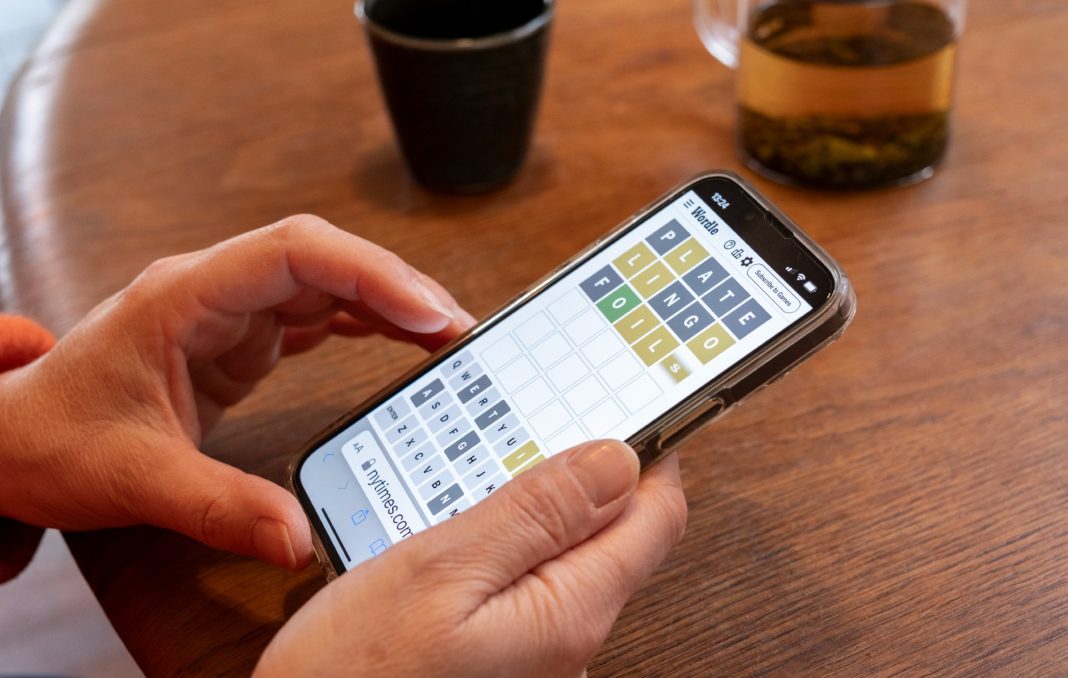
A game built for one person
Every great internet story has a moment where it could have gone the other way, and Wordle's came early: it was never supposed to be a product at all. Josh Wardle, a Welsh software engineer living in Brooklyn, built it in 2021 for one person — his partner, Palak Shah, who loved word games. They had got really into the New York Times' crosswords and Spelling Bee during the pandemic, and Wardle wanted to make her something of her own. So he did. One puzzle a day, five letters, six guesses, no ads, no account, no fuss.
The name was a joke, and a good one: Wordle, a play on Wardle. He had actually tried a version of the idea before, back in 2013 — an endless Android game he called "Mr. Bugs' Wordy Nugz" — and his friends had not been impressed. This time was different, because the audience was one person who mattered, and the design was built around her. Palak went through roughly 13,000 five-letter words and kept only the ones she knew — about 2,500 of them — so the answers would always feel fair. The whole game was 63 kilobytes. It cost Wardle about 100 dollars a month to run. For six months, from January to June 2021, the two of them were the only players.
I keep coming back to that detail, because it explains everything about why Wordle worked. It was not designed to go viral. It was designed to be good for one person, once a day, with no tricks. The scarcity — one puzzle, then you wait until tomorrow — was not a growth hack. It was a kindness: a game that respects your time instead of eating it.
The slow start, and the 90 players
Wardle opened Wordle to the public in October 2021, and almost nobody noticed. The New York Times later reported that only 90 people played on November 1, 2021. Ninety. Not ninety thousand. Ninety human beings. For a game that would have ten million daily players within four months, that is a useful reminder: everything that looks inevitable in hindsight looked like nothing at the time.
What changed was not marketing — there was none — but a single feature, and it came from a player. A woman in New Zealand started posting her results as little green and yellow squares on social media, a grid that showed how she had done without spoiling the answer for anyone else. Wardle saw it, understood immediately what it was, and built a share button into the game that produced the same grid. That button is the whole viral story. It turned a private puzzle into a public ritual, because suddenly your result was a thing you could show people — and comparing grids with friends is more fun than solving a puzzle alone.
By mid-December the squares were everywhere. By January 1, 2022, around 300,000 people were playing every day. A week later it was two million. By February, Wardle said in an interview that nearly ten million people were playing daily. The growth curve was almost vertical, and it happened with no advertising, no app, no accounts, and no revenue. Wardle had built the most popular game on the internet by accident, and he had no plan for what to do with it.
The man behind it
It helps to know who Josh Wardle is, because his background explains the design. He is a Welsh-born software engineer who spent nearly a decade at Reddit, where he built two of the internet's strangest and most beloved experiments: r/place, the collaborative pixel canvas where millions of strangers drew together, and r/thebutton, a social experiment built around a single button and a countdown timer. Both were built on the same idea that would later define Wordle: give people one small shared thing, limit it hard, and let the community do the rest.
That history matters because it tells you Wordle was not a fluke. Wardle had spent years thinking about scarcity, shared rituals, and the strange power of a simple rule. Wordle is r/place reduced to its essence: one puzzle, one day, everyone together. He just did not expect it to be the one that changed his life.
He also did not want to be a games mogul. As the player count climbed into the millions, Wardle was getting acquisition offers from large companies, and he was publicly uncomfortable with all of it. He had made a game for his partner. He had never run an ad on it. He did not want to build a company around it. The question was not whether someone would buy Wordle. It was whether anyone would buy it and leave it alone.
The sale: January 31, 2022
The answer was the New York Times, and the irony is hard to miss: the company whose crosswords and Spelling Bee had inspired Wardle and Shah in the first place became the buyer. The Times announced the acquisition on January 31, 2022 — barely three months after the game's public release — for an undisclosed price "in the low seven figures." Contemporary reporting put the deal at roughly one to three million dollars. Wardle was the sole owner, so he received the entire payout, and he was allowed to keep his domain.
The Times said the game would initially remain free for new and existing players, and that win streaks would be preserved. That promise mattered enormously, because the worst fear in the Wordle community was that the Times would put the game behind a paywall and ruin it. It did not. The daily puzzle is still free in 2026, four years later, and that decision is a big part of why the acquisition worked. The Times bought the habit, not the revenue, and it understood that charging for the habit would kill it.
For the Times, the deal was part of a stated strategy: grow digital subscriptions to 10 million by 2025, and use games as one of the main engines. Wordle was the perfect fit. It brought millions of new daily visitors to the Times, and a meaningful share of them stayed for the crossword, the Spelling Bee, and eventually a subscription. The company later reported that the acquisition had been a major driver of its games growth, and the numbers since then — 13.76 million subscribers by the third quarter of 2026 — suggest the strategy worked.
What changed, and what did not
The handover was not seamless. In the early weeks under the Times, some players lost their streaks in the migration, and there were complaints about answers being changed — the Times removed around 30 words from the answer list, including offensive terms and some UK spellings, and swapped in replacements. A few answers were also changed after publication when the Times' editors decided a word was too obscure or too sensitive. Players noticed, and they were not shy about saying so.
But the essentials held. One puzzle a day. The same word for everyone. Free. The share grid. The six guesses. The Times added WordleBot, an analysis tool that grades your play, and an archive of past puzzles for subscribers. It added hints. It built the game into the NYT Games app alongside Connections, Strands, Spelling Bee, and the crossword. And in February 2026, it started adding previously used answers back into the rotation, because the original list of around 2,315 words was running out after four years of daily puzzles.
What did not change is the thing that made Wordle work in the first place: it is still a small, daily, shared ritual. The game is still 63 kilobytes of an idea, really — one word, six guesses, tomorrow it resets. The Times could have turned it into an app full of ads and in-app purchases. It did not, and that restraint is the most underrated business decision in the whole story.
Why the story still matters
I think there are two reasons Wordle's history is worth telling properly, beyond the nostalgia. The first is what it proves about design: the best products are often the smallest ones. Wordle had one feature — a daily puzzle — and one social feature — a shareable grid — and that was enough to reach ten million people. Every product team in the world should have that taped to a wall. You do not need more features. You need one feature that is exactly right.
The second is what it proves about the internet: it still rewards sincerity. Wardle built a game for one person, refused to put ads on it, sold it to a company that promised to keep it free, and walked away with a few million dollars and his integrity intact. That is not how internet success stories usually go. Usually someone builds a thing, a company buys it, the ads arrive, and the users leave. Wordle went the other way, and four years later it is still the first thing millions of people do in the morning.
The game started with two people in a flat in Brooklyn, playing a word game one of them had built for the other. It ended up owned by the New York Times, played by millions, and copied by an entire industry. And the remarkable thing is that, if you play it tomorrow morning, it will feel exactly like it did in October 2021: five letters, six guesses, one puzzle, and then you wait until tomorrow. That is the whole story. That is why it worked.
Conclusion
Wordle began as a private gift from Josh Wardle to his partner Palak Shah — a 63-kilobyte game with no ads and, for six months, two players. It went public in October 2021 with 90 players on November 1, exploded to millions by January 2022 on the strength of a shareable grid of coloured squares, and was bought by the New York Times on January 31, 2022 for a price in the low seven figures. The Times kept the daily puzzle free, added WordleBot and an archive, and turned the game into the front door of its subscription business. Five years on, the game is unchanged in its essentials, and that is the point. Wordle worked because it was small, honest, and built for one person — and the internet recognised that immediately.
FAQ
Who created Wordle?
Josh Wardle, a Welsh software engineer who previously built r/place and r/thebutton at Reddit. He created Wordle in 2021 as a private daily word game for his partner, Palak Shah.
How many people played Wordle when it launched?
Only 90 people played on November 1, 2021, a month after it went public. By January 1, 2022 there were around 300,000 daily players, then two million within a week, and nearly ten million by February 2022.
How much did the New York Times pay for Wordle?
An undisclosed price "in the low seven figures," announced January 31, 2022 — generally understood to be roughly one to three million dollars. Wardle was the sole owner and kept his domain.
Why is Wordle called Wordle?
It is a pun on its creator's surname, Wardle. He had previously made a 2013 prototype called "Mr. Bugs' Wordy Nugz."
Is Wordle still free?
Yes. The daily puzzle has remained free since the New York Times acquisition. A Games subscription adds the archive of past puzzles and the rest of the NYT Games catalogue.
How big was the original Wordle?
The whole game was 63 kilobytes, cost about 100 dollars a month to run, and had no ads and no accounts. The original curated answer list had 2,315 words, and since February 2026 previously used answers have started coming back into play.