
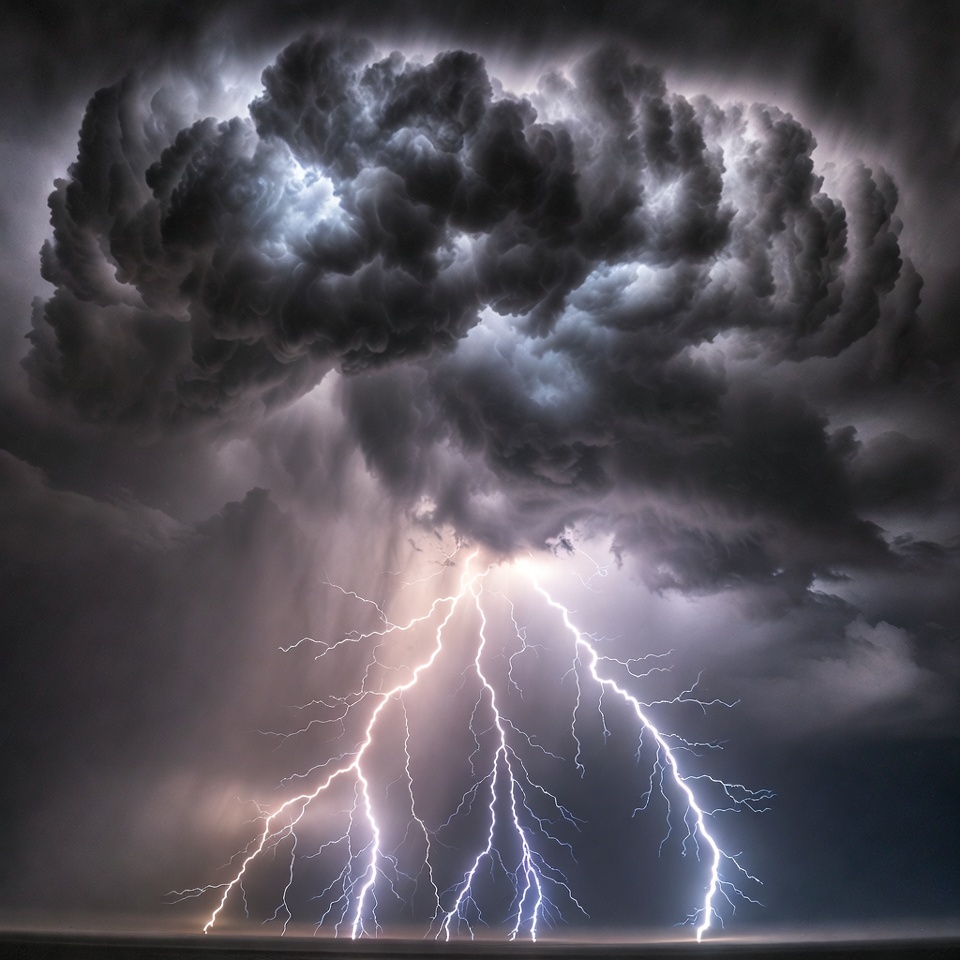
The alert that woke me up at 2 a.m. — and the one I never got
I have had two experiences with extreme weather alerts, and they taught me opposite lessons. The first was a tornado warning at 2 a.m. My phone screamed — a tone I had never heard before, loud enough to wake the whole house — and we got to the interior bathroom with minutes to spare. The tornado passed a few miles away. The alert did exactly what it was supposed to do.
The second was a flash flood warning I never received, on a road I was driving, in weather that looked bad but not dangerous. I found out about the flooding from a car ahead of me with its hazard lights on, not from any alert. That one scared me more than the tornado, because it showed me the gap: the system works, but only if you are set up to hear it, and only if you understand what it is telling you.
This article is the setup I wish I had done before either night. It covers how the alert system actually works, what each kind of alert means, and the simple configuration — phone, radio, apps — that means you hear the warning that matters, wherever you are.
How an alert gets from a forecaster to your phone
When a tornado touches down or a flash flood threatens, forecasters and emergency managers do not type separate alerts for phones, television, and radio. In the United States, they send one authenticated message through FEMA's Integrated Public Alert and Warning System — IPAWS — a cloud-based platform that routes the warning across every channel at once. One message, four networks: Wireless Emergency Alerts to mobile phones, the Emergency Alert System interrupting broadcast TV and radio, NOAA Weather Radio, and the National Public Warning System of high-power AM radio stations.
Every alert has to contain five things: who sent it, what the threat is, where it is, what you should do and by when, and when it expires. That structure is the reason alerts are terse and repetitive — they are designed to be understood in seconds, by anyone, in the dark, half asleep. The system is built on the Common Alerting Protocol, a standard format that lets the same message become a phone pop-up, a TV crawl, or a radio voice broadcast.
Wireless Emergency Alerts: the one on your phone
Wireless Emergency Alerts, or WEA, are the loud pop-up messages on your phone. They launched in April 2012 under the Warning, Alert, and Response Network Act, and they are a partnership between FEMA, the Federal Communications Commission, and the wireless carriers. Since launch, the system has been used nearly 96,000 times, according to the FCC, to warn the public about dangerous weather, missing children, and other emergencies.
WEA works differently from a text message, and the difference matters. A text goes to one phone number at a time, and it can jam when millions of people call and text during a disaster. WEA uses cell broadcast: the towers in the affected area broadcast the alert to every compatible phone in range at once. The system does not need your phone number, does not track your location, and is not affected by network congestion. It is also geographically precise — providers must deliver the alert with no more than a tenth of a mile of overshoot beyond the boundary the alerting authority drew, roughly 528 feet.
Each message can be up to 360 characters on modern phones, and it comes with a distinctive tone and vibration, repeated twice, designed to be impossible to sleep through. You do not need an app, a subscription, or a signup. Alerts are free and do not count against a text plan. The National Weather Service sends WEA messages for tornadoes, flash floods with considerable or catastrophic damage threat, hurricanes, storm surge, extreme wind, dust storms, snow squalls, and tsunamis. The system covers four categories of alert: imminent threat, public safety, AMBER alerts for missing children, and national alerts from the president.
The channels most people forget: weather radio and sirens
Your phone is the best alert channel for most people, but it is not the only one, and it should not be the only one. NOAA Weather Radio is the backup that works when the phone does not. It is a network of more than 985 transmitters broadcasting continuous weather and emergency information on seven VHF frequencies between 162.400 and 162.550 MHz. A dedicated weather radio — a small device that costs less than a dinner out — can be programmed with your county's SAME code so it only sounds for alerts in your area, and it works during power cuts if it has batteries. It is the channel that still works when the mobile network is down, and for that reason alone it belongs in every home in a storm-prone area.
Outdoor sirens are the other channel, and the most misunderstood. Sirens are designed to warn people who are outdoors. They are not designed to wake you up inside your house, and in many places they are not sounded for every warning — some communities only sound them for tornadoes, not for severe thunderstorms. If you are counting on hearing a siren from your bedroom, you are counting on the wrong system.
Watch versus warning: the distinction that saves lives
If you remember one thing from this article, make it this: a watch means conditions are favourable, a warning means it is happening. A tornado watch means the ingredients are there and a tornado could form. A tornado warning means a tornado has been spotted or detected on radar, and you should take shelter now. The same distinction applies to flash floods, severe thunderstorms, and hurricanes.
People die because they treat a warning like a watch — "I will keep an eye on it" — when the warning means the time for watching is over. My rule is simple: a watch means I check the forecast and know where I would go. A warning means I go there. No debate, no "let me check the radar first." The warning is the radar, interpreted by a professional, and it is telling you to move.
The other distinction worth knowing is the damage threat tag. The Weather Service now labels its most serious warnings — for example, a flash flood warning with a "considerable" or "catastrophic" damage threat, or a severe thunderstorm warning with a "destructive" damage threat. Those tags are the difference between a warning that triggers a phone alert and one that does not, and they are worth reading when you see them. A "destructive" thunderstorm warning is not a normal thunderstorm. Treat it accordingly.
The setup: ten minutes, once, and you are covered
Here is the setup I recommend, and it takes about ten minutes. First, check that Wireless Emergency Alerts are on. On an iPhone, go to Settings, then Notifications, and scroll to the bottom — Government Alerts should be switched on, including Emergency Alerts and Public Safety Alerts. On Android, the path varies by manufacturer, but it is usually under Settings, then Safety and Emergency, or Settings, then Notifications, then Wireless Emergency Alerts. Make sure the test alerts are off and the real ones are on. Do not turn off AMBER alerts to reduce noise — the day you need the system to work is not the day to have half of it disabled.
Second, install one good weather app with alert notifications, and turn those notifications on. The Weather Channel and AccuWeather both offer severe weather alerts, and they are faster than the broadcast channels for the simple reason that they push the moment the warning is issued. Third, if you live anywhere with tornadoes, flash floods, or hurricanes, buy a NOAA Weather Radio with SAME programming and battery backup. Put it in the bedroom. Fourth, know your shelter plan before you need it: the lowest floor, an interior room, away from windows, for a tornado; high ground, never a flooded road, for a flash flood. Write it down. Tell the household.
The flood rule, and the heat rule
Two specific dangers deserve their own paragraph, because they kill more people than tornadoes do. The first is flooding. Most flood deaths happen in cars, and almost all of them are preventable. The rule is six inches of moving water can knock you down, and twelve inches can carry away a car. Never drive through flooded roads. It is not about the depth you can see — it is about the road underneath, which may not be there anymore. Turn around, do not drown. That is not a slogan. It is the advice that would have saved most of the people who died in floods.
The second is heat. Extreme heat kills more people in the United States in an average year than hurricanes, tornadoes, and floods combined, and it does so quietly, without sirens. A heat warning means the combination of temperature and humidity is dangerous, especially for older people, children, and anyone working outdoors. Drink water before you are thirsty, stay out of the sun in the middle of the day, and check on neighbours who live alone. Heat does not feel like an emergency, which is exactly why it is one.
Conclusion
The alert system works, and it works best when you are on more than one channel. One message from a forecaster goes through IPAWS to your phone, your television, your weather radio, and the sirens outside — and the phone alert alone has been used nearly 96,000 times since 2012. Turn on Wireless Emergency Alerts and leave them on. Install a weather app with notifications. Buy a weather radio if you live in a storm-prone area. Learn the difference between a watch and a warning, and treat a warning as an instruction, not a suggestion. Never drive through floodwater, and take heat warnings seriously. Ten minutes of setup, once, is the difference between the alert that wakes you up and the one you never get.
FAQ
What are Wireless Emergency Alerts?
WEA messages are short emergency alerts broadcast from cell towers to every compatible phone in the affected area. They launched in 2012, need no app or signup, are free, and use a distinctive tone and vibration. They do not track your location and are not affected by network congestion.
What is the difference between a weather watch and a warning?
A watch means conditions are favourable for severe weather to develop. A warning means it is happening or imminent, and you should act now. A tornado watch means be ready; a tornado warning means take shelter immediately.
How do I turn on emergency alerts on my phone?
On iPhone: Settings, Notifications, scroll to Government Alerts at the bottom, and switch on Emergency Alerts and Public Safety Alerts. On Android: usually Settings, then Safety and Emergency, or Settings, then Notifications, then Wireless Emergency Alerts. Keep them on.
What is NOAA Weather Radio?
A network of more than 985 transmitters broadcasting continuous weather and emergency information on VHF frequencies between 162.400 and 162.550 MHz. A dedicated receiver can be programmed with your county's SAME code so it only sounds for local alerts, and it works on batteries during power cuts.
How deep does floodwater need to be to be dangerous?
Six inches of fast-moving water can knock an adult down, and twelve inches can carry away a car. Never drive through flooded roads — the road underneath may be washed away. Turn around, do not drown.
Do emergency alerts work if the mobile network is down?
WEA uses cell broadcast, which is more resilient than SMS during congestion, but it still needs a working cell tower. That is why a battery-powered NOAA Weather Radio is the recommended backup — it does not depend on the mobile network at all.