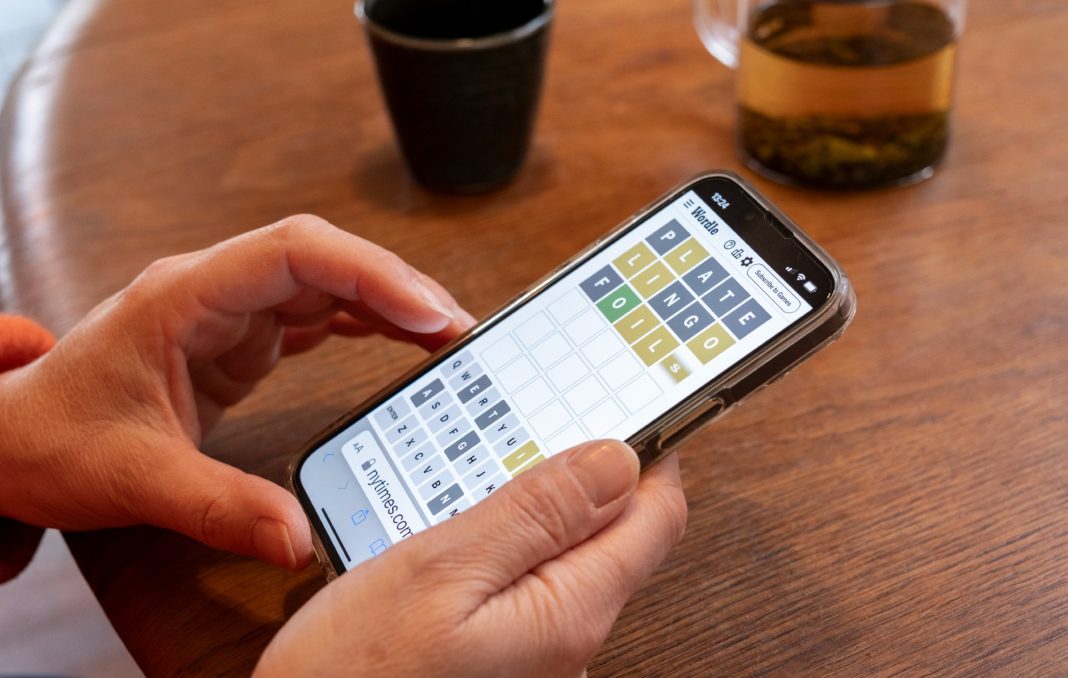
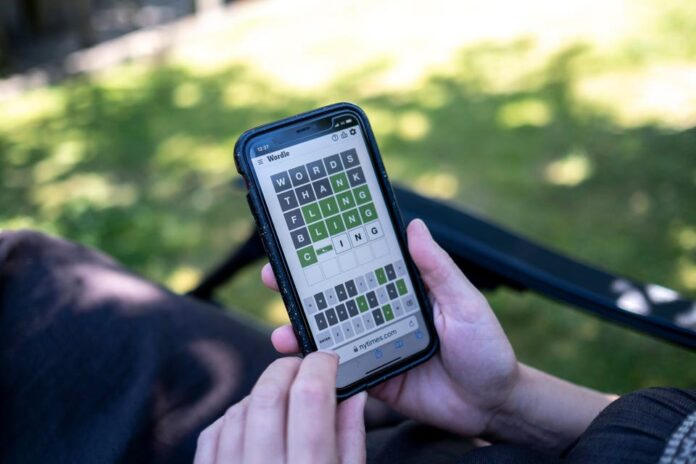
My opener was costing me games, and I didn't know it
For the first year I played Wordle, I opened with ADIEU every single day. It felt smart. Four vowels in one word — how could that possibly be wrong? Then I started tracking my scores properly, and the truth was embarrassing. I was averaging close to four and a half guesses, I lost more often than my friends, and my "clever" opener was the problem. ADIEU tests four vowels, sure, but it tells you almost nothing about the consonants, and consonants are where Wordle answers actually live.
So I did what I do with everything I get stubborn about: I went and read the research. Not listicles. The actual math. MIT researchers, information theory, letter-frequency analysis of the real answer list, and the New York Times' own WordleBot rankings. What I found changed how I play, and honestly, it changed how I think about the game. There is a right answer to "what's the best starting word," and it is not the word your group chat uses.
The answer list is the whole game
Here is the thing most strategy articles skip: Wordle does not draw from the whole English language. It draws from a curated list of common five-letter words. Josh Wardle's original answer list had 2,315 words, and the Times has removed around 30 of them since taking over — offensive terms, some UK spellings — while adding new ones as the list runs down. That curated list is everything, because the math only works if you know what you are guessing against.
Across those 2,315 answers, the most common letters are E, A, R, O, T, L, I, S, N, and C, in roughly that order. The top eight letters account for about 85 percent of all letter occurrences in answers. That single fact explains almost every good opener and exposes almost every bad one. A great starting word tests five of those high-frequency letters with no repeats. A bad one wastes slots on rare letters or doubles up a letter and learns nothing from the second copy.
That is why ADIEU fails. A, D, I, E, U: it tests two of the top letters and three that barely matter. It feels productive because vowels light up, but vowels are the easy part of any Wordle answer. The hard part is always the consonants.
SALET: the word the math crowns
If you want the single best answer the research gives us, it is SALET. Yes, it is a weird word — a 15th-century type of helmet, and a word that will almost certainly never be a daily answer itself. But that is the point. You are not playing SALET because it might be the answer. You are playing it because it extracts the most information from the board.
MIT Sloan professor Dimitris Bertsimas and PhD student Alex Paskov used a method called Exact Dynamic Programming to build an algorithm that solves Wordle optimally, and that algorithm opens every single game with SALET. It averages a solve in 3.421 guesses. To put that in perspective, Saint Paul, Minnesota, has the best average Wordle score of any US city, at 3.51 guesses — and the SALET algorithm beats the best city in America.
In entropy terms, SALET produces about 5.89 bits of expected information per guess, the highest of any opener. It reveals an average of 1.683 coloured tiles on the first move. Compare that with AUDIO, the vowel-heavy opener a lot of people still recommend: 1.320 coloured tiles. That gap is the difference between solving in three and scrambling in five.
SLATE, CRANE, TRACE: the real-word contenders
I get it, though. Playing a word you have never used in a sentence feels wrong. If you want a real English word, the data gives you a cluster of near-identical options, and the honest truth is that the differences between them are tiny. The top seven openers are within 0.05 bits of each other. In real play, that is about one puzzle in twenty.
SLATE is the current pick of the New York Times' own WordleBot, and it has been since mid-2025. It covers S, L, A, T, and E — five letters that show up in a huge share of answers. WordleBot has flip-flopped over the years: CRANE held the top spot from February 2024 to July 2025, TRACE had a brief run in early 2024, and then further analysis by mathematician Grant Sanderson pushed SLATE back to the top. As of the latest rankings, WordleBot rates SLATE, CRANE, TRACE, CARTE, and SLANT at the same top skill score of 99 out of 100 in Normal mode.
CRANE covers C, R, A, N, and E, and it is still an excellent opener — it sits just behind SLATE in most rankings, averaging around 3.46 guesses. TRACE and CRATE are essentially the same word with the letters shuffled, both averaging about 3.44. STARE actually posts the highest pure letter-coverage score of any common word, testing S, T, A, R, and E. RAISE is right there too. My advice: pick one of these five, learn it, and stop second-guessing yourself. The word matters far less than what you do with the information it gives you.
What the data says about second guesses
Here is where most players, including me for a long time, throw the game away. You get two yellow letters from your opener and immediately start guessing words that might be the answer. That is usually the wrong move. The strongest second guess is often another information word, not a solution attempt.
The research backs this up. The best two-word opening pair identified in the data is CONES followed by TRIAL. Together they test ten different high-frequency letters with no repeats, and they narrow the answer list dramatically. If you open with SLATE and get nothing, a second word like CORNY or ROUND tests a fresh batch of common letters instead of rearranging the ones you already know are wrong.
Letter position matters more than people think
Letter frequency is only half the story. Where letters sit matters just as much. E is the most common letter overall, but it is far more likely to appear at the end of an answer than at the start. S is common at the start and rare at the end. Y shows up at the end of answers far more than anywhere else. T and R cluster in the middle.
This is why a yellow letter is so valuable, and why I stopped treating yellows as disappointments. A yellow E in position one tells you the answer probably ends in E or has E in the middle — and that eliminates a huge chunk of the list. A green S in position one is even better, because S-starting answers are a big family. The players who consistently solve in three are not luckier than you. They are reading position, not just colour.
It is also why double letters are a trap. Words with repeated letters — like LLAMA or EERIE — are genuinely hard, because every duplicate letter is a slot that gives you no new information. When you are down to two guesses and the answer might have a double letter, most players refuse to believe it. I have lost more games to a hidden double letter than to any other single mistake. If your remaining options all look wrong, consider the double.
Hard Mode changes the strategy completely
If you play in Hard Mode, where every guess must use the hints you have already found, the opener rankings shift. WordleBot's current Hard Mode leaders are TARPS and PLOTS, both scoring 99 out of 100. The reason is positional: in Hard Mode you cannot afford to burn a guess on a fresh information word, because every guess must include your confirmed letters. So the opener needs to test letters in positions where they are likely to go green, not just exist somewhere in the word.
For most people, I would not recommend Hard Mode as a learning tool. It punishes the exact thing that makes you better — the free information guess on turn two. Play Normal mode, learn to read the board, and switch to Hard Mode later if you want the extra challenge. Your win rate will thank you.
The strategy I actually use now
After all of this, here is what I do every morning, and it has taken my average from around 4.4 guesses to just under 3.8. I open with SLATE — a real word, top of the WordleBot rankings, and easy to type without thinking. If it gives me two or more coloured tiles, I start solving from there, using the position of each hit. If it gives me one or zero, my second guess is CORNY or ROUND, testing five fresh letters. By guess three, I almost always have three confirmed letters and a short list of possible answers, and then it is just a matter of not doing something silly.
One last thing. None of this makes Wordle less fun. If anything, it made it more fun for me, because now when I solve in three, I know why. And when I lose, I usually know exactly which guess cost me the game. That is a better feeling than blaming the puzzle.
Conclusion
The best Wordle starting word, by the math, is SALET — an average solve in 3.421 guesses, the highest entropy of any opener. If you want a real word, SLATE is the New York Times' own pick, with CRANE, TRACE, CRATE, and STARE all within a hair of it. The opener is only the beginning, though. The real skill is the second guess: test fresh letters, read positions, respect the double letter, and stop guessing answers before you have the information to find one. I spent a year opening with ADIEU and wondering why I kept losing. The data fixed that in a week. Pick SLATE, play the information game, and watch your average drop.
FAQ
What is the best Wordle starting word in 2026?
By the math, SALET — MIT's optimal algorithm opens with it and averages 3.421 guesses. For a real English word, SLATE is the New York Times WordleBot's top pick, with CRANE, TRACE, CRATE, and STARE all nearly tied behind it.
Is ADIEU a good Wordle starting word?
No. It tests four vowels but only two high-frequency letters overall, and it reveals fewer coloured tiles on average (about 1.32) than SALET (about 1.68). Vowels are the easy part of a Wordle answer; consonants are where games are won.
What is the best second word in Wordle?
A fresh information word that tests five new letters, not a guess at the answer. The best researched two-word pair is CONES followed by TRIAL. After an opener like SLATE, a second word such as CORNY or ROUND tests a new batch of common letters.
How many possible Wordle answers are there?
Josh Wardle's original curated answer list had 2,315 words. The New York Times has removed around 30 and added new ones as the list runs down. Since February 2026, previously used answers have started coming back into play.
What are the most common letters in Wordle answers?
E, A, R, O, T, L, I, S, N, and C, in roughly that order. The top eight letters account for about 85 percent of all letter occurrences across answers.
Should I play Wordle in Hard Mode?
Only once you are comfortable in Normal mode. Hard Mode forces every guess to use revealed hints, which removes the free information guess on turn two — the move that most improves your score. WordleBot's top Hard Mode openers are TARPS and PLOTS.