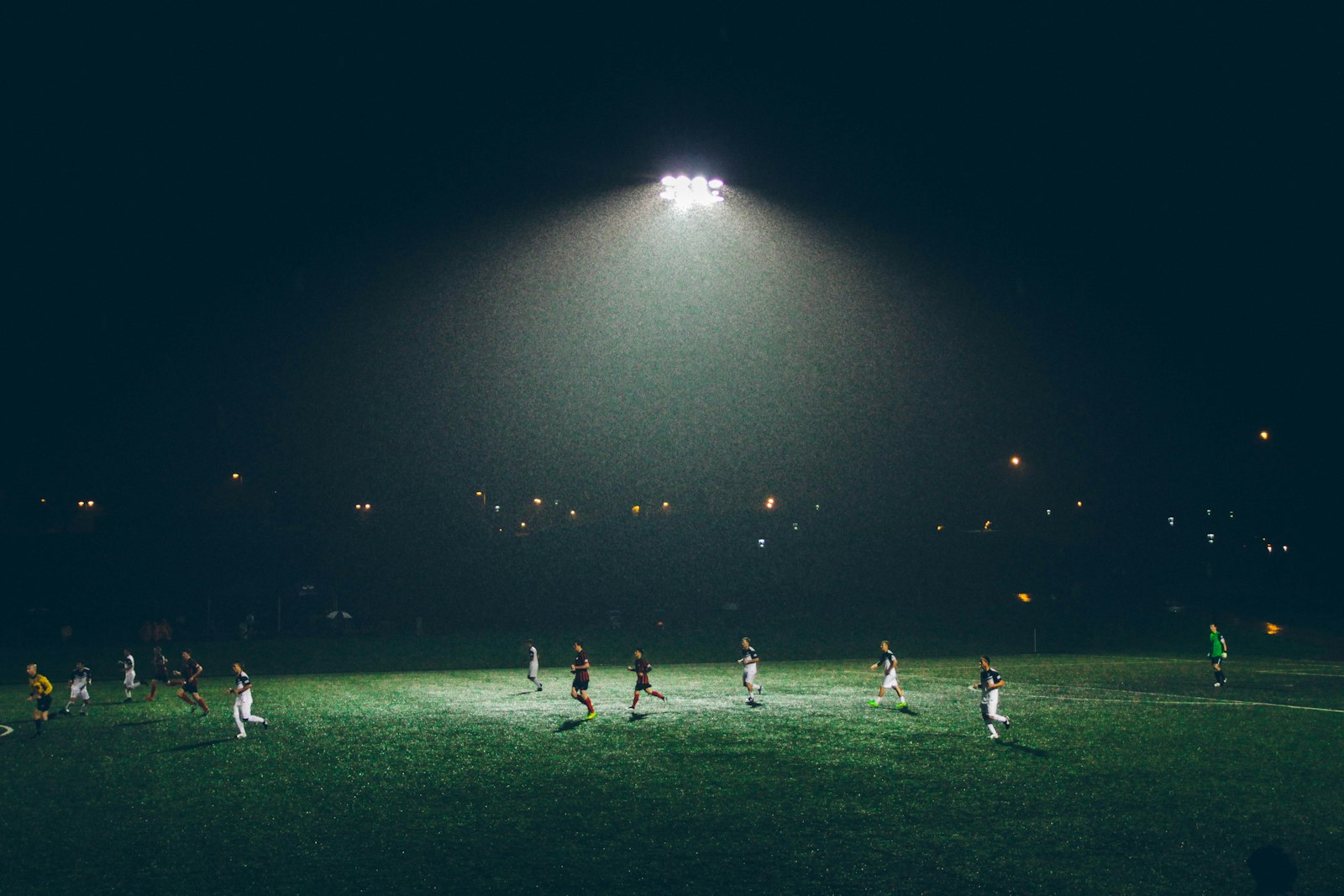
I spent the 2026 World Cup doing what most football fans did: checking kick-off times in three time zones, switching between apps, and explaining to my family why I needed the television at 2 a.m. The tournament ran from June 11 to July 19, 2026, with 104 matches across the United States, Mexico and Canada, and it was the most-watched World Cup ever — and also, I think, the most confusing one to actually find on television. Rights were sold country by country, the matches were spread across four mainland time zones, and the answer to "what channel is the World Cup on?" depended entirely on where you were standing.
So here is the guide I wish I had before it started, written now that it is over and the picture is complete: who showed the World Cup in every major country, what was free, what you had to pay for, and what I would do differently next time. If you are reading this because the 2030 World Cup is coming and you want to know how this all works, the lessons still apply — the broadcasters will change, but the system will not.
The United States: Fox, Telemundo, and the antenna trick
In the United States, the English-language rights belonged to Fox Sports, and the Spanish-language rights belonged to Telemundo. Fox showed all 104 matches across its family of channels — the main Fox broadcast network carried the marquee fixtures, the opener, the final, the USA games and the big knockouts, while FS1 and FS2 absorbed the volume of the group stage, when up to four matches kicked off on the same day. Fox put 70 matches on the main network alone, which is a remarkable amount of free television for a country where the World Cup used to be a cable afterthought.
That is the first thing I would tell any American fan: a surprising amount of this World Cup was free. Fox and Telemundo are both available over the air with a cheap antenna in most US markets, and between them they covered the matches that mattered. Telemundo showed 92 matches free over the air, with Universo carrying the remaining 12, mostly simultaneous group games. Spanish-language coverage historically draws the larger US World Cup audience, thanks to the country's enormous Spanish-speaking fanbase, and Telemundo treated it that way — full studio coverage, big production, and the final live in Spanish to millions.
For streaming, the picture was more expensive. Fox launched FOX One, its standalone streaming service, at $19.99 a month, carrying all 104 matches in 4K with no cable login required. Peacock carried every match in Spanish for $10.99 a month. The Fox Sports app also streamed matches, but it required a pay-TV login — cable, satellite, or a virtual service like Fubo, YouTube TV, Sling TV Blue, Hulu + Live TV or DirecTV Stream, all of which carry Fox and FS1 in their base packages. Fubo was the simplest single subscription for cord-cutters, because it carried the whole Fox and Telemundo families. My honest verdict on the American setup: if you had an antenna and patience, you could watch the tournament for nothing. If you wanted every match, in 4K, on your phone, you paid for it — and the bill added up fast.
The United Kingdom: the best deal in world football
Here is the part that made me jealous. In the United Kingdom, every single match was free-to-air. The BBC and ITV share the rights in an equal partnership, a tradition that goes back to 1966, and they split the 104 matches between them. BBC One carried roughly half, with simulcasts on BBC iPlayer in HD and 4K for the marquee fixtures. ITV carried the other half on ITV1, with ITV4 pressed into service when two matches kicked off simultaneously, and ITVX handling streaming and catch-up.
The split is engineered so each broadcaster gets a fair share of the headline games, and the final is usually simulcast. ITV opened the tournament with Mexico vs South Africa on June 11. The only catch, if you can call it one, is that you need a valid TV Licence to watch live BBC programming in the UK, and the kick-off times were brutal — matches ran from late afternoon to the early hours, because North American time zones are five to eight hours behind Britain. I know people who watched the final at 8 p.m. UK time on a Sunday and thought that was civilised. They did not watch the 2 a.m. group games. Nobody sane did.
For viewers in Ireland, RTÉ carried the matches free-to-air, and in Scotland, STV shared the ITV allocation. The UK model is the one I point to whenever anyone asks why football broadcasting feels broken elsewhere: 104 matches, no subscription, no paywall, no app that demands a cable login. It can be done. Most countries just choose not to do it.
Canada and Mexico: home advantage, home broadcasters
Canada's English-language rights sat with TSN and CTV, both part of Bell Media, with RDS covering French-language broadcasts. CTV is free over the air, which meant Canadian fans could watch a good share of the tournament without paying, and TSN carried the rest on cable and streaming. The Canadian setup was solid and unglamorous, which is about right for a country hosting its first World Cup matches — Toronto and Vancouver staged 13 matches between them, and the coverage treated the tournament like the national event it was.
Mexico was simpler and better: TelevisaUnivision and TV Azteca carried the matches free-to-air, as they have for generations. In Mexico, the World Cup is not a subscription product. It is on the television in every house, every bar, every taxi. The opening match at the Azteca was on free television to the whole country, and that is exactly how it should be. If you want to understand why football matters more in Mexico than almost anywhere else, start with the fact that nobody there has ever had to pay to watch their team at a World Cup.
The rest of the world: free in some places, a subscription everywhere else
Outside the big markets, the picture was mixed, and it is worth knowing because it shows how uneven World Cup access still is. In Australia, SBS carried the tournament free-to-air. In India, JioHotstar held the rights. In Pakistan, Tapmad carried it. In Brazil, the matches were on free television and on CazéTV's streaming platform. FIFA confirmed broadcast deals in more than 175 territories, and the last holdouts — India, Pakistan, China and Bangladesh — only signed in the final weeks before kick-off, which tells you how hard FIFA has to work to sell these rights in every market.
The pattern is consistent: the bigger and richer the market, the more likely the World Cup is behind a paywall. The United States split it between free over-the-air and paid streaming. The UK kept it free. Mexico kept it free. Australia kept it free. And in a lot of smaller markets, fans watched on whatever local channel had bought the rights, or on a stream of uncertain legality that I am not going to recommend here. The geo-blocking was strict, by the way — a UK viewer trying to use BBC iPlayer from abroad, or a Brazilian using CazéTV outside Brazil, ran straight into a wall. Rights are territorial, and the broadcasters enforce it.
What I would do differently next time
Here is what I actually learned from watching this tournament, and what I will do for the 2030 World Cup. First, check the free options before you pay for anything. In the US, an antenna got you Fox and Telemundo and most of the matches that mattered. In the UK, you needed nothing at all. Too many fans I know paid for a streaming subscription on day one and never used it, because the matches they cared about were on free television anyway.
Second, if you do pay, pay for one service, not three. The cord-cutter trap in 2026 was stacking subscriptions: FOX One for English, Peacock for Spanish, a live TV service for the rest. One good live TV service — Fubo in the US was the obvious choice — covered the whole tournament. Third, plan around the time zones. Four matches a day sounds wonderful until you realise the fourth one kicks off at 1 a.m. your time. I recorded the late games, avoided social media, and watched them over breakfast. It worked, mostly. And fourth, if you travel to a host country, remember the broadcaster changes at the border. I know fans who crossed from the US into Canada mid-tournament and discovered their streaming app had stopped working. Rights are territorial, and your subscription does not travel with you.
Conclusion
The 2026 World Cup was shown in more than 175 territories, by more broadcasters, on more platforms, than any tournament before it. In the United States it was Fox and Telemundo, with FOX One at $19.99 a month and Peacock at $10.99 for the Spanish coverage. In the UK it was the BBC and ITV, free to everyone. In Canada it was TSN, CTV and RDS. In Mexico it was Televisa and TV Azteca, free to everyone. In Australia it was SBS, free. And in a lot of places, it was whatever local channel had bought the rights, or a stream you found at the last minute.
The best deal in world football was in Britain and Mexico, where the whole tournament was free. The most complicated was in the United States, where you could watch it for nothing with an antenna or pay three subscriptions for the full experience. My advice for 2030 is the same as it was for 2026: check what is free first, pay for one service if you must, and never trust a stream that asks you to turn off your ad blocker. The football is worth watching properly.
Frequently Asked Questions
What channel was the World Cup 2026 on in the USA?
Fox and FS1 in English, and Telemundo and Universo in Spanish. Fox showed all 104 matches, with 70 on the main Fox network. Streaming was on FOX One ($19.99/month) for English and Peacock ($10.99/month) for Spanish.
Was the World Cup 2026 free to watch in the UK?
Yes — every match was free-to-air, split between the BBC and ITV, and streamed free on BBC iPlayer and ITVX. A TV Licence is required for live BBC viewing.
How could I watch the World Cup 2026 for free?
It depended on your country. In the UK it was free on BBC and ITV. In Mexico it was free on Televisa and TV Azteca. In Australia it was free on SBS. In the US, Fox and Telemundo were free over the air with an antenna, covering most marquee matches.
Who showed the World Cup 2026 in Canada?
TSN and CTV in English, with RDS covering French-language broadcasts. CTV is free over the air in Canada.
Could I stream every World Cup 2026 match?
In the US, FOX One streamed all 104 matches in English and Peacock streamed all 104 in Spanish. In the UK, BBC iPlayer and ITVX together covered every match free. Streaming rights were territorial, so services generally did not work outside their home country.
When was the World Cup 2026 final and where could I watch it?
The final was on July 19, 2026, at MetLife Stadium, New York/New Jersey, kicking off at 3 p.m. ET. In the US it was on Fox and Telemundo; in the UK it was simulcast free on the BBC and ITV.