I've spent years watching GPU launches, and I've never seen a chip like this
I've been writing about hardware since the days when a 250-watt graphics card felt outrageous. So when Nvidia told me — well, told the world — that its new Blackwell B200 data-center GPU draws 1,000 watts, I laughed. Then I read the rest of the spec sheet, and I stopped laughing. The B200 isn't a faster H100 with a new coat of paint. It's a fundamentally different machine, and it is quietly redrawing the map of who can afford to train and run serious AI at all.
Here's the thing most coverage misses: the B200's real story isn't the headline performance number. It's the bill that comes after the purchase. The power. The cooling. The racks. The building itself. If you buy a B200 the way you used to buy an H100, you will end up with a very expensive space heater and a very angry facilities team.
So let me walk you through what the B200 actually is, what it costs to own versus rent, who is buying it, and — the question that matters most — whether you should care at all if you're not a hyperscaler.
What the B200 actually is
Let's start with the silicon, because it is remarkable. Blackwell was unveiled by Nvidia at GTC on March 18, 2024, and the B200 is its flagship data-center GPU. The chip packs 208 billion transistors across two separate dies built on TSMC's 4NP process, connected by a chip-to-chip link running at 10 TB per second. Nvidia literally could not fit the design on one reticle — the maximum size a chip can be printed at — so it built two halves and stitched them together so tightly that the software sees one GPU.
Each B200 carries 192GB of HBM3e memory with roughly 8 TB/s of memory bandwidth. Compare that to the H100's 80GB at 3.35 TB/s and the H200's 141GB at 4.8 TB/s, and you start to see the shape of the upgrade. Memory is the wall that most large AI workloads hit first — the model's weights plus the KV cache have to live somewhere — and Blackwell roughly doubles the headroom.
Then there's FP4. Blackwell is the first Nvidia architecture with native 4-bit floating point tensor cores, which roughly doubles peak inference throughput over the FP8 precision that Hopper topped out at. For inference — actually serving models to users, which is where the money is now — that's a genuine step change. On MLPerf Inference v5.0, an eight-GPU B200 system delivered 3x higher throughput than an eight-GPU H200 system on the Llama 2 70B benchmark.
And NVLink got a full generational jump too. NVLink 5.0 delivers 1.8 TB/s of bandwidth per GPU, double Hopper's 900 GB/s. That matters enormously once you scale past a single server, because at that point your bottleneck stops being compute and becomes how fast the GPUs can talk to each other.
The 1,000-watt problem
Here's where I have to be honest with you: the B200's power draw is the story. A single B200 draws up to 1,000 watts, against 700 watts for an H100. An eight-GPU DGX B200 chassis pulls up to 14.3 kilowatts. And that's just the warm-up act.
The real Blackwell machine is the GB200 NVL72 — a full rack that links 72 Blackwell GPUs and 36 Grace CPUs into a single NVLink domain with 130 TB/s of interconnect bandwidth. That rack delivers up to 30x faster real-time LLM inference than the same number of H100 GPUs, at up to 25x lower cost and energy per token, according to Nvidia. It also draws roughly 120 kilowatts. One rack. 120 kilowatts. That's the power draw of a small neighborhood, and it cannot be air-cooled, full stop.
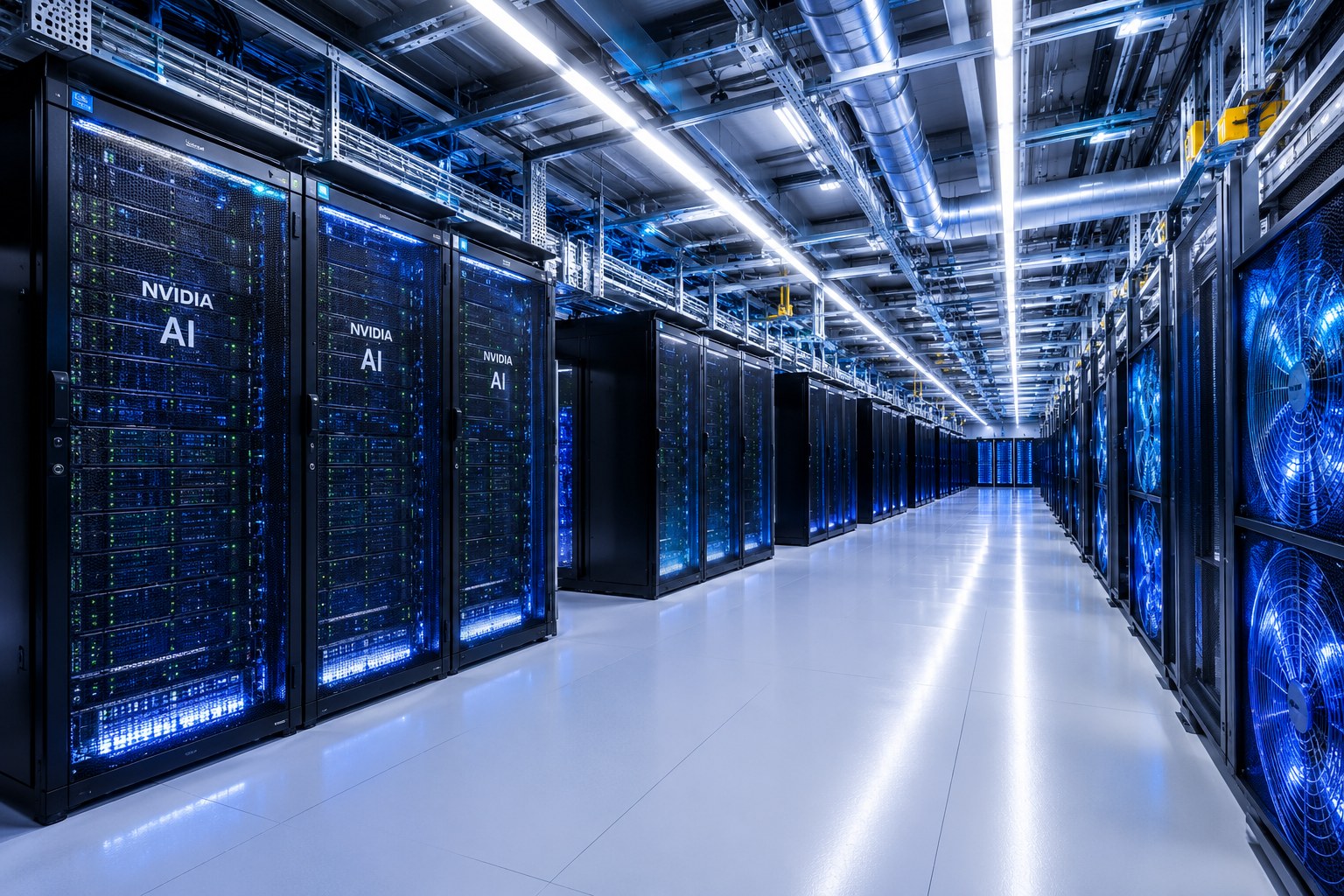
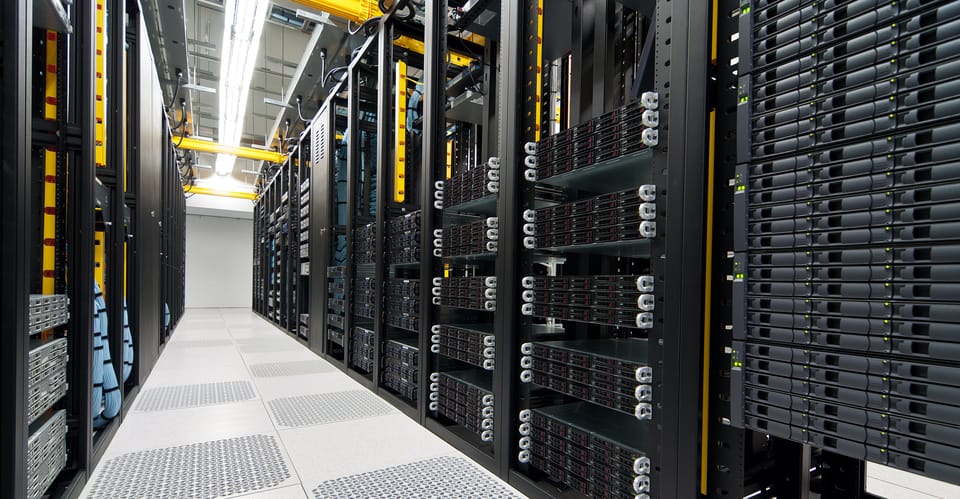
This is the part nobody puts in the launch keynote. The H100 and H200 are air-coolable. The B200 is effectively liquid-cooling-mandatory for sustained workloads. That means a facility water loop, coolant distribution units, and floor loading that most buildings were never designed for. The chip is the cheap part. The building is the expensive part. A B200 you cannot cool is slower than an H200 you can, and I think that's the single most important sentence in this entire article.
What it costs: buying versus renting
Let's talk money, because the numbers here are genuinely wild. A new B200 card lands somewhere around $30,000 to $40,000 depending on form factor and volume. The H100 and H200 sit in roughly the same $25,000 to $40,000 range, which tells you something interesting: Nvidia is not really charging a huge premium per card. The premium is in everything around the card.
Renting tells the same story from the other side. In mid-2026, H100s rent for roughly $2 to $5 per GPU-hour depending on the provider. B200s typically run about $3.75 to $8 per hour on demand, with some providers listing B200 SXM nodes around $10 per hour on-demand and closer to $5 on spot. That looks expensive until you do the throughput math: independent estimates put Blackwell's cost per token at roughly 7x lower than the H100's, because the throughput gain outpaces the price premium. You pay more per hour and less per answer.
But — and this is a big but — those rental prices assume you can get a card at all. Blackwell Ultra, the B300 with 288GB of memory and a 1,400-watt TDP, arrived in the first half of 2026, and the queue for Blackwell hardware stretches months. If you need GPUs in the next 90 days, B200s are largely off the table as a purchase, and your realistic choices are renting, or buying H200s now and upgrading in 18 to 24 months.
Who is actually buying these things
Nvidia's financial results tell you everything about demand. Data Center revenue — which covers both Hopper and Blackwell — reached a record $75.2 billion in the first quarter of fiscal 2027, the quarter ended April 26, 2026, up 92% year over year. Full-year fiscal 2026 Data Center revenue was $193.7 billion. Those are not normal numbers. Those are "every cloud on Earth is rebuilding itself around your product" numbers.
The buyers are who you'd expect: the hyperscalers and the neoclouds. Microsoft Azure has rolled out GB200 NVL72 racks. CoreWeave was first to market with GB200 NVL72 deployments. The big AI labs, the sovereign AI projects, and the cloud providers building inference capacity at national scale — they're all in the queue. What you don't see much of is the mid-sized company buying eight B200s for its own server room, and the reason is simple: the mid-sized company doesn't have a liquid-cooled, 120-kilowatt rack to put them in.
Should you buy a B200? My honest take
I've read a lot of buyer's guides that try to answer this with a flowchart, so let me give you my version in plain language instead.
If you're training frontier-scale models above roughly 100 billion parameters, or running latency-sensitive inference on trillion-parameter mixture-of-experts models, Blackwell is where you want to be. The memory pool, the FP4 support, and the NVLink 5 bandwidth are real advantages that compound at that scale, and the cost-per-token math genuinely favors it.
If you're running established, well-optimized inference pipelines on models in the tens of billions of parameters, or doing fine-tuning above 7 billion parameters in a serious way, the B200 is also the right target — but rent it first. Get the throughput numbers on your own workload before you commit to the building work. A month of rentals will teach you more than a year of spec sheets.
And if you're a smaller team, a startup, or a WordPress and Elementor developer like most of my readers — someone who uses AI tools rather than trains them — then the B200 matters to you indirectly. The models you use every day, the AI features inside your site builders, the copilots in your IDE: they run on this hardware. Blackwell is why inference is getting cheaper and faster, which is why your tools keep getting better while their prices mostly stay flat. You don't need to buy the chip. You need to understand the economics it creates.
My rule of thumb, after all this research: buy Hopper if you have air-cooled racks and a workload that fits them. Rent Blackwell if you want the throughput without the building project. And only buy Blackwell if you already own — or are genuinely prepared to build — the liquid-cooled facility it demands. Anything else is buying a race car with nowhere to drive it.
The bigger picture: the AI factory era
There's one more thing I want to say, because I think it's the part that gets lost in the spec-sheet wars. Nvidia doesn't call the B200 a GPU anymore in its serious messaging. It calls Blackwell an "AI factory" platform. The GB200 NVL72 isn't sold as 72 graphics cards; it's sold as a single machine that manufactures tokens the way a factory manufactures goods.
I used to think that was marketing fluff. After looking at the numbers — 1,440 PFLOPS of FP4 compute per rack, 13.4 TB of HBM3e in one NVLink domain, 25x lower energy per token — I've changed my mind. The unit of compute has genuinely moved from the chip to the rack. The companies winning the AI race aren't buying GPUs; they're buying factories.
Conclusion
The Blackwell B200 is the most capable AI chip Nvidia has ever shipped, and also the most demanding one. 192GB of HBM3e, native FP4, NVLink 5 at 1.8 TB/s, and up to 30x the inference throughput of Hopper at rack scale — those numbers are real, and they're already reshaping who can afford to run serious AI. But the 1,000-watt TDP and the liquid-cooling requirement mean the chip is only half the purchase. The other half is the building, the power, and the patience to wait in a queue that stretches months deep.
My advice hasn't changed since I started this article: rent before you buy, measure cost per token instead of cost per card, and remember that a B200 you can't cool is slower than an H200 you can.
FAQ
How much power does the Nvidia B200 draw?
A single B200 GPU draws up to 1,000 watts, compared with 700 watts for an H100. An eight-GPU DGX B200 chassis draws up to 14.3 kW, and a full GB200 NVL72 rack draws roughly 120 kW and requires direct-to-chip liquid cooling.
How much does a B200 cost?
New B200 cards land around $30,000 to $40,000 depending on form factor and volume. Cloud rentals typically run $3.75 to $8 per GPU-hour on demand, though some providers list higher on-demand rates and lower spot rates.
Is the B200 faster than the H100?
Yes, substantially at scale. Nvidia reports roughly 4x the H100's training throughput on transformer models, and on MLPerf Inference v5.0 an eight-GPU B200 system delivered 3x the throughput of an eight-GPU H200 system on Llama 2 70B. At rack scale, the GB200 NVL72 delivers up to 30x faster real-time LLM inference than the same number of H100 GPUs.
Does the B200 need liquid cooling?
For sustained workloads, effectively yes. The B200 is liquid-cooling-mandatory in dense deployments, and the GB200 NVL72 rack has no air-only option. H100 and H200 cards, by contrast, are designed to run on air.
What is FP4 and why does it matter?
FP4 is 4-bit floating point precision, new to Blackwell. It roughly doubles peak inference throughput over the FP8 precision Hopper topped out at, which is a major reason Blackwell's cost per token is far lower than Hopper's.
Who is buying B200 GPUs?
Mainly hyperscalers, AI labs, sovereign AI projects and neocloud providers such as Microsoft Azure and CoreWeave. Blackwell hardware is backordered deep into the year, so most smaller organizations access it through cloud rentals rather than purchases.